


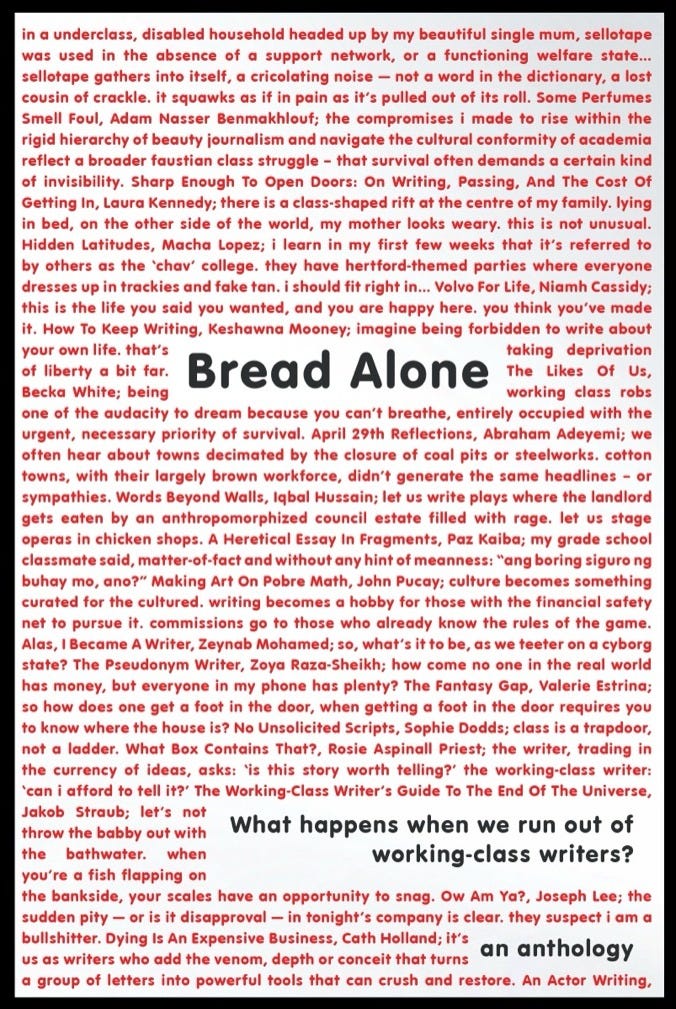
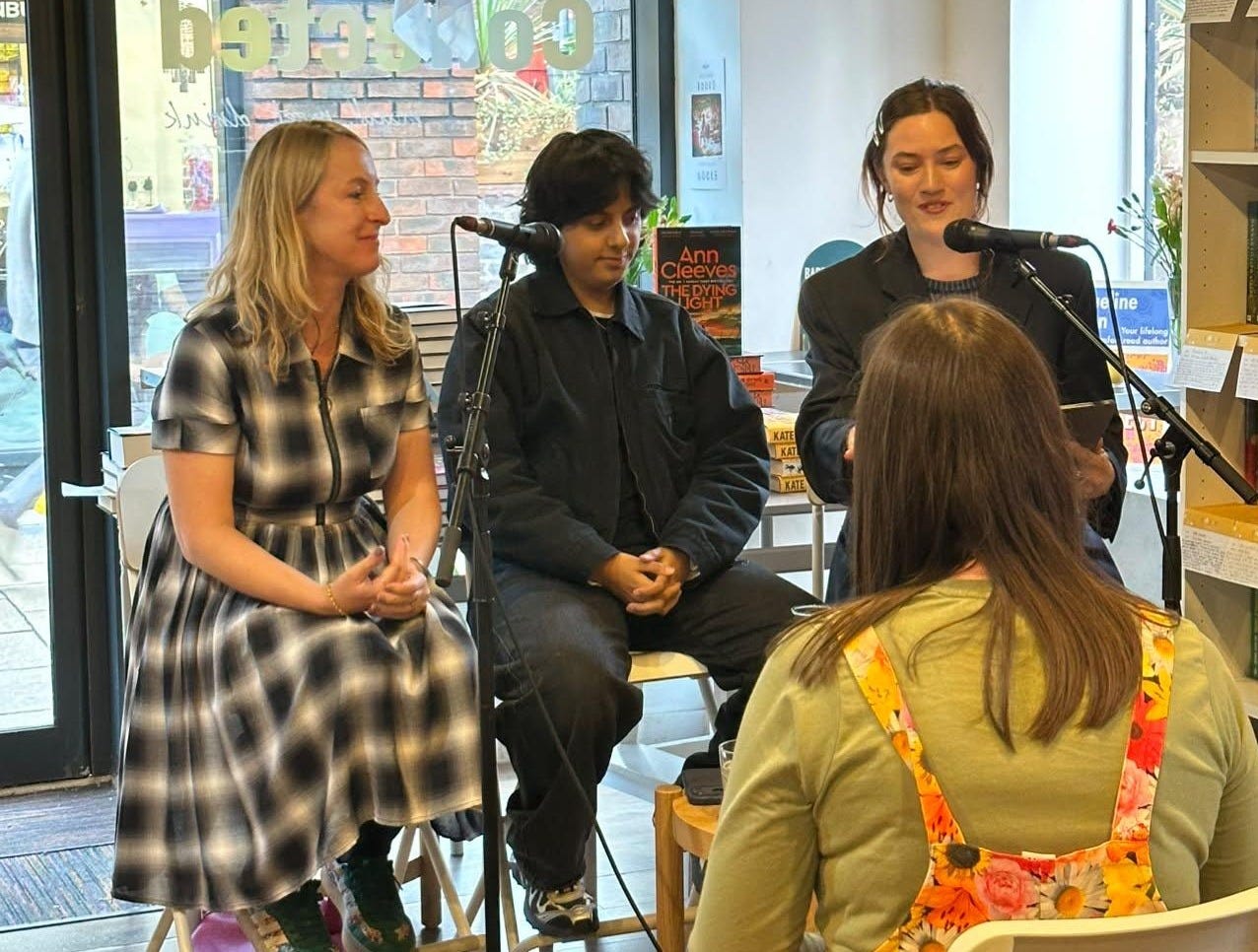
On Saturday evening, Collected Books hosted a panel discussion on Bread Alone Anthology, a collection of essays responding to the question, ‘What happens when we run out of working-class writers?’, as part of Durham Book Festival.
The event was chaired by the Anthology’s editor Kate Pasola, who was joined by contributors Z. Raza-Sheikh and Becka White for a thought-provoking discussion which explored navigating feelings of frustration and anger, elitism in universities, the current situation for working-class authors, the reading crisis in the UK, what needs to be done to improve the situation, and writing rituals.
Kate first asked the writers to introduce their pieces to the audience. Becka White’s The Likes Of Us challenges assumptions about who reads and writes and advocates for more working-class representation in literature that portrays the lives of working-class people in an authentic way to counter often lazy and harmful representations in many popular works.
Z. Raza-Sheikh’s piece The Pseudonym Writer focuses on their experiences at university, for example being pushed into writing on obscure niches rather than on subjects that actually interested them and warns against cashing out on personal stories when trying to build a career.
Did the panelists think that the situation for working-class writers is better now? Becka and Z agreed that while there is a lot more dialogue now surrounding the importance of working-class representation, the reality has unfortunately not changed much.
Z highlighted that it is difficult to pitch without having certain/enough bylines, and that university connections are key. They said that independent magazines are providing better opportunities for working-class writers, but that funding is often an issue. Both suggested that surviving off commissions alone is pretty much impossible, and Becka highlighted that taking risks such as sabbaticals and short-term contracts aren’t often possible for writers who don’t have the cushion of a wealthy background.
When Kate asked the panelists for one thing that could be done to promote reading and writing, both writers emphasised the importance of funding libraries. Z shared that library reading challenges helped encourage them, and advocated for making libraries diverse and accessible, inter-community links such as sharing resources, and reading together as a family.
While the subjects of discussion were serious, there were moments of comic relief, for example when Z and Kate joked about being encouraged to write on obscure niches such as construction and fishing rather than subjects that they were actually interested in.
During a discussion surrounding writing rituals, Kate expressed her dislike of hearing about the writing rituals of famous writers, joking about writing after lie-ins and lavender and milk baths which elicited laughter from the audience. Discussion surrounding snatching minutes to write whenever possible for example on commutes, and the beauty of the notes app, provided a much more realistic representation of writing which I can certainly relate to myself.
The audience posed some brilliant questions to the panelists, for example, how ca
n opportunities for working-class writers be provided for the wellbeing of communities rather than just the career progression of individuals?
Kate recommended the work of New Writing North such as their community projects and writing groups, both of which I have personally benefitted from and can vouch for. The panelists emphasised the importance of reading and writing for joy and escapism and expressed that people may want to write because they have something to say, not necessarily in pursuit of a career or prize.
This discussion was a joy to witness, and I would highly recommend reading this incredible anthology of work by brilliant working-class writers.