

Astronomers in the North East have described the “wow” moment they witnessed a never-before-seen star discovery.
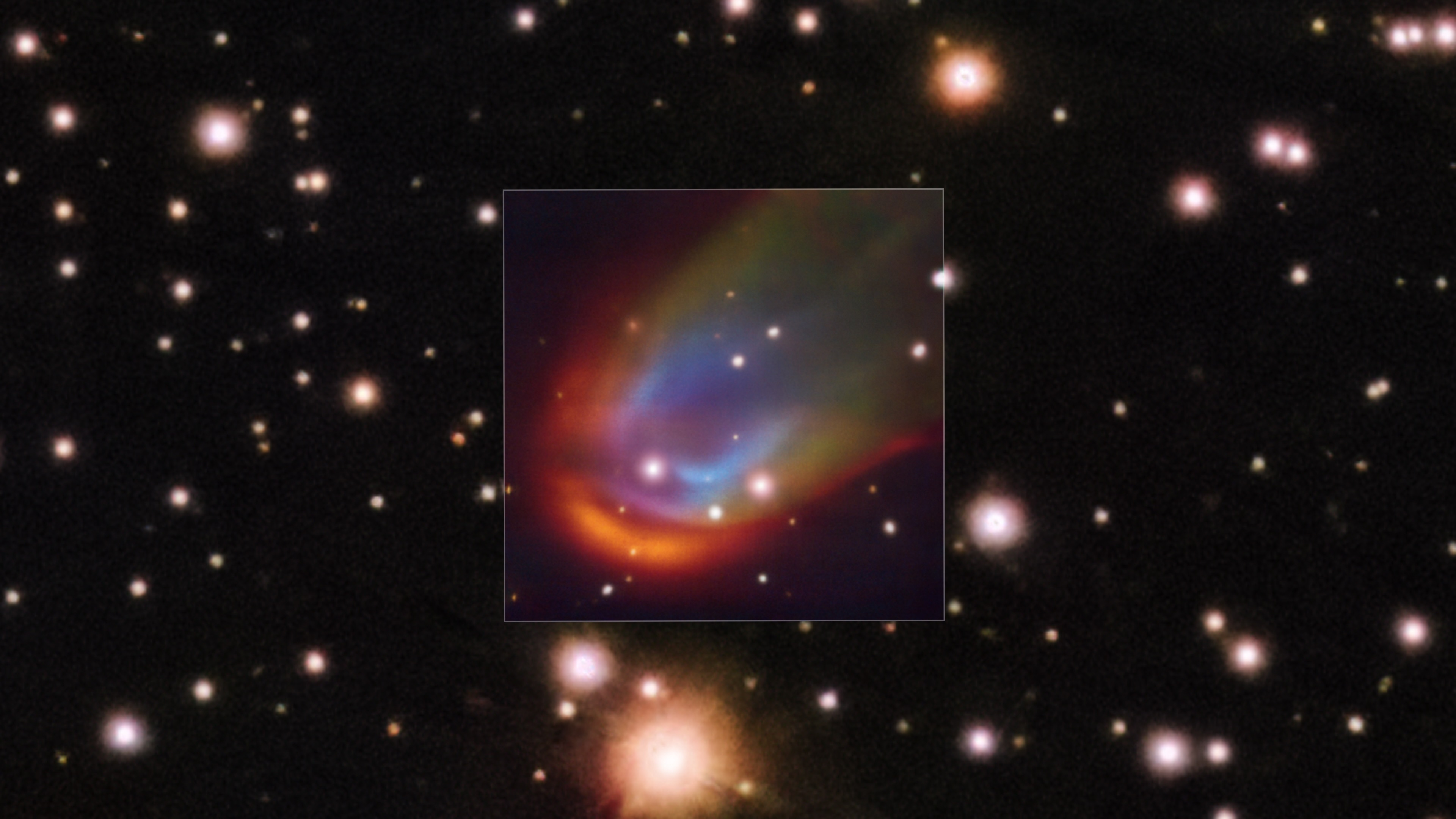
The mysterious and beautiful shock wave around a dead star has been observed by scientists at Durham University.
The team witnessed the phenomenon around the white dwarf star, named RXJ0528+2838, which is the remnant of a low-mass star, found 730 light years from Earth.
The white dwarf is being orbited by a companion star. Usually, material from the companion would transfer to the white dwarf, forming a disc which fuels the dead star and creates powerful outflows.
Under the right conditions, these outflows of gas and dust can clash with their surroundings to create a shock wave, or nebula.

However, this white dwarf shows no signs of a disc, making the power source of the surrounding shock wave a mystery.
The wave from the white dwarf is roughly 3,800 times the distance between Earth and the Sun. The effect is that the white dwarf ploughs through interstellar material, sweeping it up and making the shock wave visible.
The discovery, published earlier this week, in Nature Astronomy, challenges the understanding of how dead stars interact with their surroundings and how they evolve.
Research co-lead author Associate Professor Dr Simone Scaringi, of Durham University’s Department of Physics, said: “This is something never seen before and entirely unexpected.
“This star is known as a polar white dwarf, which unlike other accreting white dwarfs, do not collect a disc of material around them from their companion.
“With no disc, we would not expect this type of star to have any bow shock wave, or nebula, around it.
“The surprise that this supposedly quiet, disc-less system could drive such a spectacular nebula was one of those rare ‘wow’ moments.”
The mysterious object was initially observed by a final-year physics student working with Dr Scaringi during a project searching for nova shells – remnants from an explosion of fuel around an accreting white dwarf.
For Dr Scaringi it was clear that the shape his student had spotted was not a nova shell, as it had a tail.
Just how a dead star without a disc can power such a long-lasting outflow remains a puzzle and challenges previous understanding of the physics around polar white dwarfs.
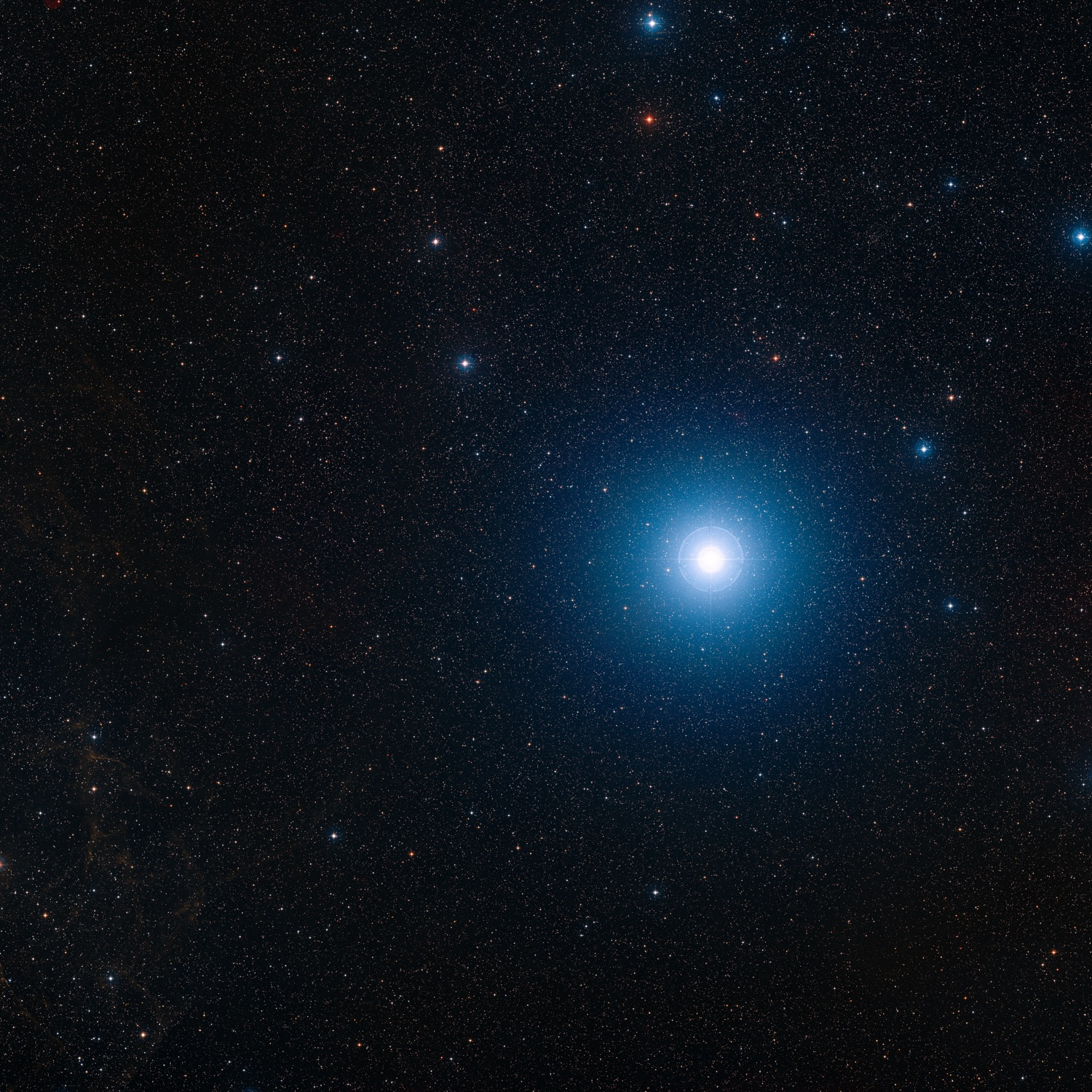
To investigate the object in more detail, the team asked for time on the MUSE instrument on the European Southern Observatory’s Very Large Telescope (ESO’s VLT).
Using data from these observations, the team were able to map the bow shock in detail and analyse its composition.
The shape and size of the bow shock suggests that the white dwarf has been expelling powerful outflow for at least 1,000 years.
The results also showed that the dead star has a strong magnetic field, channelling material accreted from its companion star directly into the white dwarf, without forming a disc around it.
This strong magnetic field could be part of the hidden energy source behind the powerful outflow, but the team cautioned that this still needs to be investigated.
The data shows that the current magnetic field is only marginally strong enough to power a bow shock lasting for a few hundred years at most, so this cannot explain the discovery.
The researchers are also keen to investigate this through more observations.
Dr Scaringi said: “To try and understand this, we really need to try and find more examples elsewhere in the galaxy.
“In this case, this particular white dwarf is quite close to Earth and therefore we can see it well.
“The hunt is on now to try and discover more examples of this, to help develop our understanding and offer a physics-based solution to the mystery.”
The research was co-led by Dr Simone Scaringi and Dr Krystian Ilkiewicz, who was based at Durham University at the time, but is now part of the Nicolaus Copernicus Astronomical Center, Polish Academy of Sciences, Warsaw, Poland.
The team has involved physicists from 12 institutions across seven countries, including the universities of Warwick, Southampton and Oxford in the UK.