



Welcome to a bumper edition of Cultured. On Sunday after last weekend’s mini-break.
For anyone wondering, I survived putting roller skates on for the first time in roughly 35 years in honour of my best friend turning 50. Sadly, one member of our party was less fortunate and spent Sunday having surgery on a double ankle break, which rather suggests the definition of “extreme sports” shifts a bit once you hit midlife. What about those wrinkles though, eh?!
A n y w a y. Let’s get on with what’s in store this week.
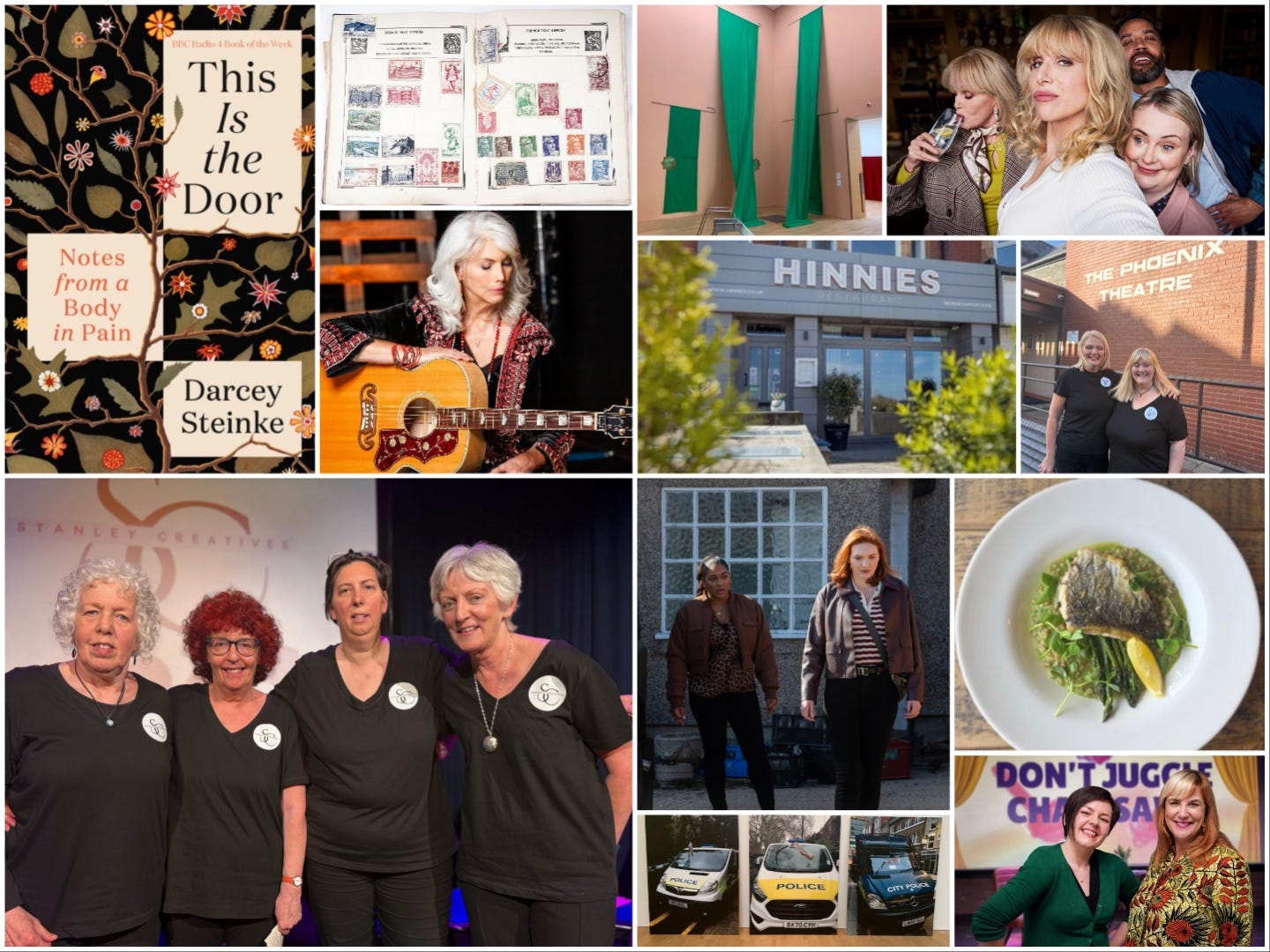
We preview tomorrow night’s very special farewell tour date from Emmylou Harris at Sunderland Empire (May 18) - brought to the North East by The Fire Station and a long-standing relationship between Harris and venue director Tamsin Austin.
Dave Whetstone heads to Middlesbrough for the New Contemporaries exhibition at MIMA, while poet and broadcaster Dr Kate Fox talks neurodiversity, late diagnosis and live podcasting ahead of Neurotypicals Don’t Juggle Chainsaws coming to Gosforth Civic Theatre this week.
There’s also a feature on The Women We Are - a powerful creative project led by theatre maker Alison Stanley, which brought together women with lived experience of domestic abuse and breast cancer before culminating in a moving performance at the Phoenix Theatre, Blyth last week.
Tony Henderson opens a collection of stamps carrying stories of travel, tragedy and extraordinary heroism, while former Tyne Tees Television managing director Graeme Thompson reflects on what feels like the busiest period for television drama production in the North East for decades in this week’s Sunday Column.
Elsewhere, there’s a passionate recommendation from Collected Books ahead of an event with author Darcey Steinke, Michael Telfer looks ahead to the return of Amandaland in Boxing Clever and this week’s Sunday Plate comes courtesy of head chef Jonny Cairns from Hinnies.
Right then. Kettle on.
The Fire Station scales up with Emmylou Harris at Sunderland Empire

When Emmylou Harris walks onto the stage at Sunderland Empire next week, there will be a real sense of occasion.
The only North East date on what is being billed as a farewell tour for the UK and Europe, will offer a rare opportunity to see one of the most revered figures in American music singing songs from an incredible back catalogue, on Wearside.
The sold out Sunderland date sits alongside performances in London, Birmingham, Liverpool and Bristol - and it also marks a milestone for the city’s Fire Station, which for the first time is presenting a concert outside its own footprint.
And what a gig to start with.

Swans, police vans, dirty socks - where modern art is at

If all the submissions to this year’s New Contemporaries exhibition had been accepted, it could have filled MIMA 100 times over.
As it is, 26 works of art were chosen by a selection panel comprising artists Pio Abad, Louise Giovanelli and Grace Ndiritu.
Quite a big responsibility lay on their shoulders, suggested Claire Louise Staunton who gave me an introduction to the exhibition when it opened to the public on May 8 – and (by way of apology for the photos in this article) with the lighting in MIMA’s four linked galleries still being adjusted.
“What this exhibition does, as it has done for 77 years, is give a measure of where contemporary art is at, with the selectors tasked with taking the temperature,” said Claire.
“And the submission process is anonymised so they have no knowledge of the artists’ identity when they’re selecting.”
Live audience invited into neurodiversity podcast conversation

A live recording of neurodiversity podcast Neurotypicals Don’t Juggle Chainsaws is coming to Gosforth Civic Theatre later this month.
Hosted by poet, broadcaster and author Dr Kate Fox and neurodiversity trainer and educator Nic King, the event will see the pair record two episodes in front of an audience before opening the floor to questions and discussion.
Described as “honest, funny, warm” conversations about life as neurodivergent people in a neurotypical world, the podcast has built a growing following since launching a couple of years ago - particularly among late-diagnosed autistic and ADHD adults looking for more open and accepting conversations around neurodiversity.
Kate, a regular contributor to BBC Radio 4 and Radio 3 who was diagnosed autistic in 2017 at the age of 42, says the idea for the podcast grew after she met Nic following a performance of her Bigger on the Inside show at Gosforth Civic Theatre in 2024.

Stories, songs and strength from The Women We Are

There is a lot of laughter backstage at the Phoenix Theatre in Blyth.
Not the polite kind. Proper laughter. The sort which arrives in bursts between nerves, excitement and last-minute reminders about who’s doing what and who’s meant to be standing where.
In a few minutes, the women gathered in the studio space will stand up in front of an audience of friends, family and supporters to perform original songs, sketches, poetry and monologues inspired by experiences of domestic abuse, breast cancer and the lasting impact both can have on lives long after a safe place has been found and memories of hospital appointments have faded.
Just a few months ago, some of them would barely speak in a group setting - but looking at them as the countdown to curtain up ticks along, you’d struggle to identify who they were.
The sharing performance marked the culmination of The Women We Are - a project led by North East theatre maker Alison Stanley through Stanley Creatives, which has spent the past year bringing together women with lived experience of domestic abuse and breast cancer in a weekly creative support group in North Tyneside.
What began as tentative meet-ups built around writing prompts, singing exercises and drama workshops has gradually evolved into something far bigger than a theatre project.

George Cross hero remembered through stamp collection

Albums of stamps up for auction have illustrated a young man’s dream of going to sea and seeing the world.
But it would end in an act of “supreme heroism’ by Donald Owen Clarke and his death at the age of 19.
In 1943 his parents were presented by the King with his posthumous George Cross - the highest award for gallantry for a civilian. The seagoing apprentice from Chester-le-Street was also the only merchant seaman to be granted the medal.
His collection of world stamps and air mail covers from a host of destinations worldwide in the sale by Newcastle auctioneers Anderson & Garland were mainly addressed to his parents Thomas and Bertha Clarke.
Donald sent these covers home with instructions for the stamps to be kept.

Graeme Thompson, former managing director of Tyne Tees and chair of the Royal Television Society Education Committee reflects on the region’s busiest period for television drama in decades.
Get ready to see and hear a lot from the North East on your TV screens over the coming months. A £7m production fund and partnerships with two major broadcasters have resulted in a flurry of television drama commissions set in the region.
For the first time in more than three decades, the North East is seeing drama production across every month of the year stretching into 2027 and beyond. The BBC has committed a spend of £40m over a six-year period on programming from this corner of the UK. Channel 5 has ordered three drama series with more in the pipeline. ITV and Netflix are also eyeing projects from the area.
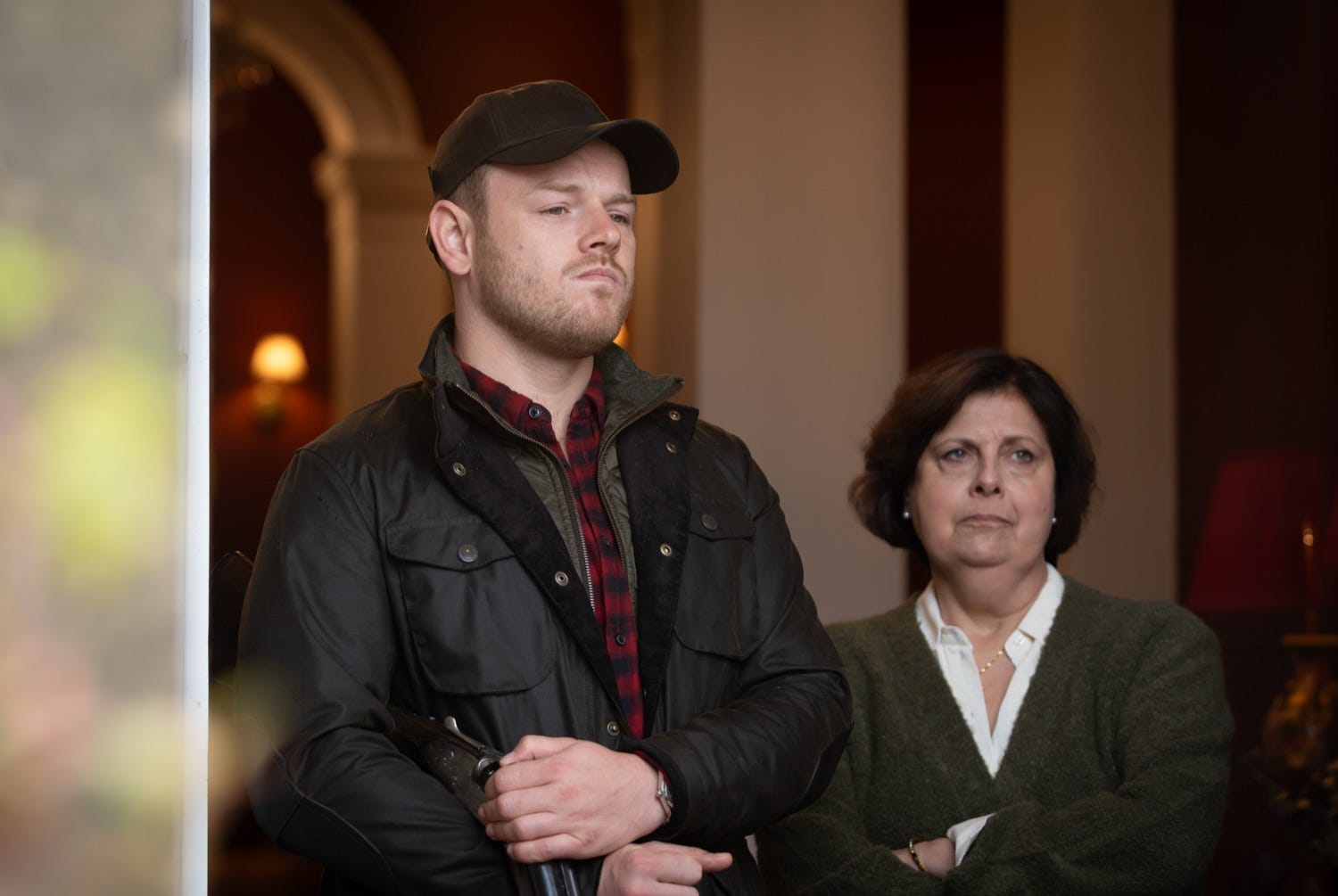
Currently filming, coming soon or just delivered are The Fortune (Lonesome Pine for 5), Forever Home (FilmNation for 5), the 10-part adaptation of The Secret Diary of Adrian Mole (Big Talk for BBC), Smoggie Queens (Hat Trick for BBC) The Dumping Ground (CBBC) and the Northumbria Mysteries starring Robson Green (Lonesome Pine for BBC).
The last golden age of TV drama from the region was the 20-year period from 1973 when the BBC and Tyne Tees Television created and produced a host of career defining titles.
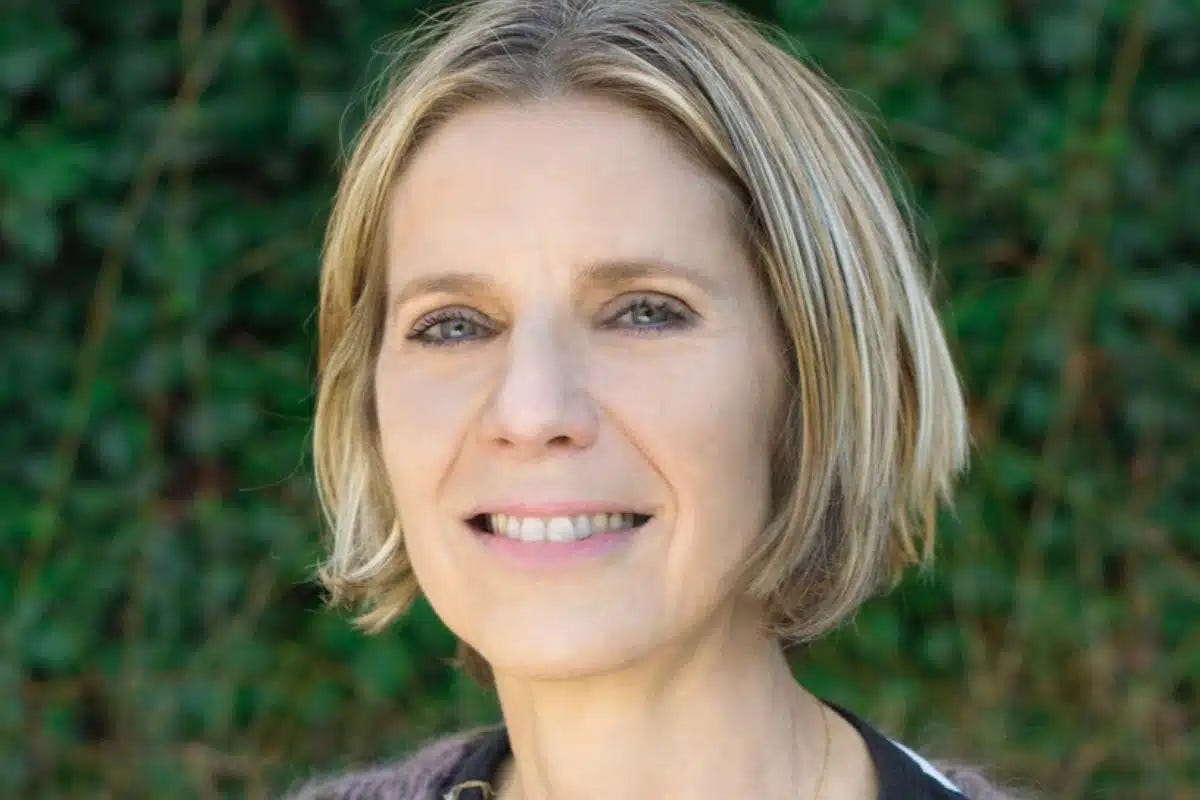
Founded by Emma Hamlett, Collected Books is an independent bookshop in Durham, with two floors of books to browse as well as coffee, wine, and cake to enjoy. They specialise in writing by women but stock all genres of fiction and non-fiction as well as books for kids, YA titles, poetry, and classics.
This week, Emma is recommending: This is the Door: Notes from a Body in Pain, Darcey Steinke
Darcey Steinke is an American author and academic, a teacher of creative writing at a number of prestigious US universities. Having previously published two memoirs and five novels, Steinke’s writing is well known in the US; two of her five novels have been selected as New York Times Notable Books of the Year. She has been writing and publishing for four decades and her first novel, Up Through the Water, was edited by Jackie Onassis when the former First Lady was working at the publisher Doubleday in the late 1980s. And yet, Darcey Steinke is relatively little-known over here in the UK. I very much hope that the publication of this new book changes that.
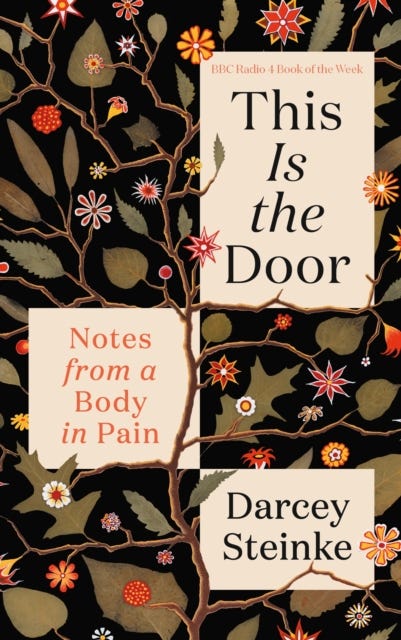
This is the Door is one of those books that defies categorisation, blending memoir, creative meditation, and factual investigation. Darcey doesn’t only recount her own experience of back pain, and of supporting members of her family through the pain of illness and injury, but interweaves this experience with reflections on her research into medical history and science, conversations and interviews with around 100 people, and the examples of artists and creatives like Frida Kahlo and Kurt Conbain, and writers and thinkers including Audre Lord, Simone Weil and Friedrich Nietzsche.
The key shift here compared with other pain memoirs is that the focus is not on finding a cure, on getting free of the pain. Instead, the writing focusses on the experience of the pain itself, on inhabiting and exploring pain, and – while not glorifying suffering – celebrating how bodies can endure, and what humans can create through their pain to provide relief for themselves and others.
Starting with chapters on pain in different parts of the body – spine, knees, heart, brain, skin, and breast – the book moves through heartache onto three thematic chapters to conclude: suffering, soul, healing. The book has a wealth of research and references, ranging from William Harvey’s 1628 text on the heart and blood circulation and the work of nineteenth-century physician and dermatologist Ferdinand Ritter von Hebra, to the cadavers studied by present day anatomy students and plaster cast corsets worn for the relief of back pain (including by Kahlo); there are quotes from recent science and medical journal articles alongside some from Aristotle and Seneca, as well as Simone de Beauvoir and Susan Sontag.
The underpinning theme in This is the Door is the way in which chronic pain turns things upside down, disrupts, contradicts. Much of what the author reflects on, and finds from her conversations and interviews, is how pain draws everything into itself, casuing a separation, an isolation, from the world at the same time as producing a feeling of greater connectedness. Doors close, worlds shrink, and yet the rupture of pain forces an opening, a liminality, a spiritual (if not necessarily religious) and creative openness. As Darcey writes in the book’s afterword:
Pain, while terrible, connects us to others both known and unknown. It can also be projected out and held in art, poetry, music, and religion. Creativity itself is nurtured by suffering. For me, writing – working on sentences for rhythm and clarity, detailing fictional characters whose pain can mediate my own – is an effective painkiller.
Darcey Steinke will be in conversation about This is the Door at Collected Books on Wednesday (May 20), 7.30pm. Get your tickets for the event here and order a copy of the book here.

Every week, Michael Telfer – Mike TV – recommends a box set to crack open. This week’s choice is a sharp, chaotic comedy built around a character you might be surprised to find yourself rooting for.
Successful spin offs from TV shows are rarer than hen’s teeth, which are apparently incredibly rare.
For every Better Call Saul there’s a Joey, and for every Frasier there’s a Baywatch Nights. As the ancient proverb goes, it’s a fine line between milking a golden cow and setting it on fire. Or something.
Thankfully Amandaland, the spin off to Motherland, is a hen’s tooth. A blue moon. A perfectly-plopped rocking horse turd which dropped its second series this week.
Motherland was a hugely popular BBC sitcom that ran for three seasons and a handful of specials from 2016 to 2022, and was uncomfortably hilarious for both parents and non-parents alike.
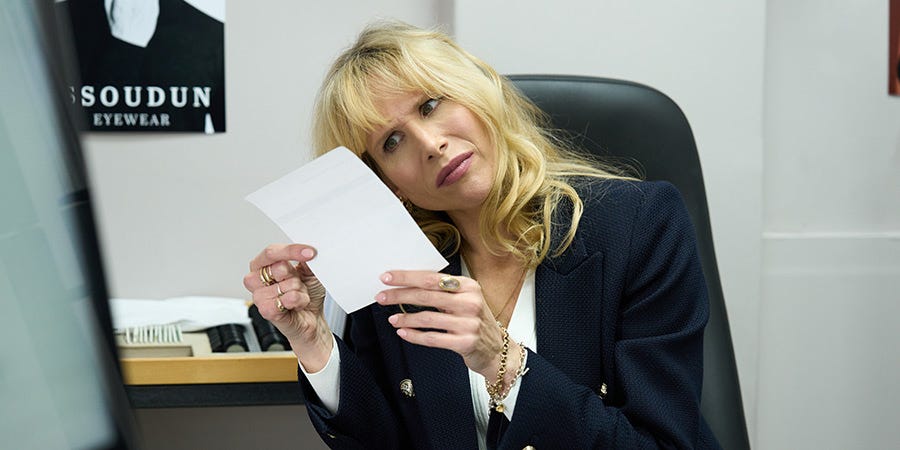
The show followed beleaguered mums Julia (Anna Maxwell Martin) and Liz (Diane Morgan) and stay at home Dad Kevin (Paul Ready) as they tried in vain to juggle parenting with their work and love lives, and keep up with the alpha mum Amanda (Lucy Punch) and her sidekick Anne (Phillippa Dunne).
Over the course of the show’s life the main characters formed an inseparable bond that stretched way beyond the confines of the school playground and the car pool. We saw them at their best and their worst, and we rooted for them through every excruciating drama.
The character of Amanda was often the cartoon villain, the graceful swan equally at home in the school fundraiser or her immaculate store (NOT shop!), always flawlessly dressed and ready with an acerbic put down to let everyone know where they stood in the Mums’ food chain.
Amandaland puts Amanda squarely at the centre of proceedings. By taking some of the Motherland characters and most of the writers, the new show stays fresh and preserves the quality of writing and humour. The gags are as good as they ever were and Amanda and Anne provide plenty of room for new narrative and growth.
The Sunday Plate sees chefs from kitchens across the North East share a recipe for you to try at home - a taste of the region’s food scene, one dish/treat at a time.
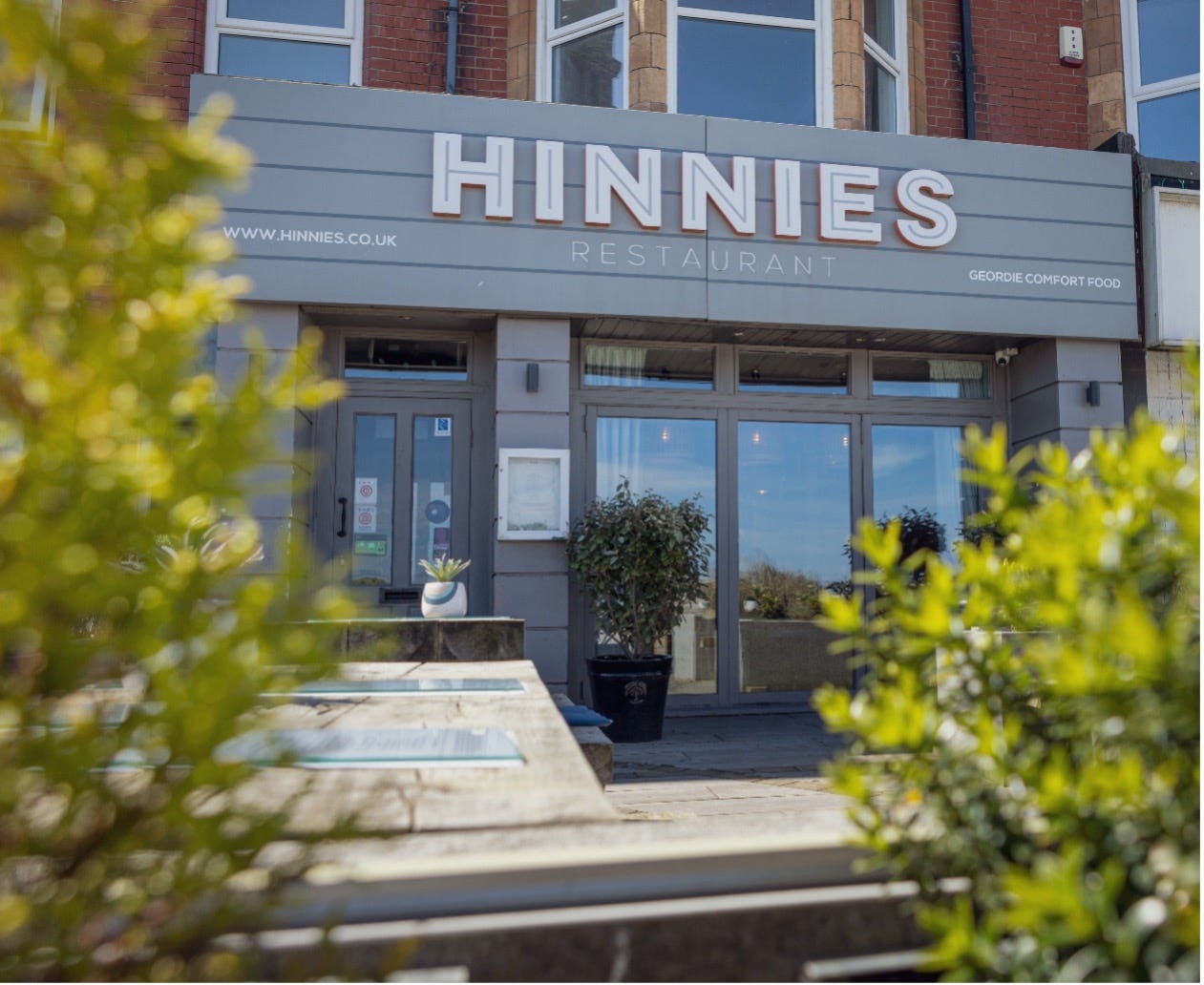
This week, Jonny Cairns from Hinnies in Whitley Bay shares his recipe for Roasted coley, spelt & wild garlic pesto risotto and asparagus.
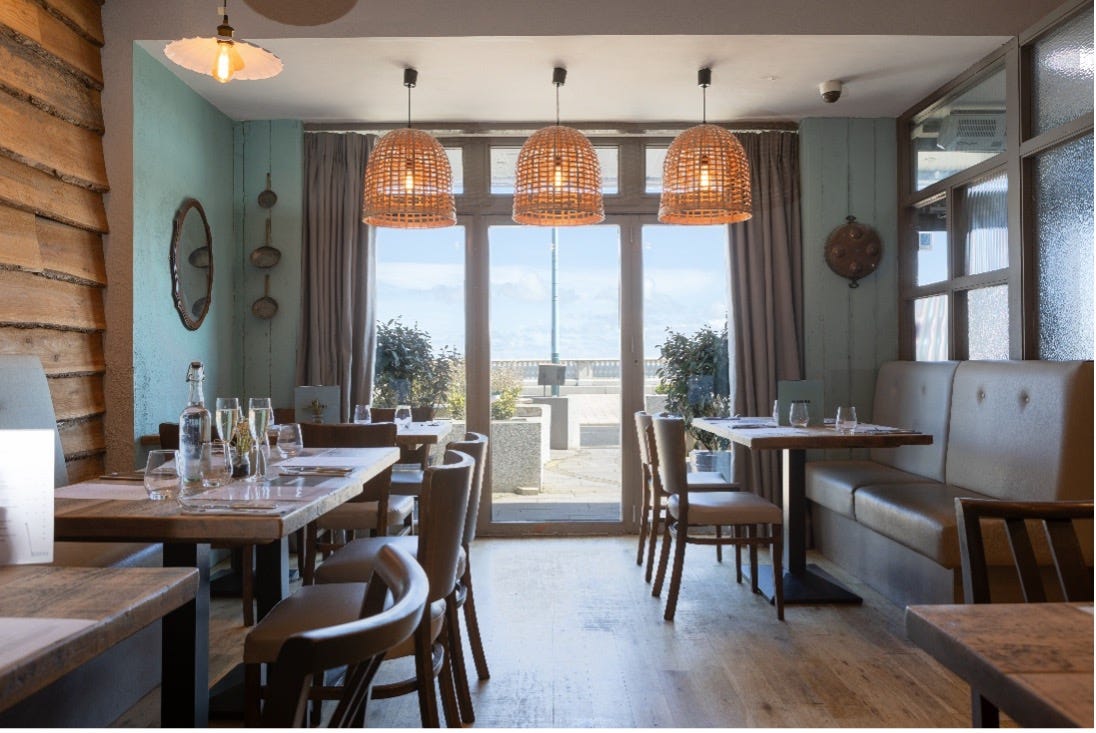
Overlooking the seafront, Hinnies is known for its hearty, Geordie-inspired comfort food and focus on local ingredients.
A keen traveller and food enthusiast, Jonny has led the kitchen since 2019, regularly bringing ideas and influences from across Europe back to the North East coast.
Recipe: Roasted coley, spelt & wild garlic pesto risotto and asparagus
Ingredients
4 x 150g portions coley (cod will also work)
100g wild garlic
50g parmesan
50g pine nuts
100 ml olive oil
500g spelt
2 litres chicken stock
2 medium sized onions
150g butter
20 asparagus tips
4 tablespoons cooking oil (vegetable or rapeseed oil)
Recipe
1. Firstly, prepare the wild garlic pesto. To do this lightly toast the pine nuts in a pan on a medium heat for 3-4 minutes until lightly browned. Once coloured allow to completely cool. Roughly chop the wild garlic and combine with parmesan, olive oil and cooled pine nuts. Place this in a food processor, or using a hand blender blitz for 30 seconds.
2. To make the risotto, finely dice the onions and place in a large saucepan with the butter. On a low heat cook the onions for 4-5 minutes. When the onions appear to be soft, turn the temperature of the pan to a medium heat, add the spelt then gradually add the chicken stock about 250ml at a time.
When adding the stock, continually stir the spelt and allow the stock to be completely absorbed into the spelt. This should take 20–30 minutes until the spelt is cooked. When cooked add salt according to your taste, keep aside and keep warm.
3. To cook the fish, lay the fillets on a plate skin side up and sprinkle the skin lightly with salt, leave for 3 minutes to allow the salt to dry out any moisture to help achieve a crispier skin.
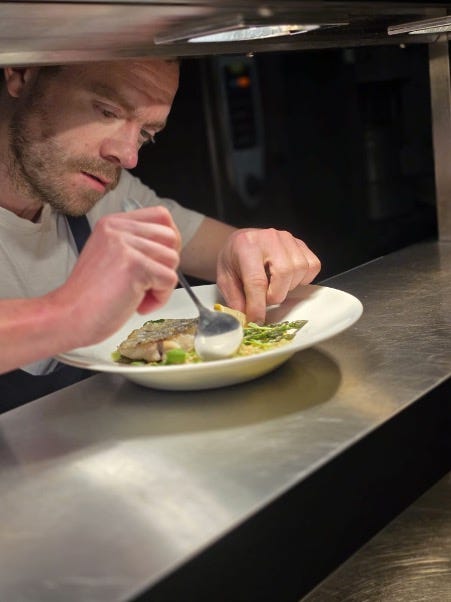
4. Heat 4 tablespoons of cooking oil in a large enough frying pan to fit the fillets on a medium heat. Carefully place the fillets in the frying pan skin side down, allow to cook for 4 minutes before turning over onto the flesh side and allow a further 2 minutes. After this, take the fish out of the pan and place on a plate or tray and keep warm.
5. Return the pan to the medium heat and give 20 seconds to come back up to temperature. Add the asparagus tips and cook them for 2 minutes.
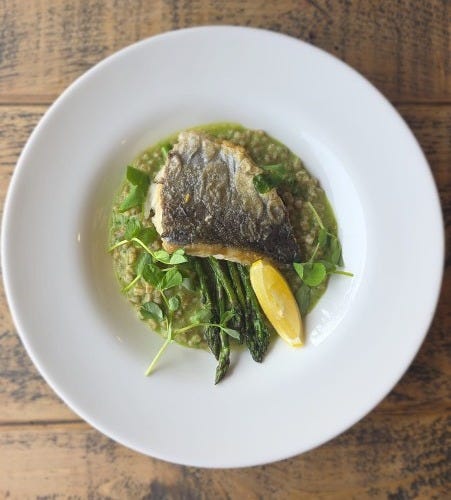
6. To assemble, add 4 tablespoons of the wild garlic pesto, to the spelt and stir in. Divide this between 4 large bowls or plates, top with asparagus tips and the fish.
