

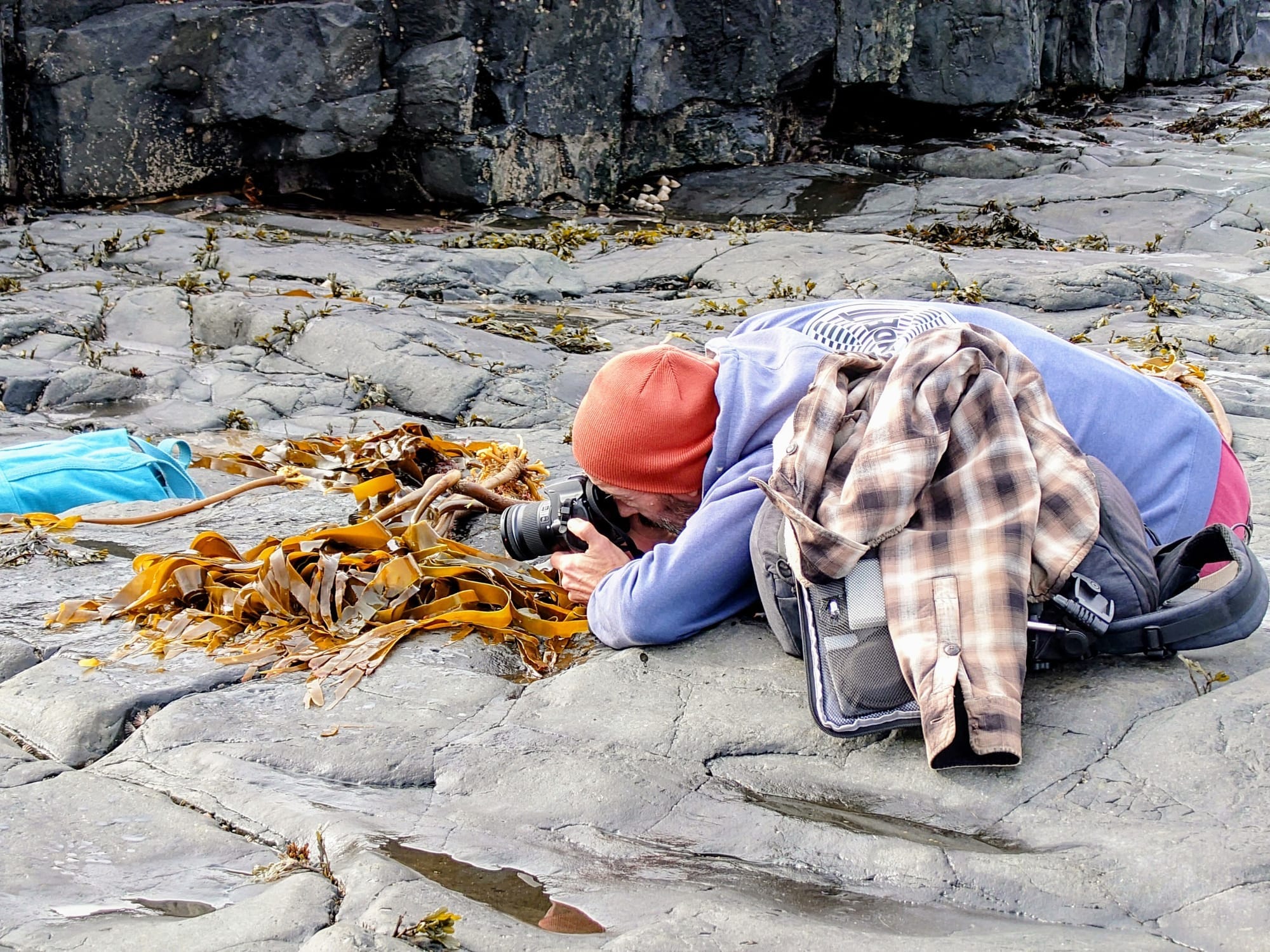
Two new exhibitions will examine how underwater forests and meadows can protect the North East coastline and, at the same time, provide wildlife habitats.
Durham Wildlife Trust is working with artists to explore the qualities of kelp and seagrass, culminating in the exhibitions in County Durham and Northumberland.
The Trust teamed up with the East Durham Artists’ Network (EDAN), based at Seaham, to produce artworks inspired by kelp as part of the Stronger Shores project.
It also worked with artists Luke McTaggart and Katherine Rousselange, of Dovecot Street Arts in Amble, to study seagrass as part of the local North Side project, a creative venture raising awareness of seagrass in the marine ecosystem.
The work has now come together in exhibitions in March and April at the EDAN Gallery in Seaham and the Dry Water Arts Centre in Amble.
The Seaham exhibition features photography, ceramics and glasswork, while acrylics and audio-visuals are part of the display in Amble.
Blair Watson, marine engagement officer for Durham Wildlife Trust, said the art projects enabled local communities to learn more about the “often overlooked” marine habitats.
“Working with the EDAN group, as well as the many artists of the North Side project, has been a brilliant experience,” said Blair.
“Their passion and enthusiasm have really elevated these projects and I can’t wait for the communities of Seaham, Amble and beyond to explore this work.”
Angela Sandwith, co-chair of EDAN, said: “Our members have thrown themselves into the project and, after almost a year of research, they have produced some exciting responses in art.”
The project is funded by Defra as part of the £200m Flood and Coastal Innovation Programmes. Managed by the Environment Agency, the programmes will drive innovation in flood and coastal resilience and adaptation to a changing climate.
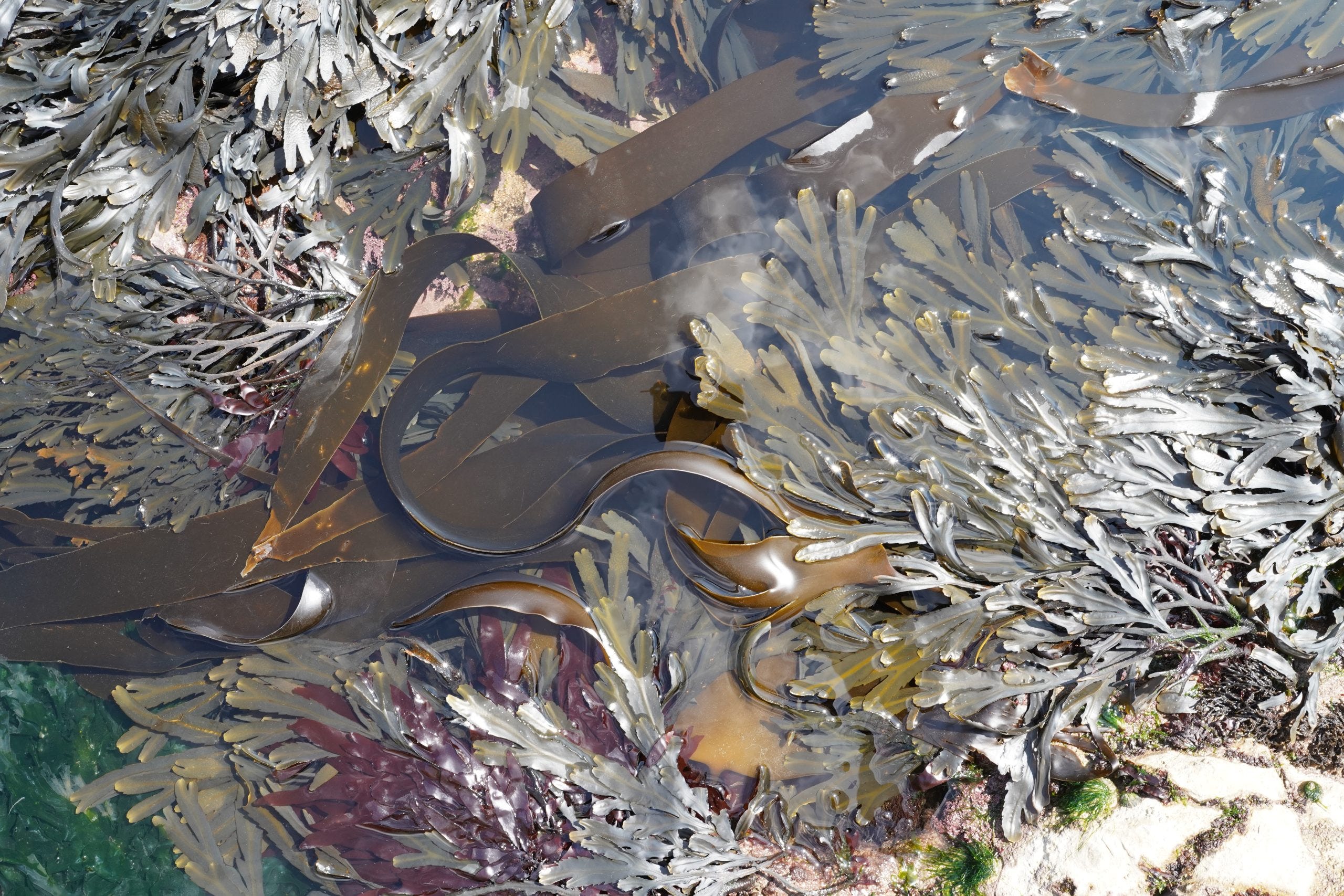
Kelp is a robust brown seaweed which provides many benefits but is often seen as a nuisance, while seagrass has been in rapid decline over the past century.
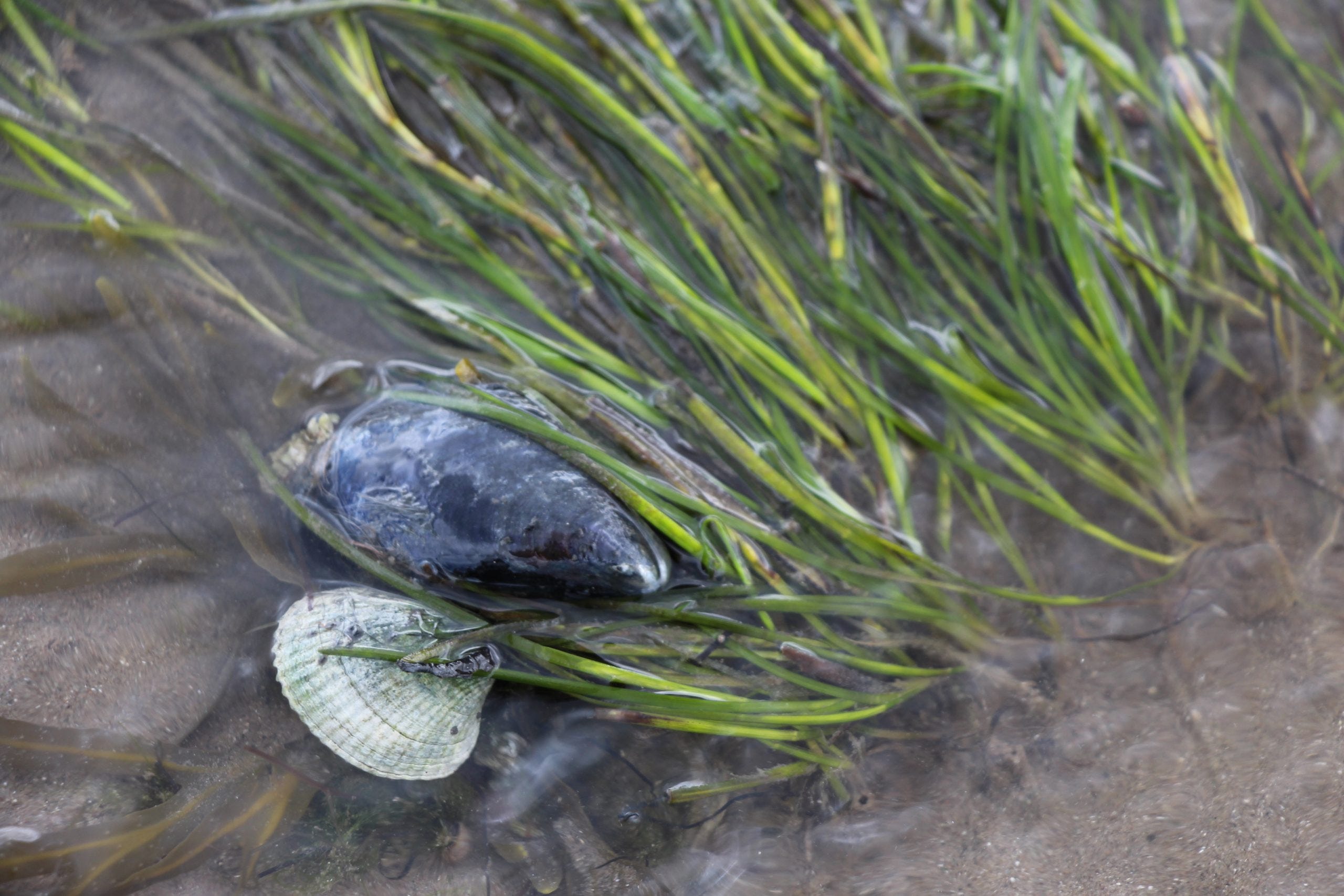
Durham Wildlife Trust is investigating the potential for kelp to be grown offshore on specialised units and is also piloting trial sites for the restoration of seagrass at sites in the rivers Aln, Don and Wansbeck.
The kelp exhibition runs until April 25 at the EDAN Gallery in Church Street, Seaham. The seagrass exhibition runs until April 1 at the Dry Water Arts Centre, Wellwood Street, Amble.
Covering the North Sea coastline from Lindisfarne in Northumberland to Skinningrove in Redcar and Cleveland, Stronger Shores is developing and testing new approaches to help measures tackle flooding, coastal erosion and climate change.
Seagrass meadows, kelp forests and oyster reefs can reduce erosion, stabilise shorelines and support wildlife.
Kelp has a root-like structure called a holdfast that attaches it to the seabed, a thin hard stalk and fronds that spread out like leaves. It can form dense underwater forests, which are a productive and diverse ecosystem.
Seagrass is the only flowering plant which is able to live in seawater. The meadows store carbon, create oxygen and are home to a large number of creatures.