


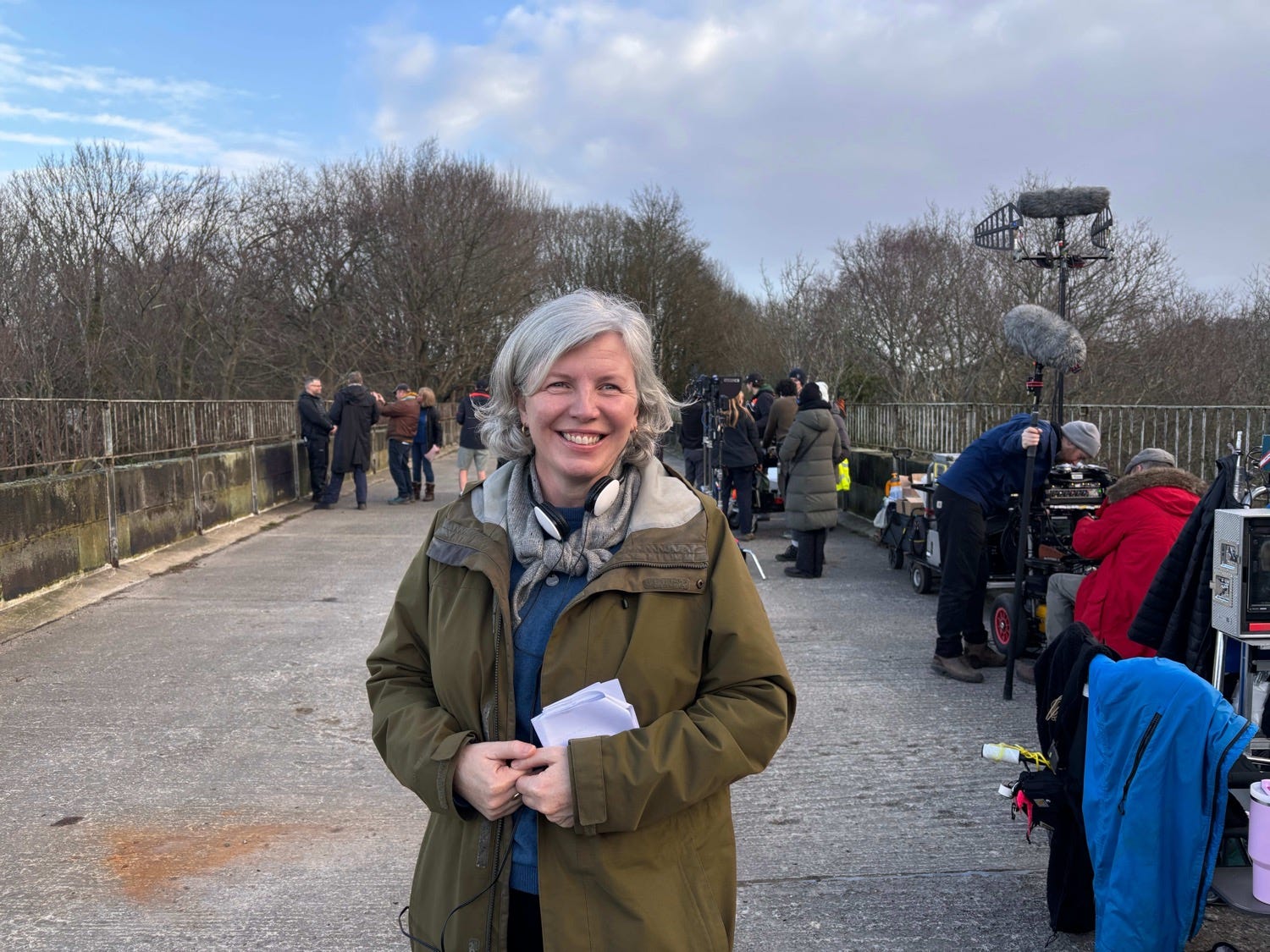
When you sit down to talk to Kirstie Macdonald, there really is no getting away from the ‘Home’ in Forever Home.
The FilmNation Entertainment executive producer, who was born in South Shields and went to school in Sunderland, spent the early part of this year working across Northumberland on the adaptation of Graham Norton’s novel, having first suggested moving its story from Ireland to the North East.
Bringing the six-part Channel 5 drama here meant returning to the region where her own ambitions in television first took shape – and strengthening her determination to make a lot more here.
Now that Forever Home has been made and screened – the finale was broadcast last night – Kirstie is more interested in what comes next, and is very clear she doesn’t want it to be a one-off.
“What we really need is a version of The Bill or something that is made here and is going to be returnable,” she says. “Multiple series, multiple writers, multiple directors, so that you can create a sort of training ground and infrastructure.”
Kirstie wants to see work generated here, regional writers developed and people able to build sustainable careers without having to leave – something she knows plenty about herself.
“If we can make stuff in the North East... the crew we had on Forever Home were phenomenal and we had the best time making it,” she says. “To be able to keep doing that here and to be able to guarantee work for people throughout the year. That has to be the aim.”
When Kirstie first set her sights on a career in film and television, staying in the North East wasn’t really an option.
She headed south to study drama and theatre at Royal Holloway and, after graduating, approached the industry with the analogue equivalent of a mass email.
“In the days of the BFI handbook, I just wrote about 100 letters to film and TV companies,” she laughs. “I got two responses.”
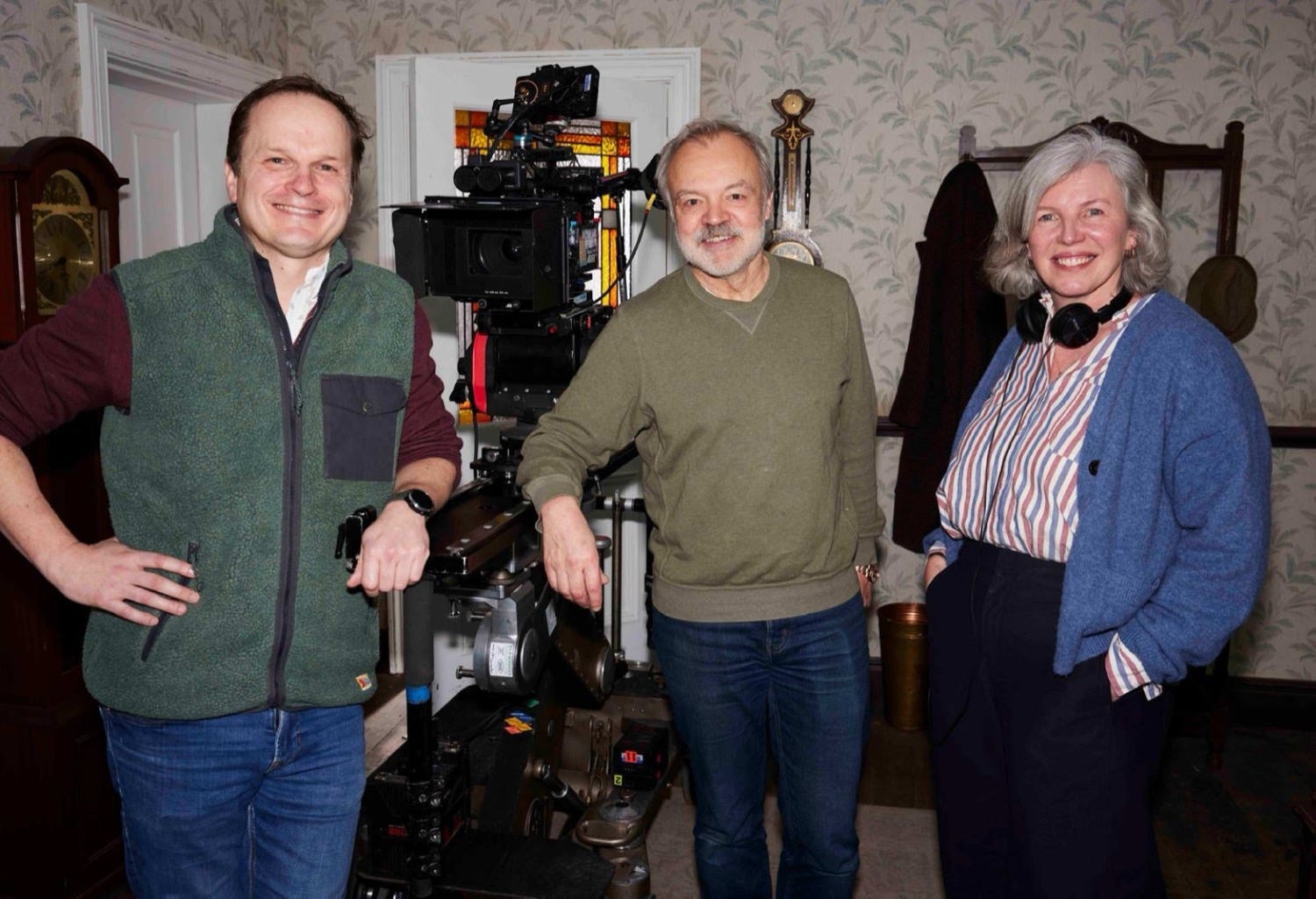
One was from Carnival Films, which offered her a job as a runner in 1995. From there she moved to World Productions, where working under influential producer Tony Garnett, who’d enjoyed a long working relationship with Ken Loach, proved incredibly formative.
“What an education,” she says. “This is the great thing about this industry. We all start at the bottom. Even now, if you did a degree in film, you still start at the bottom.”
Her first production as an assistant script editor was BBC Two series The Cops. Garnett then advised her to leave and get experience on a bigger production, prompting an 18-month stint on The Bill before she returned to World.
It became her professional home for much of the next 17 years, although Kirstie would periodically leave to gain experience elsewhere before coming back.
“I’d go away, get experience, come back,” she says. “They’d say, ‘Oh no, you can’t produce yet, go and produce somewhere else.’ So I’d go and produce somewhere else, and then I’d come back.
“Honestly, it was great. I loved it. I learned so much.”
She left World in 2017 for telly heavyweight Peter Fincham’s production company Expectation before helping establish the UK television operation of US company FilmNation Entertainment in 2019.
The idea of bringing some of that work home gathered momentum in 2022 when Kirstie spent an extended period back in the North East after her father became ill.
She was introduced to BBC comedy executive – currently serving as the Corporation’s interim director of comedy – Emma Lawson, who in turn connected her with key figures in the region’s developing screen sector.
There had been a frustrating reminder of the old situation a few years earlier. While at World, Kirstie had made Dark Angel, the ITV drama starring Joanne Froggatt as serial killer Mary Ann Cotton. Despite its North East story, the production was largely filmed in Yorkshire because, Kirstie says, the regional screen infrastructure simply wasn’t there at the time.
Coming back fours years ago, she found a very different landscape.
North East Screen had been established, the BBC was increasing its investment in the region and there was a concerted effort to connect broadcasters and production companies with the talent already here.
Kirstie credits North East Screen – and chief executive Alison Gwynn and chief operating officer Lisa Laws in particular – with helping FilmNation navigate that landscape and identify writers and other talent it could work with.
“Lisa is brilliant and has been such a massive help,” she says.
She is equally complimentary about Gwynn’s approach to the bigger task of building a sustainable screen industry.
“One of the great things about Alison is that she’s very clear-eyed about the long-term nature of this,” Kirstie says, acknowledging the pressure to produce results quickly.
There are encouraging signs, she believes, but significant gaps remain. Kirstie points particularly to the need to develop writers, noting that while “there are some brilliant writers coming up”, there is a gap between the region’s established names and its emerging talent.
And she repeatedly comes back to the need for regular production rather than occasional bursts of activity – work which allows an ecosystem of writers, directors, producers and crew to develop and, crucially, remain in the region.
It was against that backdrop that FilmNation began looking seriously at what it might develop here.
The company has established a North East slate and a partnership which gives the BBC first look at projects developed through it. One project already in development has been written by South Shields writer Emily Robson (Dogs on the Metro, Live Theatre) after four regional writers were invited to pitch ideas.
Then came Forever Home.
When Kirstie met Graham Norton, whose novels are generally rooted in Ireland, she raised the prospect of moving his story.
His response was encouraging. The new setting needed to retain the feel of the small community at the heart of the novel, but the best-selling author and veteran TV presenter agreed the North East could work.
“That meant we could go to North East Screen and apply for support from the Production Fund,” says Kirstie. “It has been a really great experience.”
She describes the fund as a “massive” lever for producers at a time when television financing increasingly involves piecing together money from several sources.
Just as important was the regional workforce.
Series producer Will Nicholson and line producer Fahima Chaudhry – both Vera alumni – brought extensive knowledge of the region and its workforce, while filming took place around Hexham, Stocksfield and elsewhere in Northumberland.
“The crew we had on Forever Home were phenomenal,” says Kirstie. “We had the best time making it.”
It is that combination of investment, experience and opportunity which she believes needs to be built upon.
FilmNation’s ambitions include establishing a physical North East base, but Kirstie is clear that an office only makes sense if there is enough work to sustain the people inside it.
“Once you’ve got an office, you can do exactly what I was talking about, what I did, where you train people up.
“Then they become script editors, and then they become producers, and then they become execs. But you’ve got to have the base and the work.”
And that brings the conversation back to the returnable series: something rooted in the region which comes back each year, employs people consistently and allows careers to develop alongside it.
Kirstie once had to leave the North East to build the career she wanted. Now she’s working towards something rather different: a whole slate of productions to come home for.
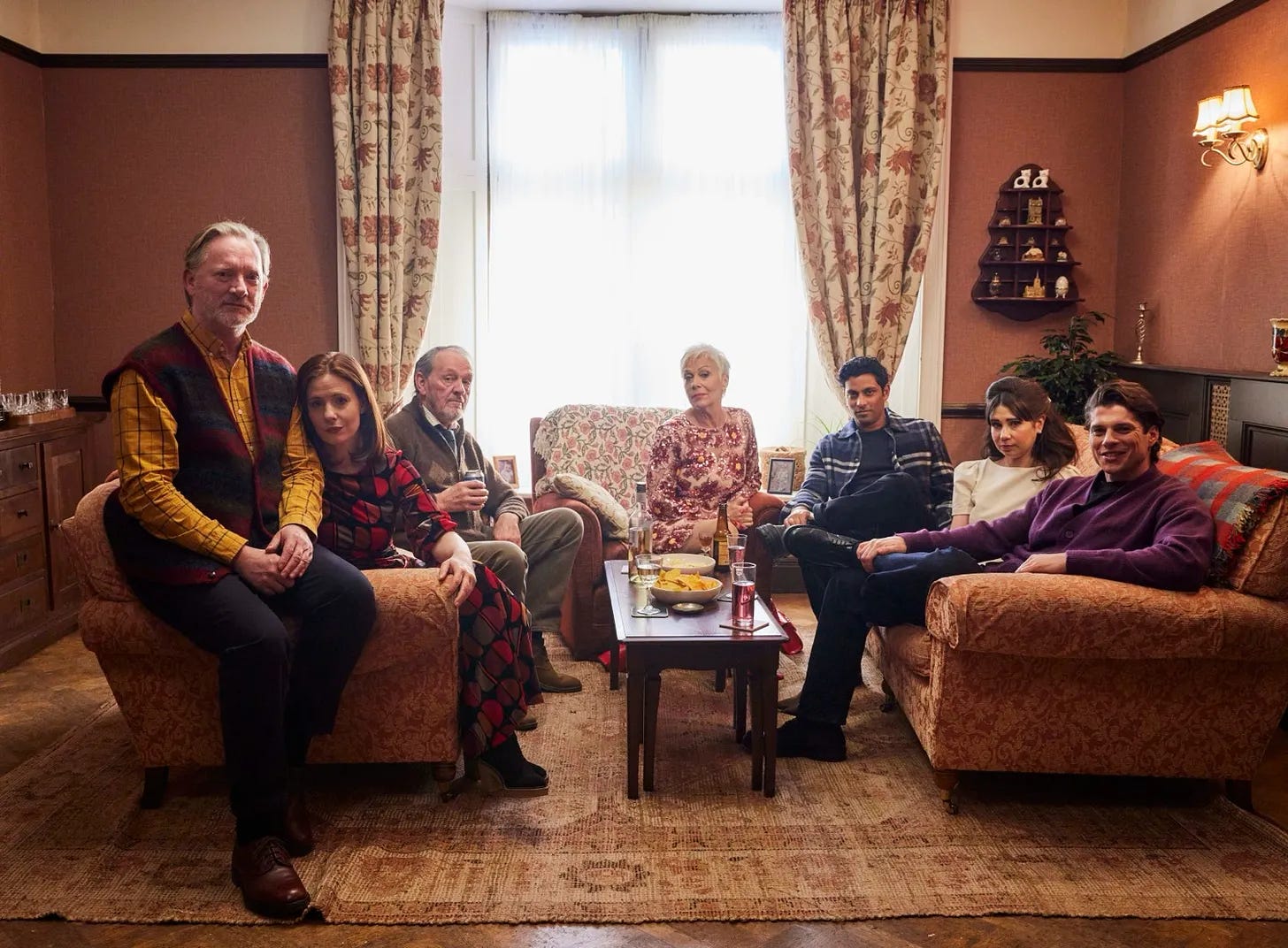
Forever Home is available to stream on Channel 5.