


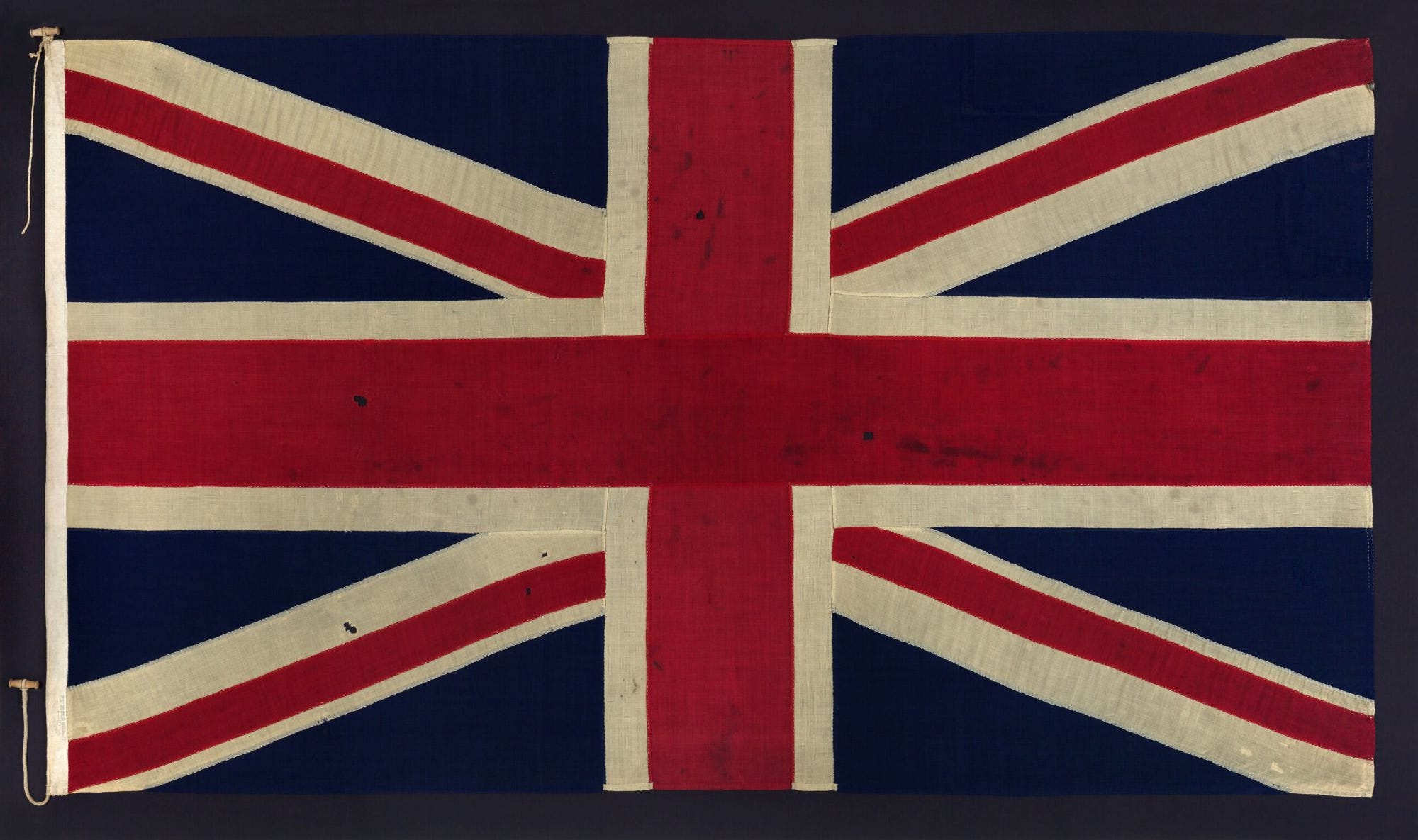
North East Museums has entered the fray to secure a famous battle flag for the region – the Union Flag which fluttered from HMS Royal Sovereign, flagship of Vice-Admiral Cuthbert Collingwood at the Battle of Trafalgar.
The battle-scarred relic of the Napoleonic Wars came up for sale last year but the Government imposed an export bar to allow time for a UK purchaser to be found.
Potential purchasers of the historic flag, valued at £450,000, had until Monday, March 16 to put in an expression of interest, which North East Museums has done.
The flag is of particular interest here because Vice-Admiral Cuthbert Collingwood, Nelson’s second-in-command at Trafalgar, was born in Newcastle on September 17, 1748, and later made his home in Morpeth.
When Nelson was killed aboard HMS Victory in the encounter between the British and larger combined Spanish and French fleet on October 21, 1805, Collingwood, aboard HMS Royal Sovereign, assumed command and secured the famous victory.
The battle, off Cape Trafalgar, on the south west coast of Spain, saw Nelson dashingly deploy unorthodox tactics, ordering his fleet to charge headlong to split the enemy fleet in two.
His plan worked to perfection, although he paid the ultimate price at the age of 47 and subsequently became a national hero, a figure atop Nelson’s Column in London’s Trafalgar Square.
But the older and less showy Collingwood (who died in 1810, aged 61) was also key to the victory, his crew aboard HMS Royal Sovereign including many from the North East, gaining them the nickname ‘Tars of the Tyne’.
It is estimated more than 500 North East sailors were in Nelson’s battle fleet at Trafalgar.
Collingwood is remembered by the towering Collingwood Memorial at Tynemouth, with its four guns from HMS Royal Sovereign, and a statue in St Nicholas’ Cathedral, near to the Newcastle street named after him and also to his birthplace, marked by a plaque on Milburn House.
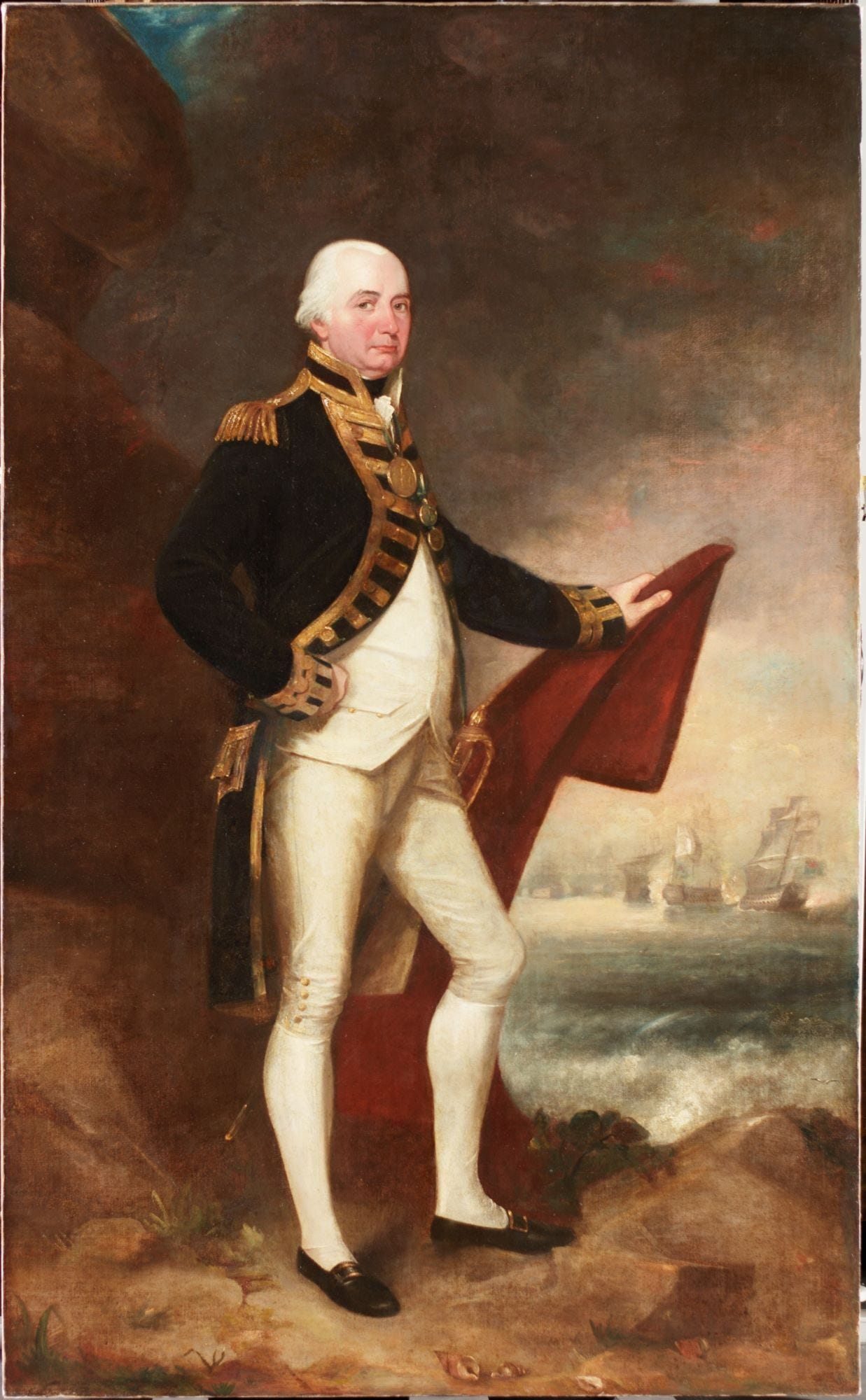
His telescope and a portrait by James Lonsdale are already in the North East Museums collection.
When the export bar was imposed, it was reported that the flag was believed to have been made and maintained by sailors aboard HMS Royal Sovereign, making it unique.
Measuring about 1.5 by 2.7 metres, it is made from hand-stitched wool bunting with a weighted edge and has splinter tears and gunpowder stains.
After the battle it was kept as a souvenir by 17-year-old Charles Aubrey Antram (1788 to 1831), one of four master’s mates aboard the vessel, and was then passed down through his family before being sold to a private collection.
Culture minister Baroness Twycross said: “Few symbols in our country are as evocative as the Union Flag, and this flag in particular is an extraordinary representation of Britain’s history and national identity.
“This flag was made by ordinary Britons and now epitomises a defining moment in our national history. I hope this profoundly important historical artefact can remain in Britain for the public to enjoy.”
Keith Merrin, director of North East Museums, said: “We hope to secure this rare and historically significant flag to ensure it remains in the UK and to display it in Newcastle as it is not only an important artefact in British history but it has notable connections with North East England.
“We would like to make Discovery Museum in Newcastle its permanent home, where it would become a star exhibit enjoyed by hundreds of thousands of visitors each year.”
North East Mayor Kim McGuinness backed the bid, saying: “Admiral Collingwood has a unique place in our maritime and military history. In fact, it is not too much to say he has a place in the hearts of quite a few North East people.
“The statue of Collingwood towering over the mouth of the Tyne is one of our best-loved local landmarks, so it is exciting to think that the union flag that flew from the Royal Sovereign at Trafalgar may soon be coming home to the North East where it belongs.”
Tom Holland, who presents the podcast The Rest is History, has also offered supportive words, saying: “Second only to his great friend Horatio Nelson, Cuthbert Collingwood is the best loved figure in Britain’s maritime history.
“It is in his native Northumbria, however, that his memory is especially cherished.
“Monuments to this heroic man are to be found across the North East: the oaks which he himself planted above what today is St Cuthbert’s Way, the profoundly moving memorial to him in St Nicholas’ Cathedral, his colossal statue at Tynemouth…
“What more fitting home for the flag he flew so boldly at Trafalgar, then, than Newcastle, a city which remains so rightly proud of her famous son?”
If North East Museums’ expression of interest is successful, acquisition of the flag will be funded by a donation secured from a charitable foundation.