


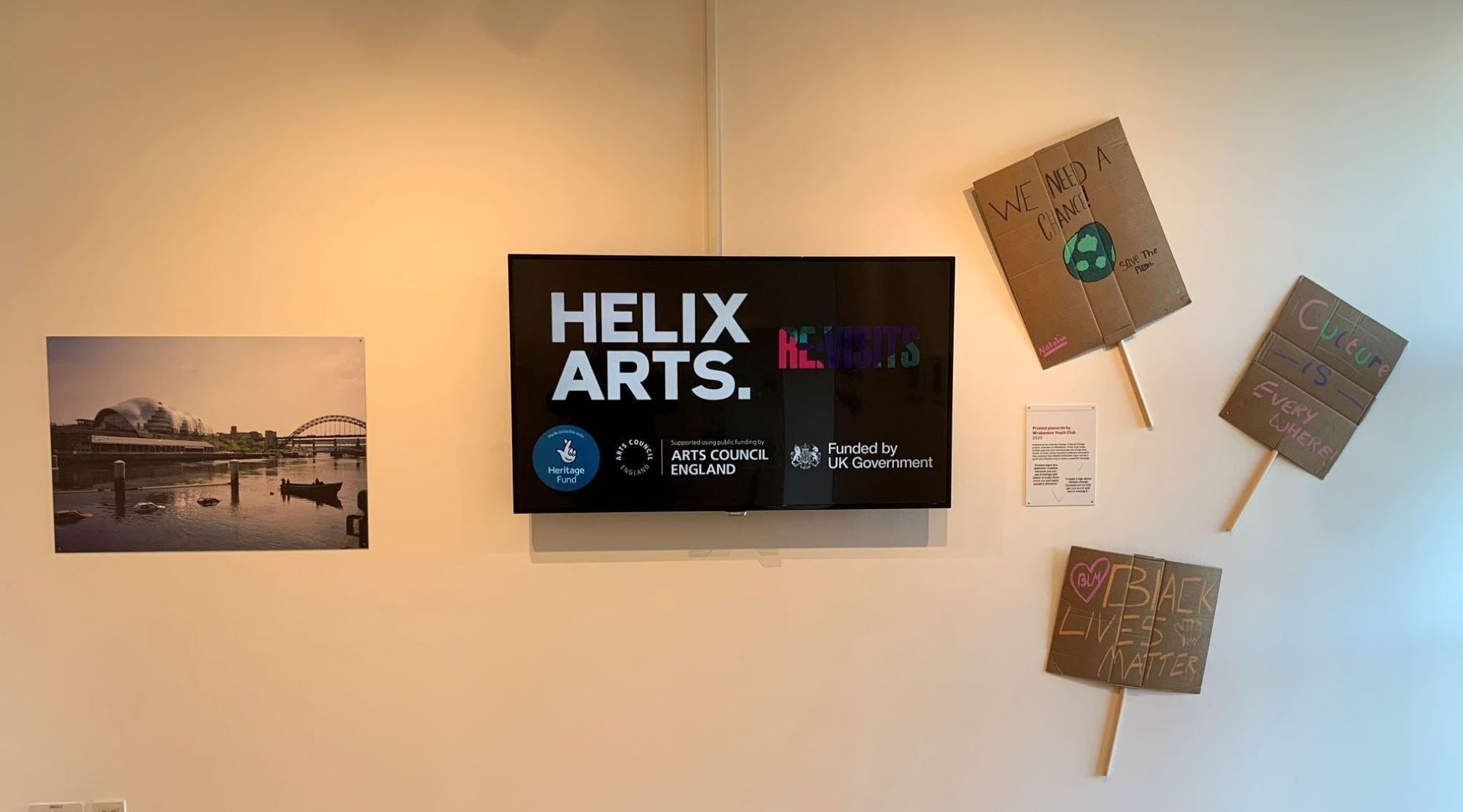
An exhibition at Gateshead Central Library is a reminder of the benefits art can bring to a community and of the work done in the borough by Helix Arts over more than 40 years.
It is called Our Story: Gateshead and it’s a jolly and optimistic affair, typical of the sort of stuff Helix Arts does across the region.
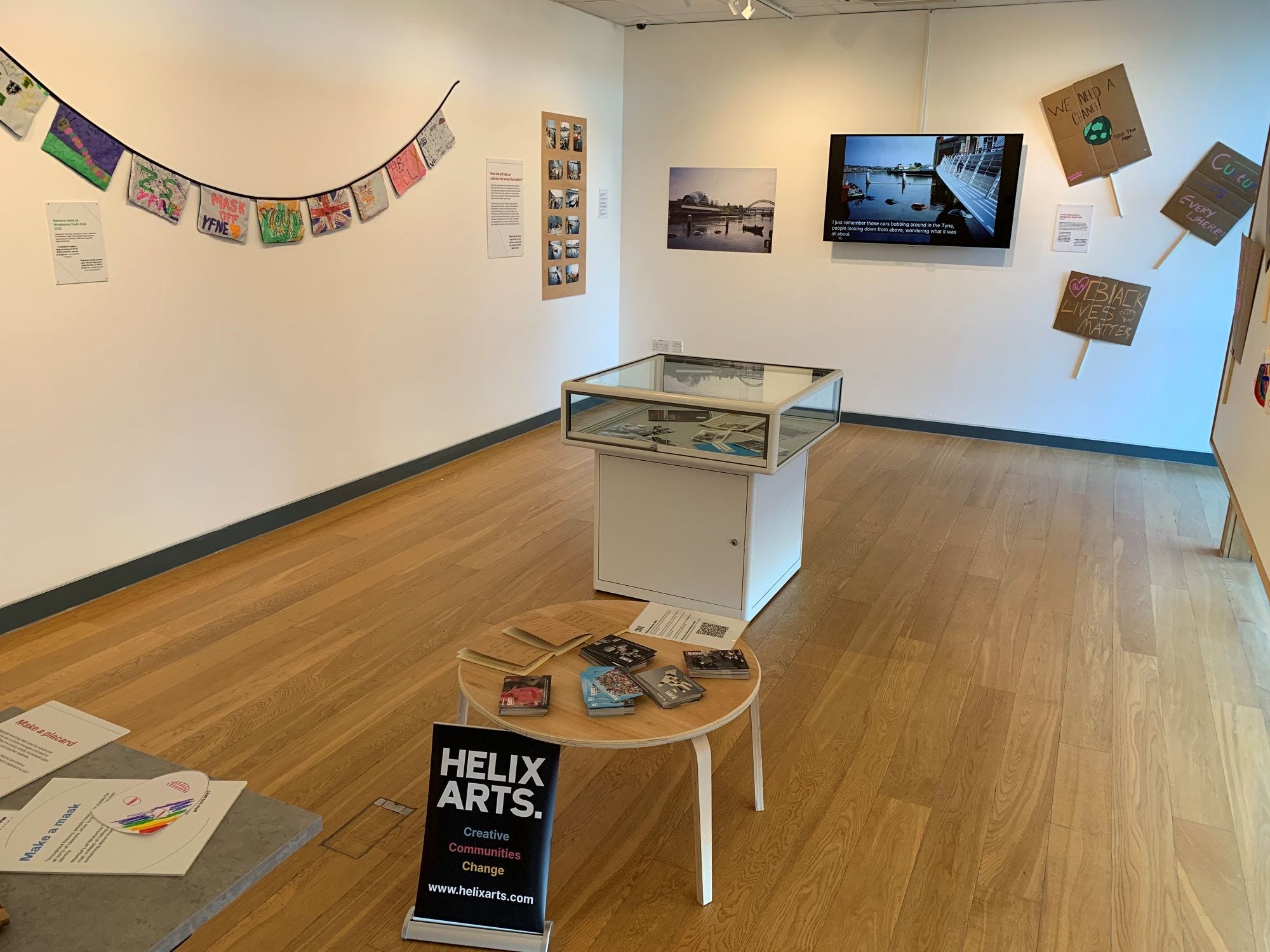
With banners, masks and placards on display, there’s ample evidence of people being encouraged to have a go… and enjoying it.
And if it’s jogging the memories of some who got involved, it seems to have done the same for those who have worked at and with Helix Arts.
The exhibition is part of the arts charity’s Re:Visits programme which is funded by the National Lottery Heritage Fund.
According to director Cheryl Gavin, it “has been a journey to remind ourselves of our rich past and how it informs our work today.
“This exciting project continues as we archive our recent work and build our heritage into our future programme.”
Postcards in the gallery suggest Re:Visits was conceived to mark the charity’s 40th anniversary but that landmark came three years ago.
It was in 1983 that the late Lucy Fairley (Milton as she then was) established The Artist Agency, bringing together artists from different disciplines to address social and environmental problems.
Lucy, initially based in Sunderland, was joined by Esther Salamon – sadly, also no longer with us – in 1987 and two years later their groundbreaking venture attained charitable status.
The name change to Helix Arts came with the new millennium, since when it has become renowned for connecting artists with diverse and often disadvantaged communities.
“Amplifying the voices of those who were seldom heard” has always been a fundamental aim, according to the website.
The projects recalled in the Gateshead exhibition were designed to help people to express themselves, build their communities and talk about issues that mattered to them.
It includes photos never previously displayed in public along with audio and video material from a capacious and swelling archive.
For Stephen Pritchard, deputy director of Helix Arts, vivid memories were stirred by a project called Climate Change, Cultural Change which came to fruition – eventually – on the River Tyne in 2006.
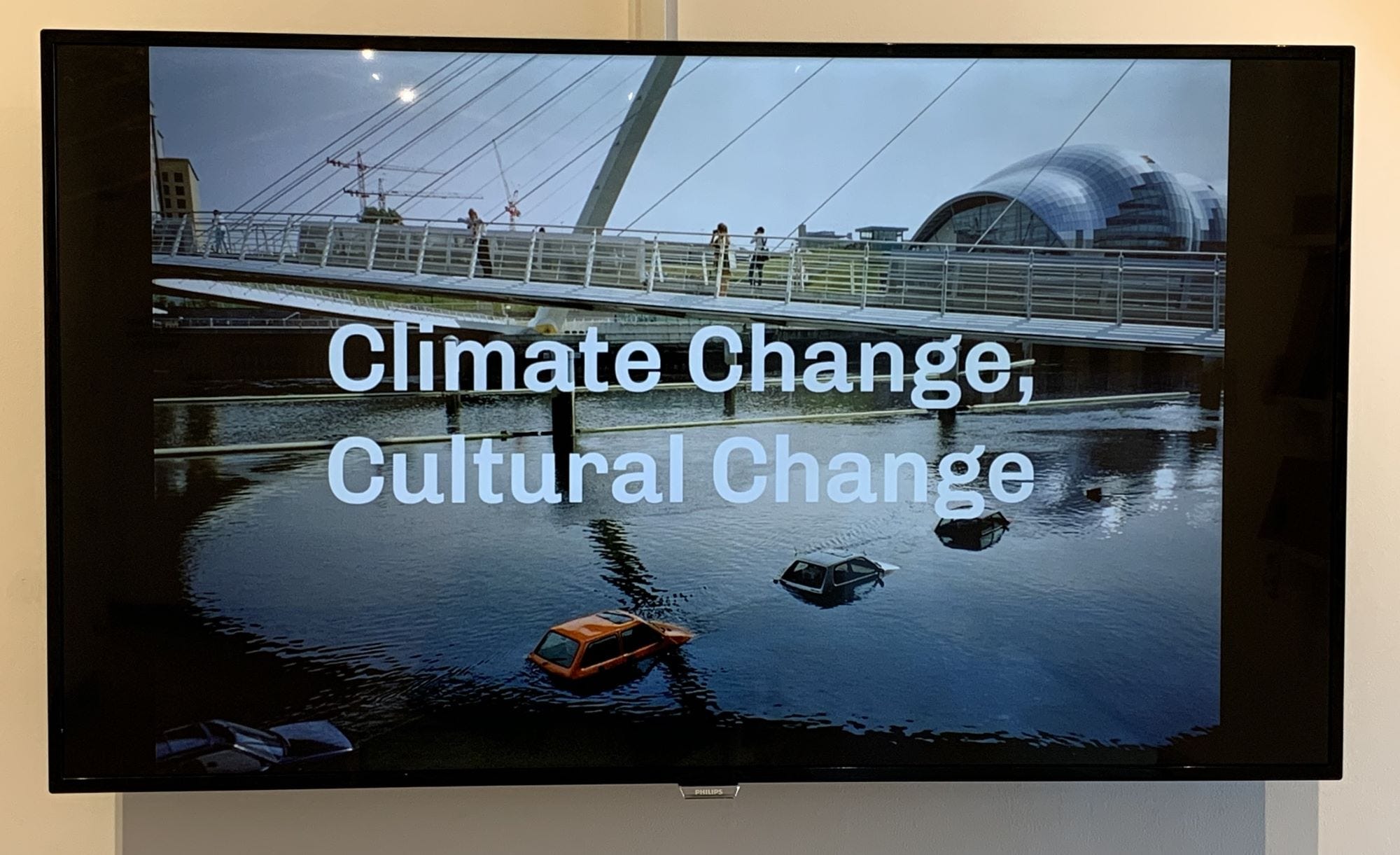
In particular, there was Michael Pinsky’s artwork, Come Hell or High Water, which was envisaged as a convoy of six semi-submerged cars on the River Tyne near the Gateshead Millennium Bridge.
It was conceived as a comment on rising water levels and traffic congestion and timed to coincide with a major conference, the World Summit on Arts & Culture, hosted by what was then being styled NewcastleGateshead.
Stephen, then a student, recalls volunteering to help prepare the cars, selected from a local scrapyard, for their artistic role during one of the warmest summers on record.
The rewards, it seems, outweighed the discomforts for it set him on track for doing the kind of work he does today with Helix Arts.
Come the big day back in 2006, the tide on the river was so strong that some of the cars were overturned, meaning they had to be removed and re-engineered ahead of a second – this time successful – launch.
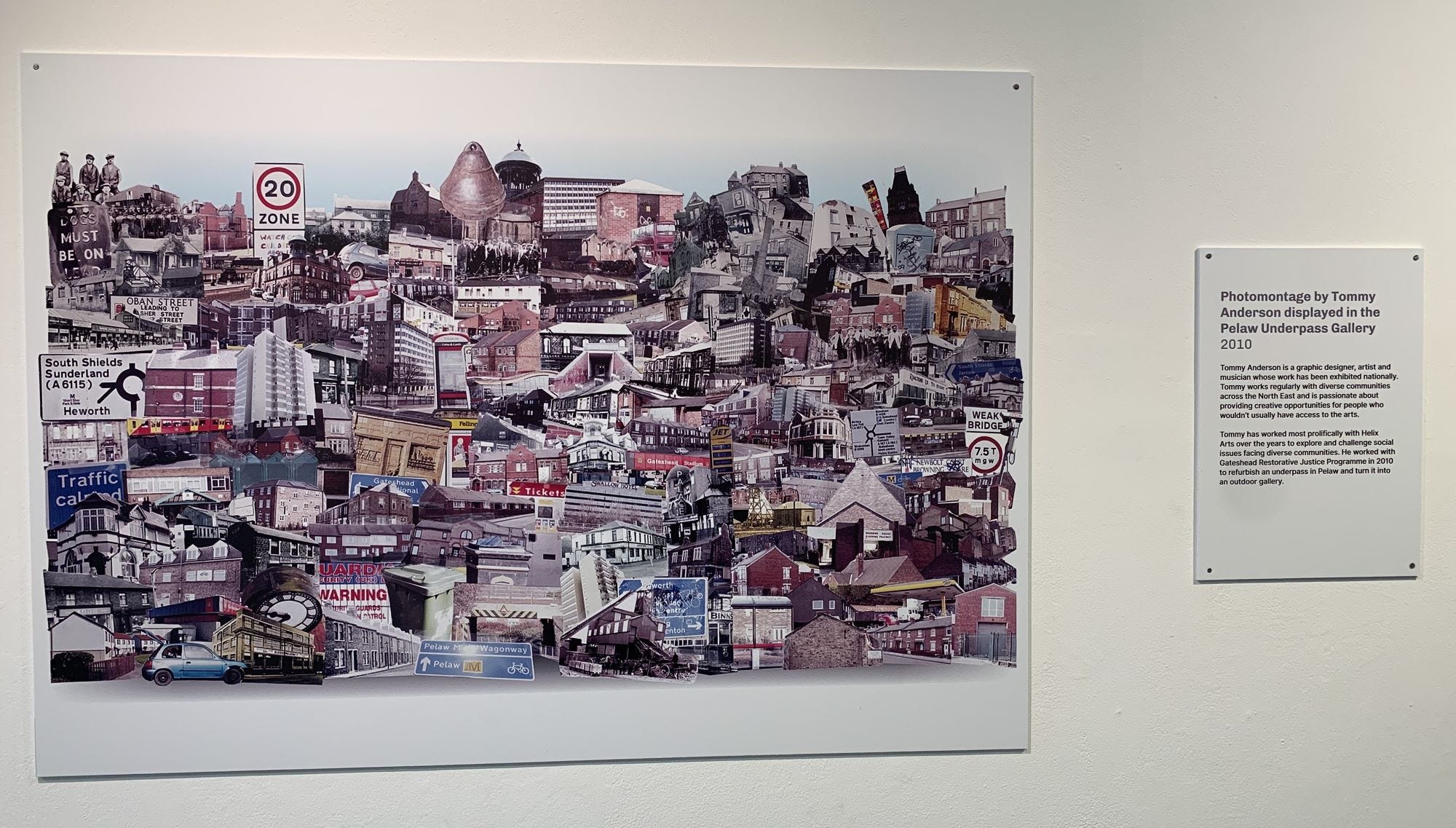
The exhibition also recalls a 2010 project involving artist Tommy Anderson and others in which a former railway tunnel, by then neglected and rundown, was turned into an outdoor art gallery.
It was opened with a parade and a musical performance – and photos recalling the project are displayed alongside a historic engineer’s drawing of the underpass which informed those designing the gallery.
The underpass, linking Pelaw and Ouston, had been part of a waggonway used to transport coal from local mines to the Tyne.
Also recalled in the exhibition is the organisation’s very first project involving school groups in Wrekenton in 1983.
Photographs by Keith Pattison show artist Christine Butler, who had a studio at the library, working with some of the children.
Back then they made masks and were encouraged to think about how they were seen by others and how they wanted to be seen.
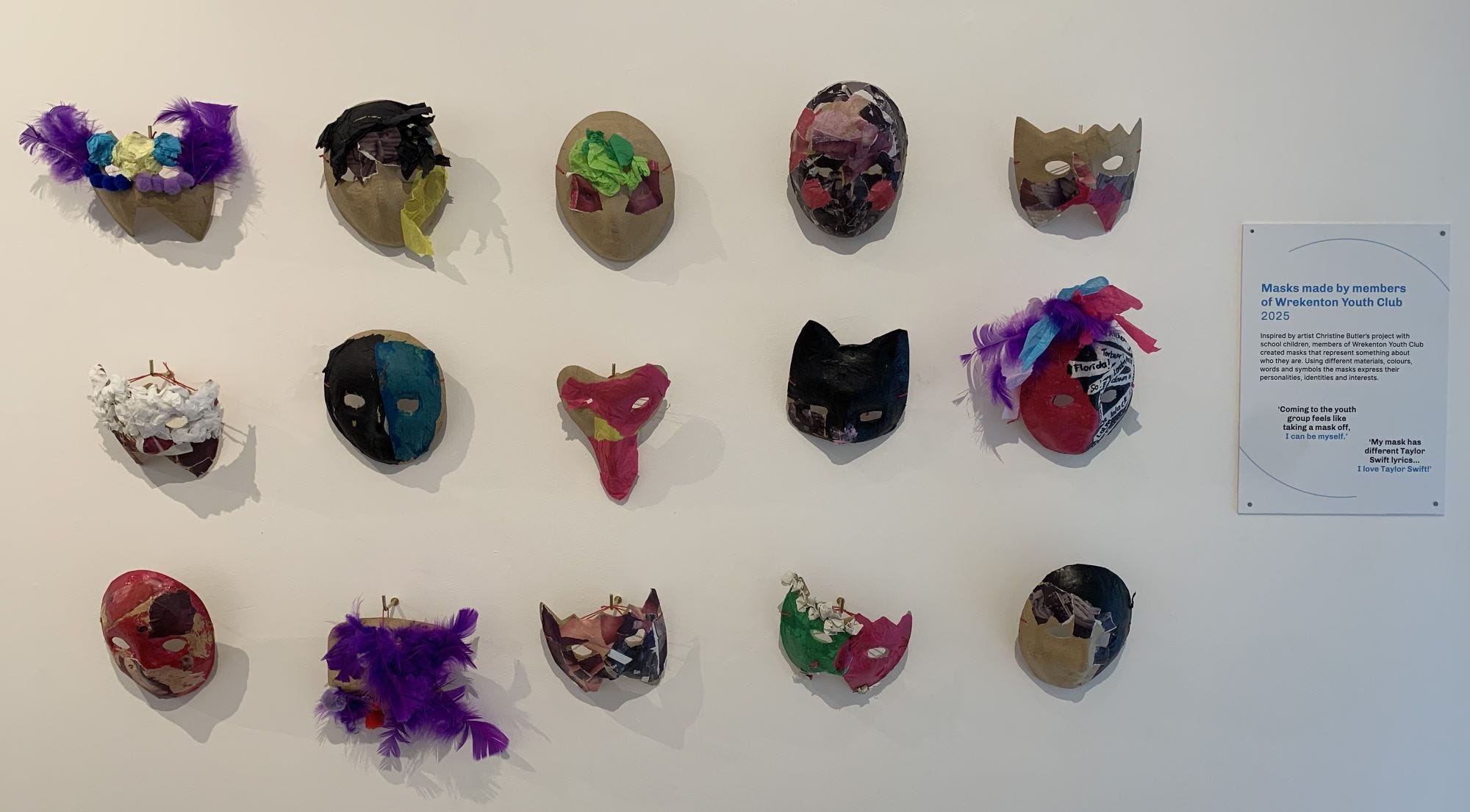
In a clear example of past projects inspiring new work, the masks we see today were made just last year by members of Wrekenton Youth Club who worked with artist Liv Hunt.
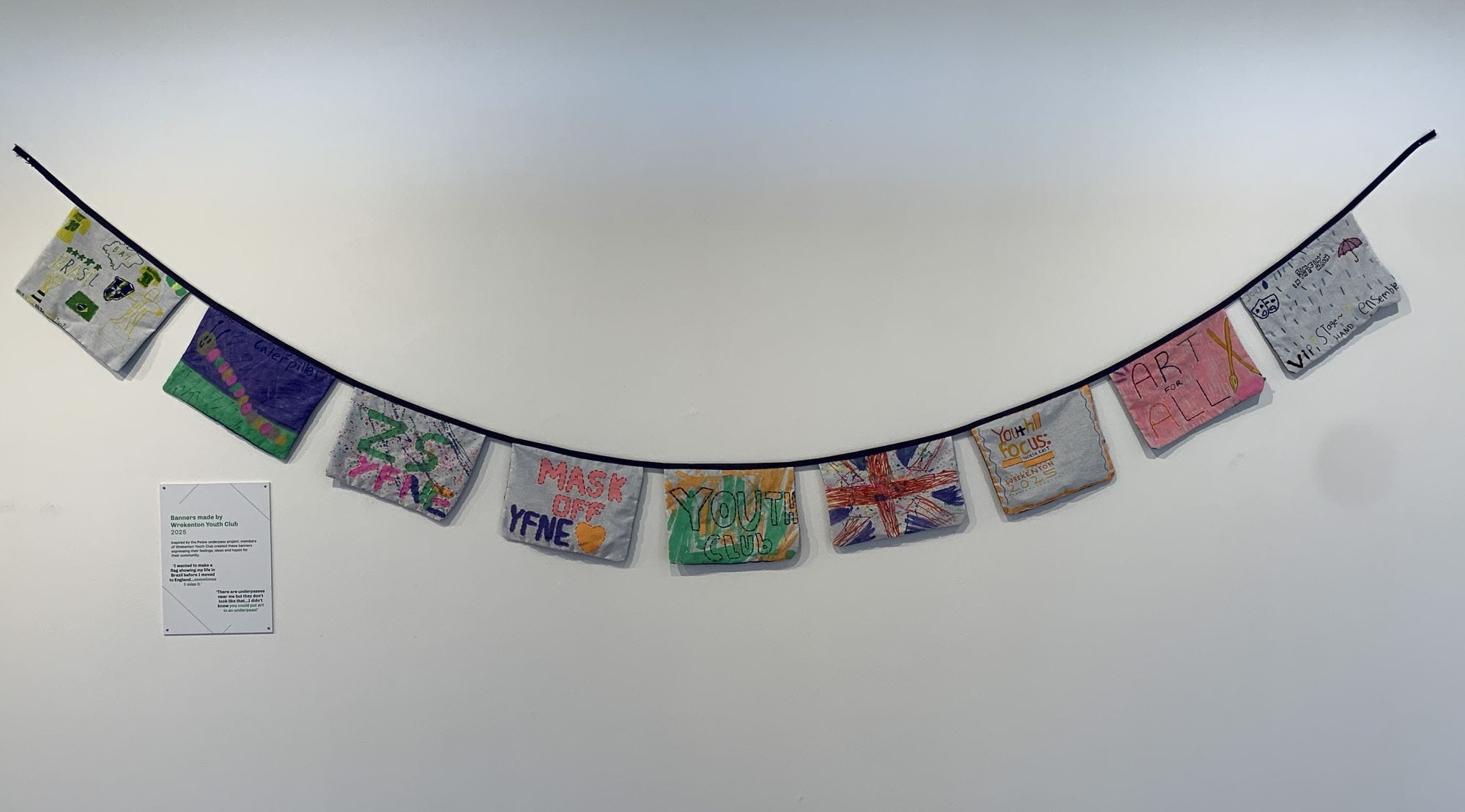
The youngsters also made banners inspired by the underpass project on which they were invited to express their feelings, ideas and hopes for their community.
Upstairs – for the exhibition is spread over two floors – you can see a film of Liv talking enthusiastically about her Helix Arts involvement with similar contributions from fellow artist Chris Folwell and animator Sheryl Jenkins.
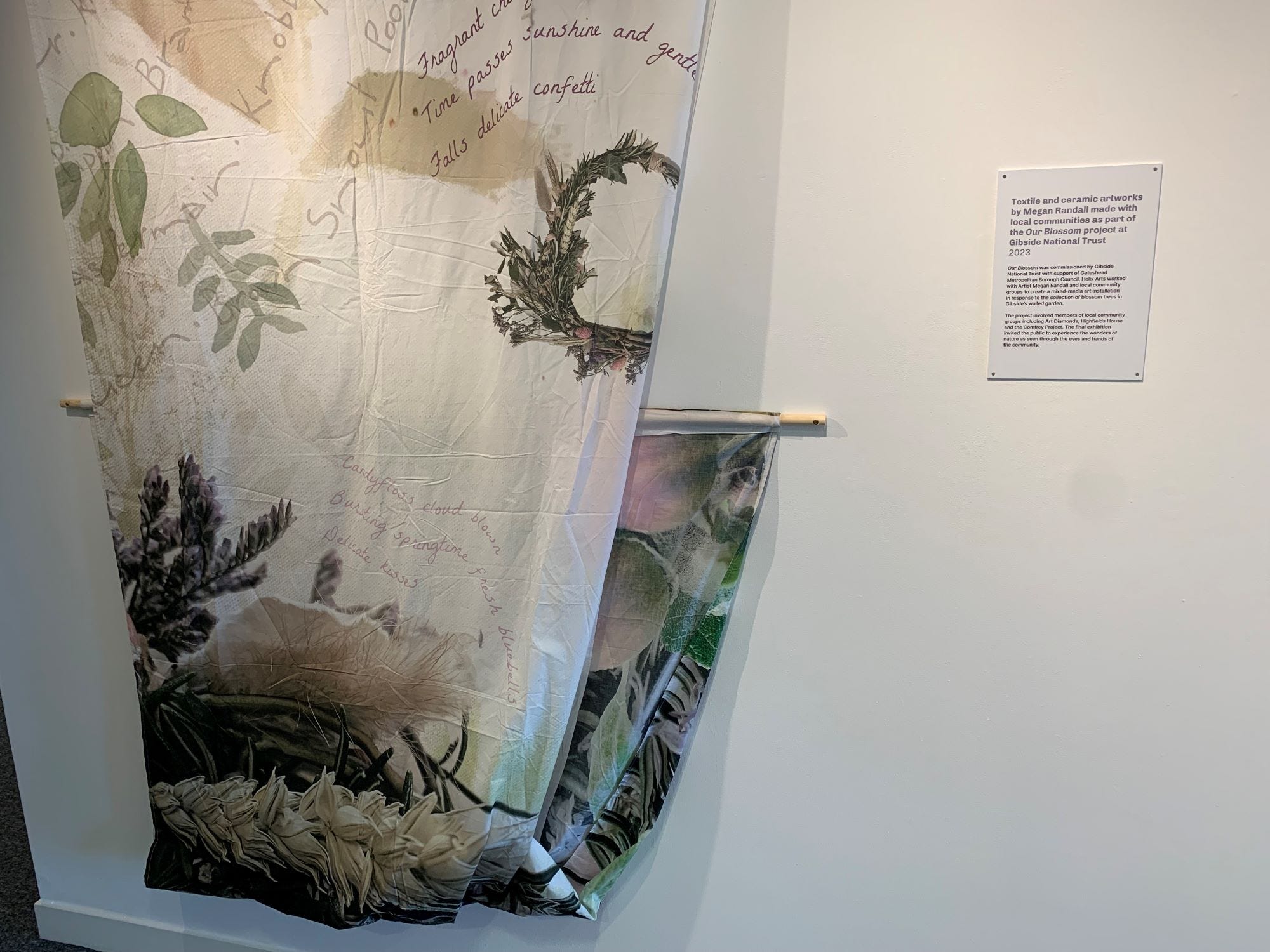
Opposite, billowing in a draught on the day I visited, is Our Blossom, an eye-catching textile creation by Megan Randall who worked with community groups on a Helix Arts project at Gibside, the National Trust property, in 2023.
Memories are also sparked of a 2016 Helix Arts project called Telling Tales – part of its long-running Make It Happen programme – which saw artist Effie Burns and community volunteers working with elderly people in Birtley.
“They collected memories, photos and objects and experimented with different artforms to share these creatively,” states the caption.
“By recognising the importance of their individual stories the project celebrated the lives of the participants and revealed the tales they have to tell.”
Helix Arts, based these days in North Shields, is still going strong, which is good because the appetite and need for its work are as keen and urgent as ever.
Our Story: Gateshead can be seen at Gateshead Central Library, Prince Consort Road, until April 18.