

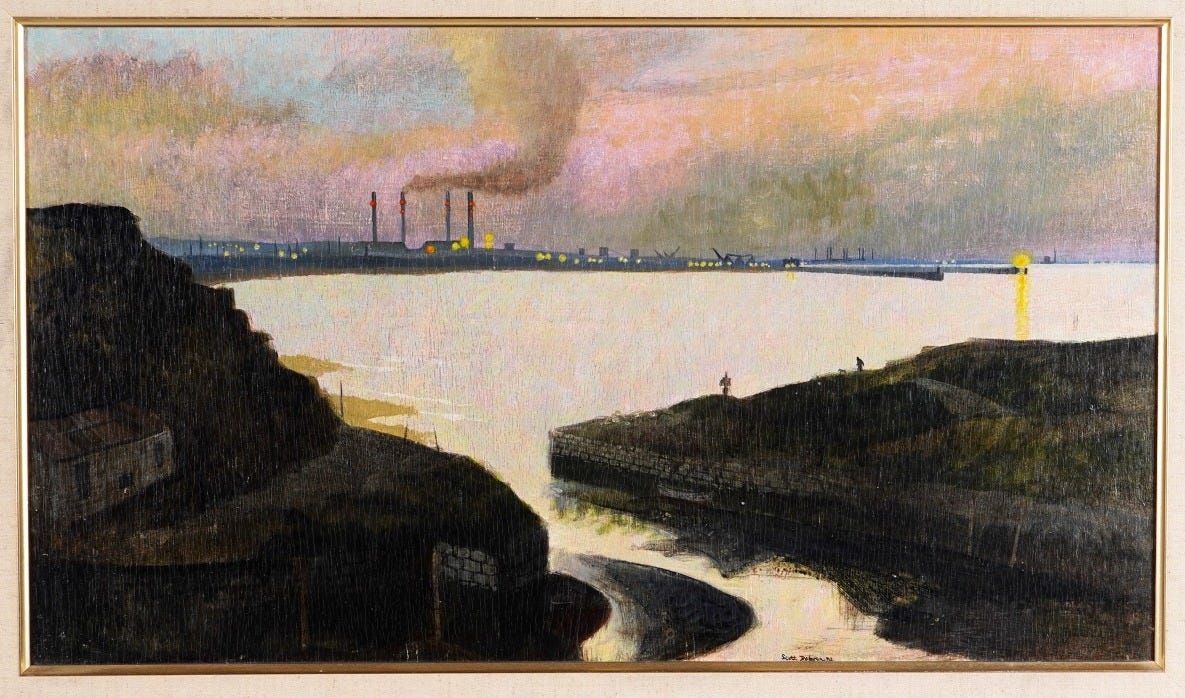
Geordie translator Scott Dobson wrote a string of books celebrating North East life and dialect, but he was also a gifted artist and cartoonist.
Now one of his paintings, a 1974 study of Blyth Power Station in the town where he was born in 1918, is up for auction with an estimate of £300-£500 at Anderson & Garland’s Newcastle art sale on May 19.
He is described in Marshall Hall’s definitive The Artists of Northumbria volume as “one of the most colourful and best known artists of Northumbria of the mid-20th century, an outspoken art critic and energetic gallery owner”.
He attended Rutherford School and studied art at Armstrong College in Newcastle, and served in the army in France and India during the Second World War. After being demobilised, he trained as a teacher, teaching art at a number of schools including St Aloysius in Newcastle.
He was also involved with two art galleries in Newcastle in the 1960s - the Westgate Gallery, which he founded, and the Side Gallery - and was arts critic for the Evening Chronicle.
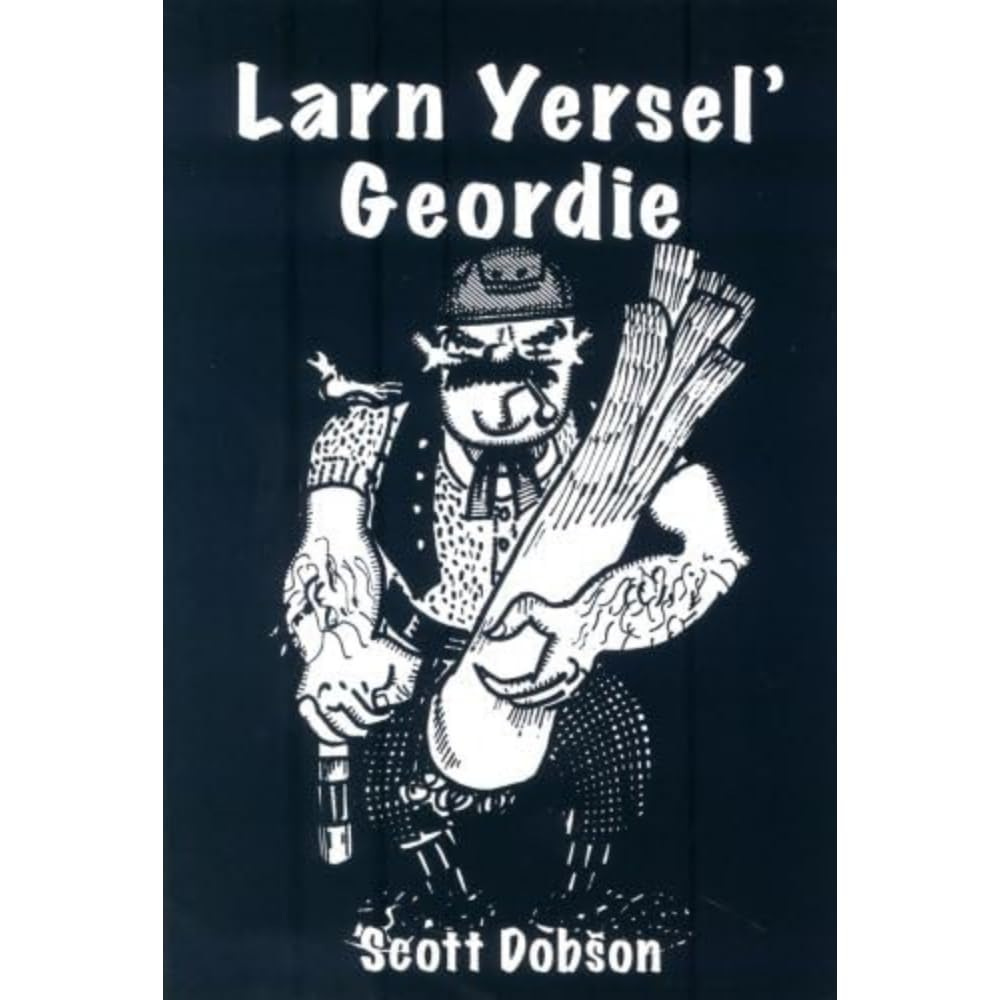
Then he embarked on a prolific run of Geordie books, when in 1969 he wrote and illustrated Larn Yersel Geordie.
This was followed by Hist’ry o’ the Geordies (1970); Advanced Geordie Palaver (1970); Hadrian and the Geordie Waall; Stotty Cake Row (1971); Supergeordie (1971); Auld Geordie’s Almanack (1972); Geordie at the Match (with Len Shackleton); A Light Hearted Guide to Geordieland (1973); New Geordie Dictionary (1974); The Geordie Joke Book (with Dick Irwin) (1970); The Geordie Bible and Geordie on the Beer.
His material was part of the BBC radio programme Geordierama, and later an annual stage show as a feature of the Newcastle Festival, which presented songs and sketches mainly in dialect and featured Mike Neville, George House and guests including Bobby Thompson and Dick Irwin.
In retirement he divided his time between his home in South Shields and the Maltese island of Gozo, where he died in 1986 and is buried in the cemetery.
His headstone is inscribed: “Gan Canny.”