

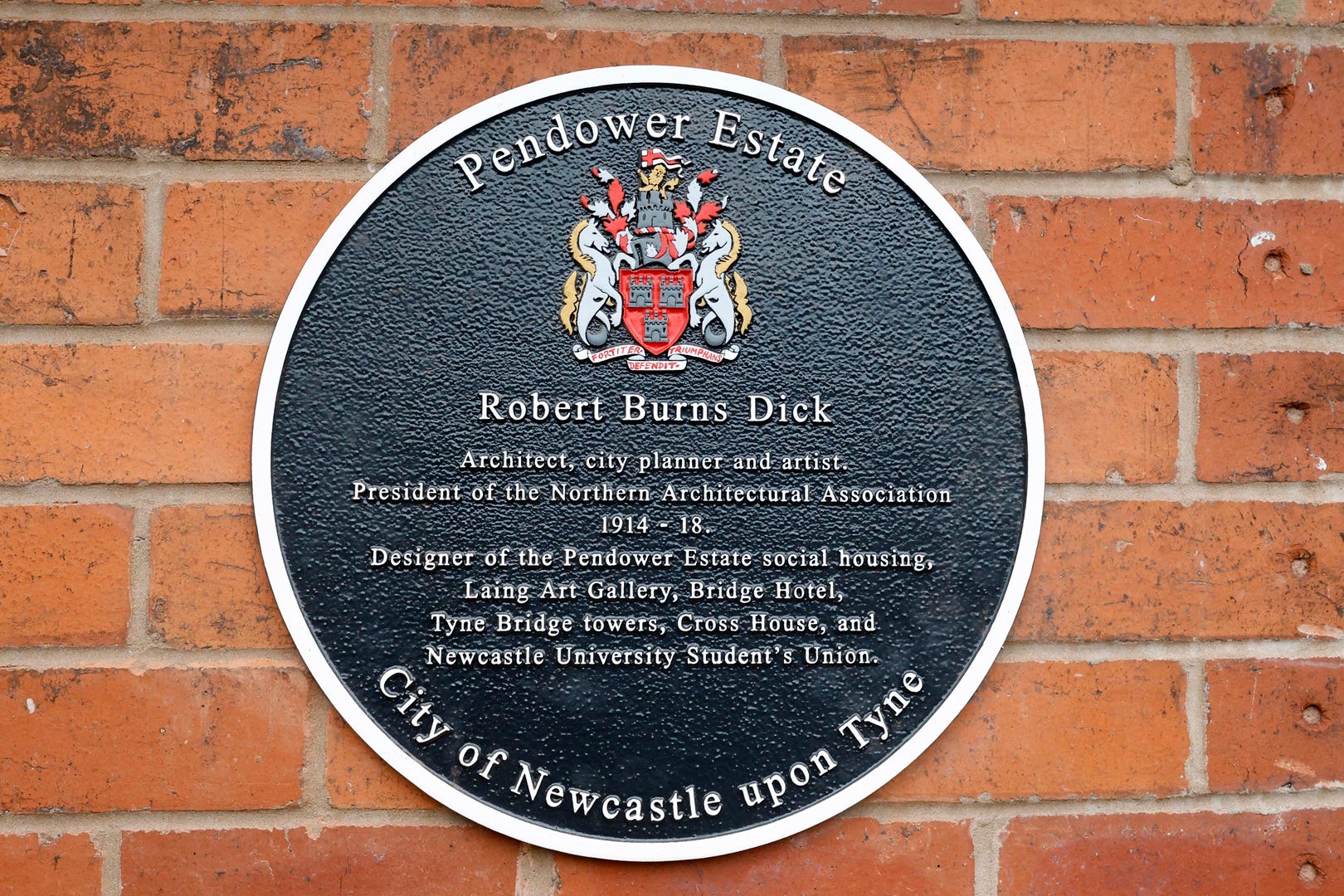
He was an architect with monumental plans for Newcastle and who designed a sweep of prominent buildings and structures on Tyneside.
Robert Burns Dick, who has just been honoured with a plaque, certainly left his mark with creations ranging from the Spanish City at Whitley Bay and Berwick police station to the Laing Art Gallery in Newcastle.
But his legacy could have been even greater if two of his most ambitious schemes had come to fruition.
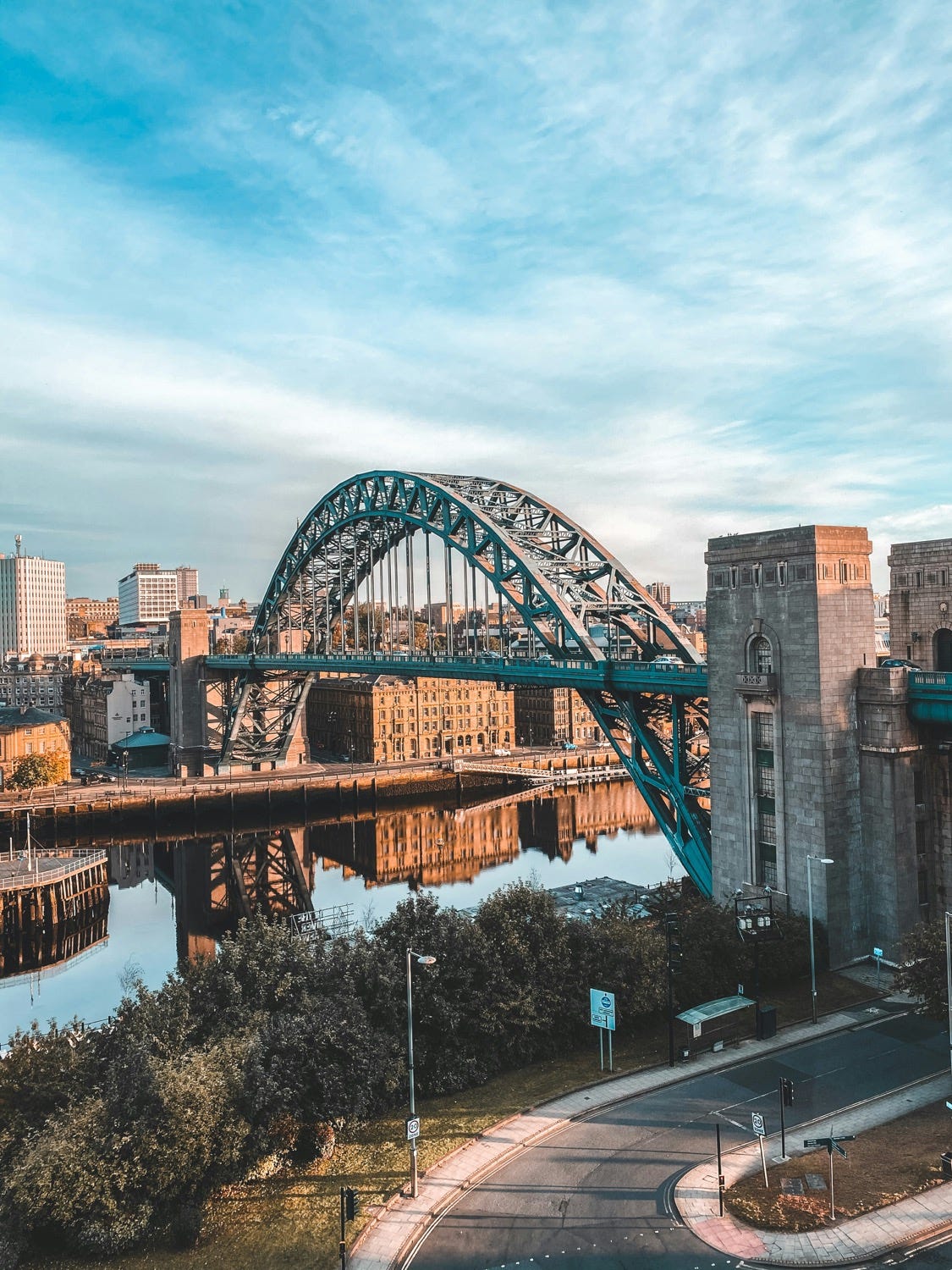
He envisaged a grand entrance into Newcastle for people and traffic arriving via the then new Tyne Bridge.
Having designed the towers of the bridge, he cast his eyes towards the foot of Pilgrim Street, with a vision for a gigantic triumphal entrance arch complex which doubled as a civic centre.
This was no pie in the sky dreaming from an architect whose work includes the Pilgrim Street Fire Station, Market Street police station and courts, and the neo-Jacobean students’ union building gateway to Newcastle University.
He was a fellow of the Royal Institute of British Architects and a president of the Northern Architectural Association.
However, because of financial restraints, the arch was never built.


Undeterred, Robert turned his gaze to Exhibition Park as the site for grandiose plans for a new Civic Centre, complete with tower, which would connect to Barras Bridge by a Parisian-style boulevard. But the outbreak of the Second World War put paid to that.
A newspaper remarked: “Could Mr Burns Dick have the opportunity of replanning Newcastle, the city might become a modern Athens or Rome.”
Robert, who worked in the Cackett, Burns Dick & McKellar practice, saw other schemes which did go ahead include the enlargement of the 1910 Northumberland County Council offices in Newcastle, which re-opened in 1934 and is now the Vermont Hotel, the Bridge Hotel opposite the Castle Keep, the 1911 Cross House near the Assembly Rooms on Westgate Road, Armstrong’s Naval Yard, and extension works at the A Reyrolle and Company factory in Hebburn.
In 1924 he was a founder member of the Newcastle upon Tyne Society to ‘Improve the Beauty, Health and Amenities of the City’. It advocated a green belt for Newcastle which included a string of parks and drew up a list of city centre historic buildings to save them from demolition or decay.
In 1929 it changed its name to the Northumberland and Newcastle Society, which has campaigned for the plaque.
After the war, Robert was involved in municipal housing and, influenced by the Garden City movement, he designed the Pendower council housing estate in Newcastle based on the layout of an English village with the density of 12 to 18 houses per acre rather than the usual 20.
The new plaque to Robert was unveiled on the headquarters of the Good Neighbour Project on Sunnybank Avenue in Pendower.
The Lord Mayor of Newcastle, Coun Henry Gallagher, who unveiled the plaque, said: “Robert Burns Dick made a considerable contribution to the architectural heritage of the city, the region and beyond.
“The buildings he designed are as much a part of our region today as they were when he first designed them. That is testimony to his greatness as an architect.”
Robert was a pupil of Newcastle Royal Grammar School. He went into a partnership with James T Cackett to form Cackett & Burns Dick in 1898.
Northumberland and Newcastle Society chairman John Matthews said: “I am delighted that we now have a plaque in Newcastle dedicated to Robert Burns Dick in recognition of his involvement in so many of the city’s historic buildings, which have stood the test of time and have been successfully repurposed for practical use in the 21st century.”
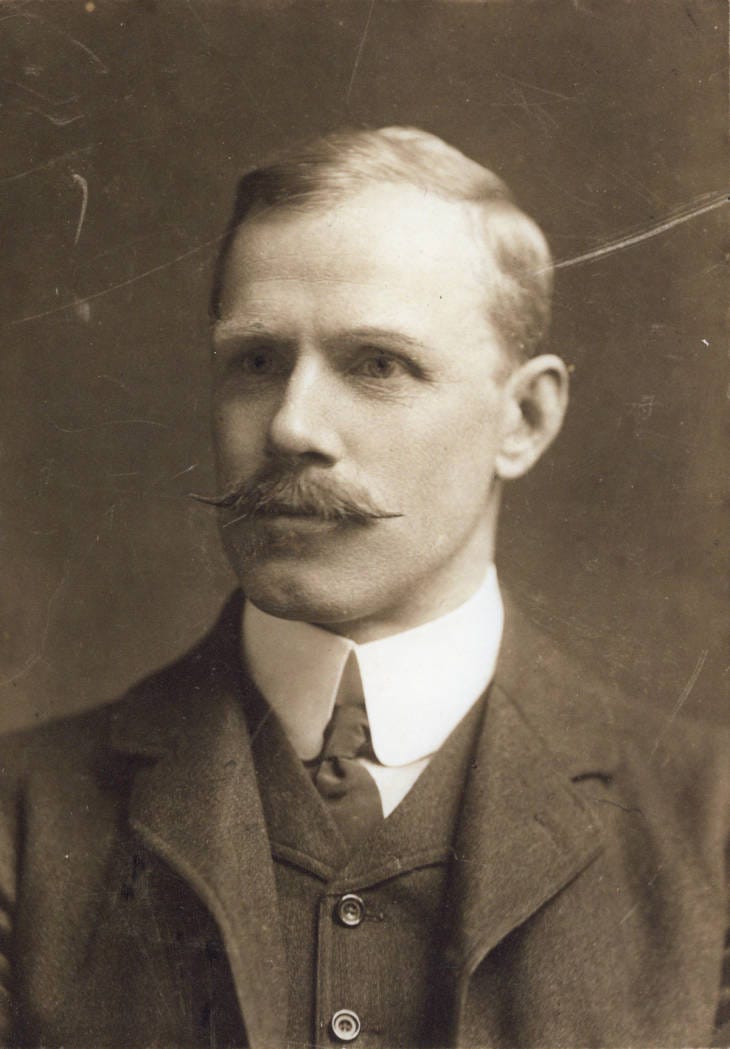
The proposal for the plaque was submitted by the Northern Architectural Association and president Neil Barker said: “He was a very talented man, and not just an architect of some repute but an artist and town planner.
“As early as 1925 he proposed a series of improvements to the layout of the city centre which he considered necessary to meet existing and future traffic problems.
“He himself was chauffeur driven to work in a Daimler, and architects would stand to attention at their drawing boards as he walked through the office.
“His legacy through architecture can be seen all around us in Newcastle and he thoroughly deserves this accolade.”
Robert died aged 86 and is buried in a grave with a modest headstone in Elswick cemetery.