

Living in the wilds on the Roman frontier in Northumberland meant you had to use your head if you wanted a new hat.
With a distinct lack of shopping centres, making use of resources on your doorstep was crucial, as one of the most remarkable discoveries from Vindolanda fort illustrates.
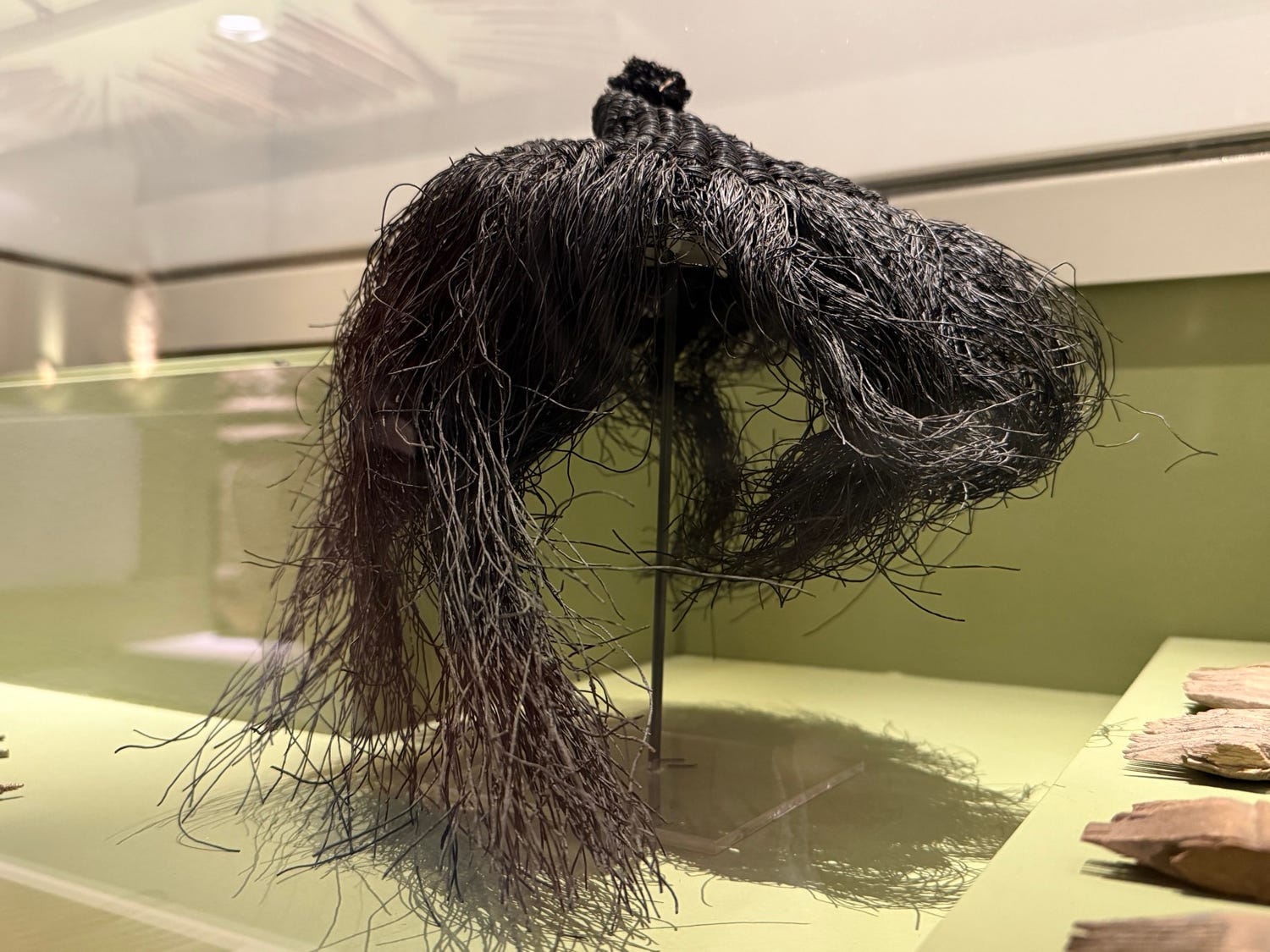
A local plant, Common Moss, was used to fashion headgear which is thought to be either a hat or a wig, featuring a complex woven cap from which long, loose strands fall at the sides and back, leaving the area of the face open.
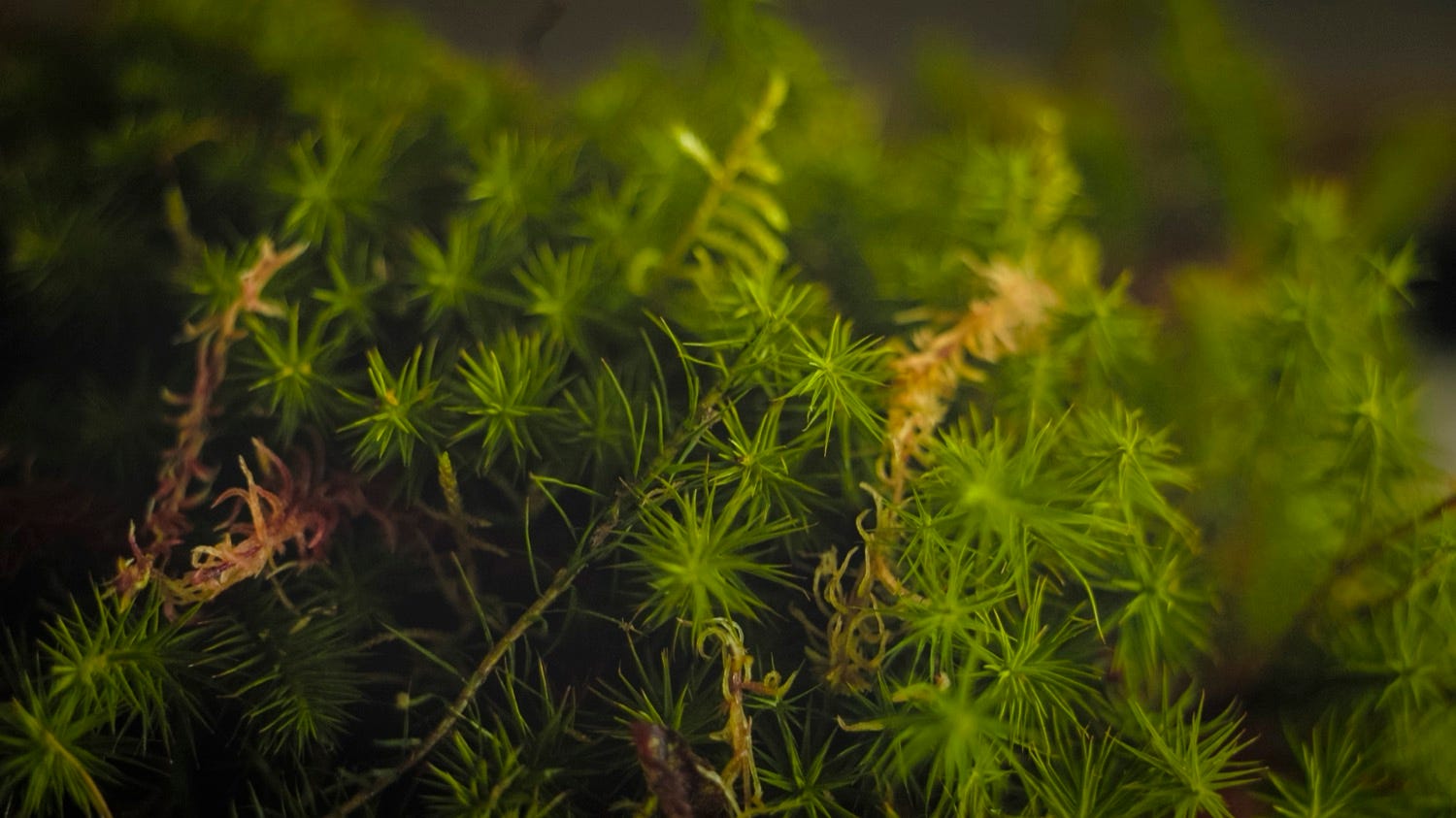
The moss (Polytrichum commune), with its strong, hair-like fibres, was ideally suited for use in different types of woven objects.
It is among Vindolanda’s collection of Roman textiles, which is the biggest in Western Europe and has been made available to fort artist-in-residence Susie MacMurray.
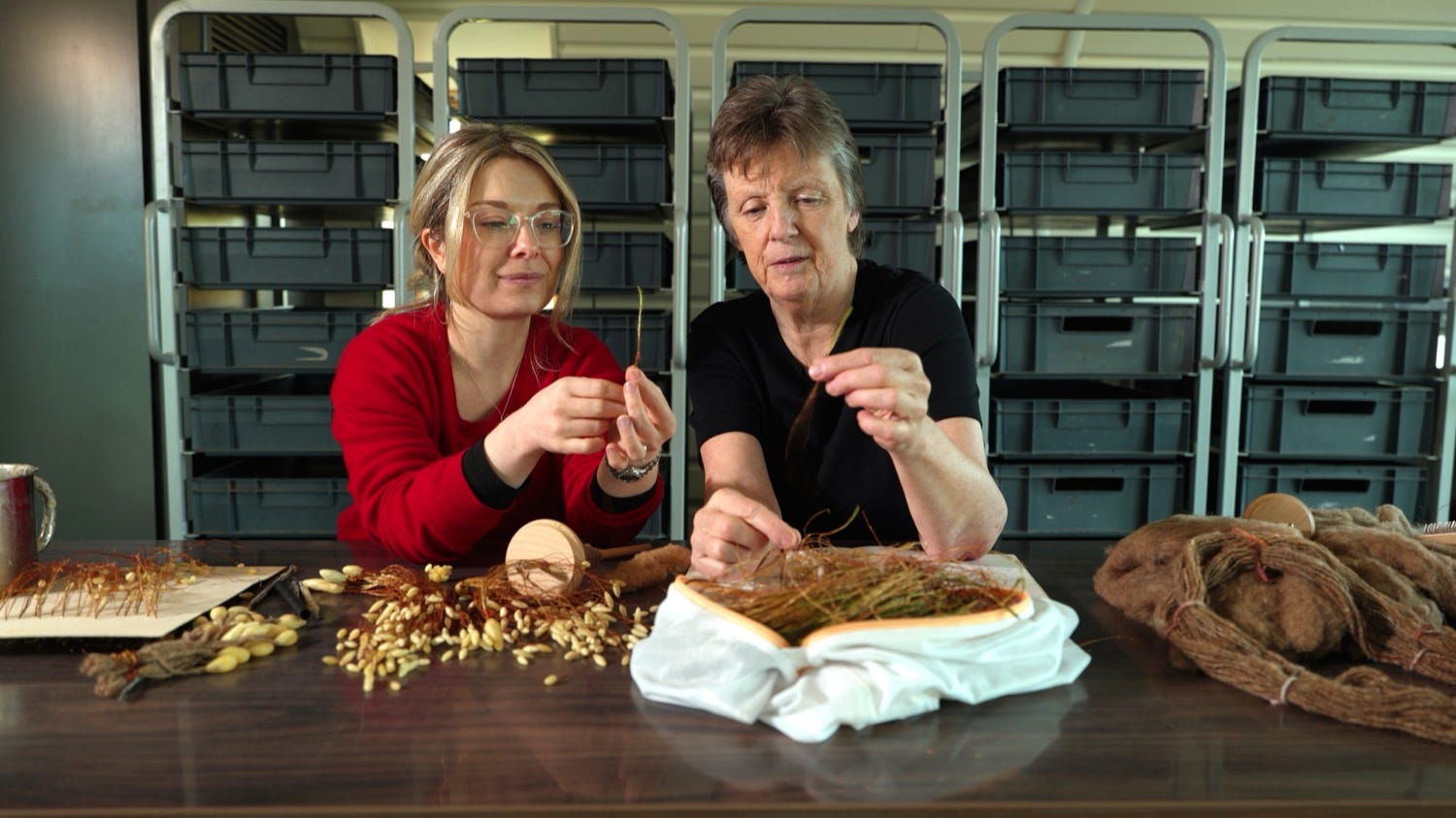
She has spent time with specialists, researchers and local makers, experimenting with materials and textile processing methods.
Susie will use this research to develop a contemporary artwork which will be exhibited in Vindolanda’s museum in the autumn/winter.
Susie’s work includes drawing, sculpture and architectural installations. A former classical musician, she retrained as an artist, establishing an international exhibition profile, showing regularly in the United States and Europe as well as the UK.
The Vindolanda textiles largely exploit the wool of northern sheep, and the collection includes tools in textile production.
Susie experimented with raw materials, including hair moss, Soay sheep wool and wax; employing and modifying ancient techniques to explore how the Romans may have processed these materials.
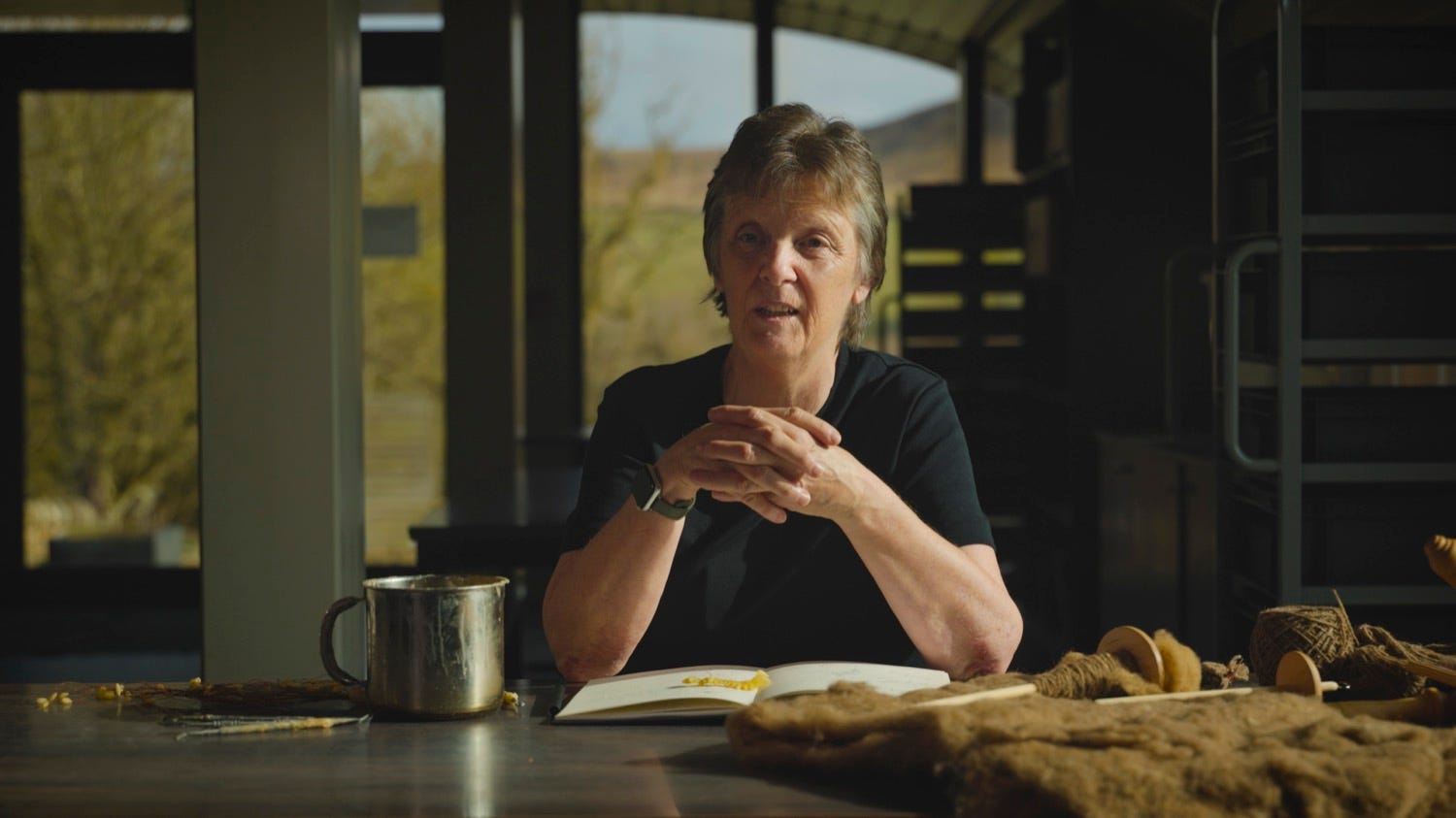
She said: “I am ultimately driven by curiosity and asking ‘what if?’. I am looking not only for new materials, but for new ways to handle, combine and manipulate the stuff that human bodies interact with.”
The Vindolanda Trust has also appointed Newcastle-based Mani Kambo as artist-in-residence at Magna Roman fort on Hadrian’s Wall.
Mani will collaborate with local community group Zigzag Days to create a temporary art installation for the fort to go on show from July–November.
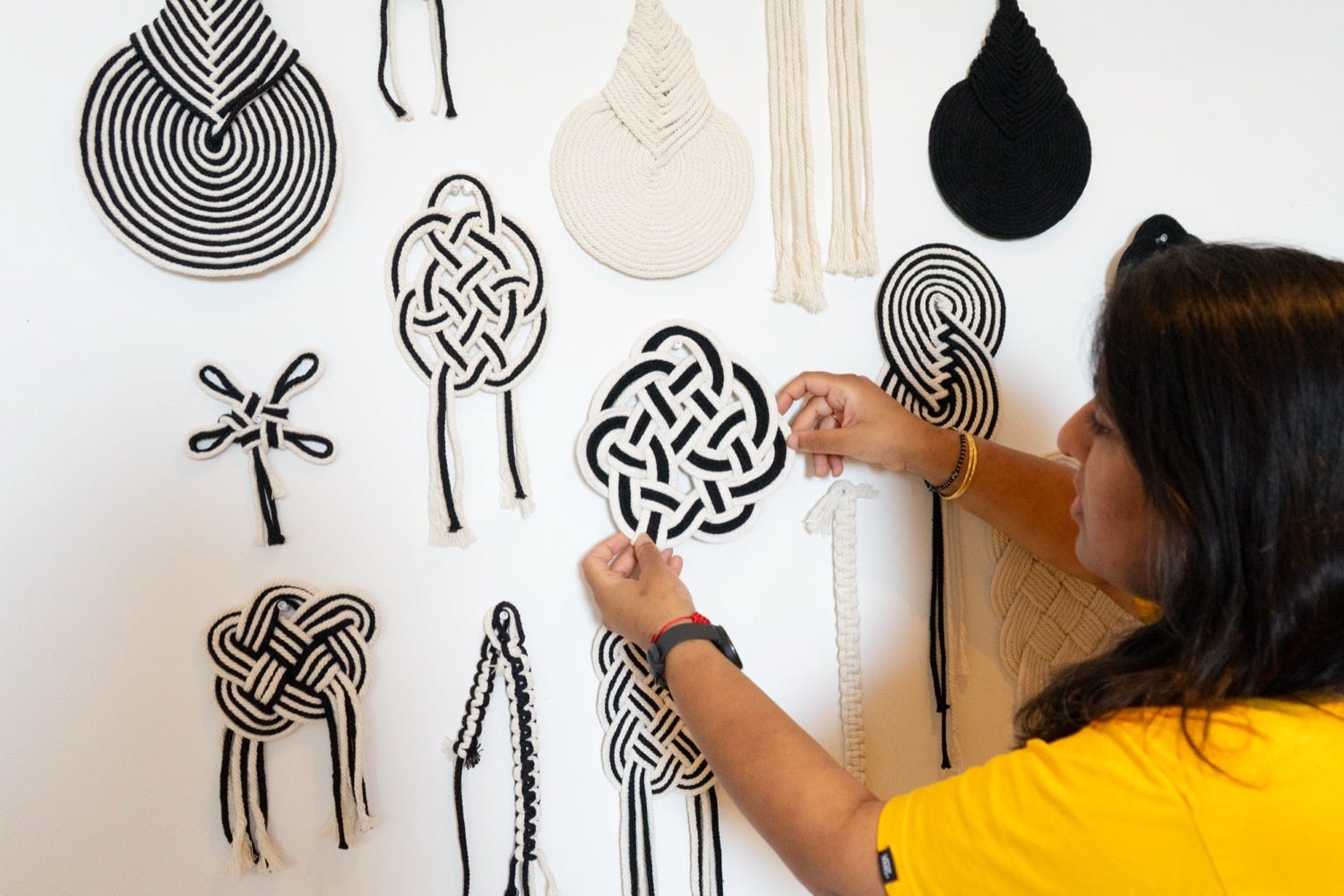
Mani primarily works in textile, print and moving images, focusing on objects, routines and rituals from both the everyday and mythology.
She is looking forward to spending time in a dark skies location, looking up and connecting with the landscape above and below ground.
“My use of embroidery and textile relates to the caste system in India, where generations of my family have been tailors, fabric printmakers, and dyers,” she said.
The Vindolanda Trust’s artist-in-residence programme The Land We Walk On - supported by The John Ellerman Foundation, Arts Council England and Newcastle University - allows participants to live and work on-site, alongside staff, volunteers and specialists.
It provides opportunities for emerging and established artists from a variety of disciplines including, but not limited to, sculpture, film, photography, textiles, mixed media and ceramics.