


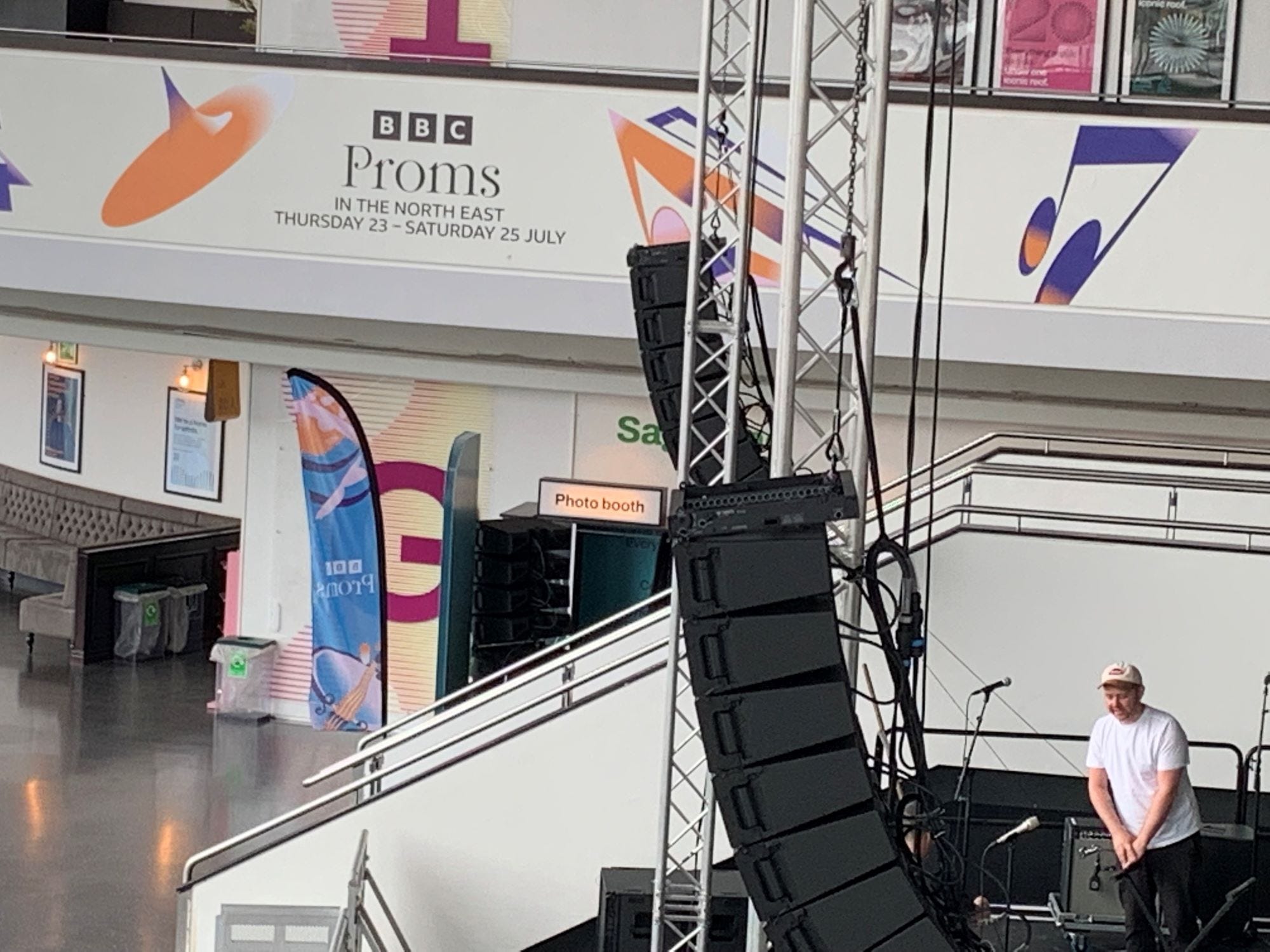
Preparations for the BBC Proms are underway across the North East with Gateshead, Sunderland and Middlesbrough all playing host this year to the world’s biggest and longest-running music festival.
Known primarily as a celebration of classical music, the Proms programme seems to become ever more eclectic as it embraces different genres and sounds.
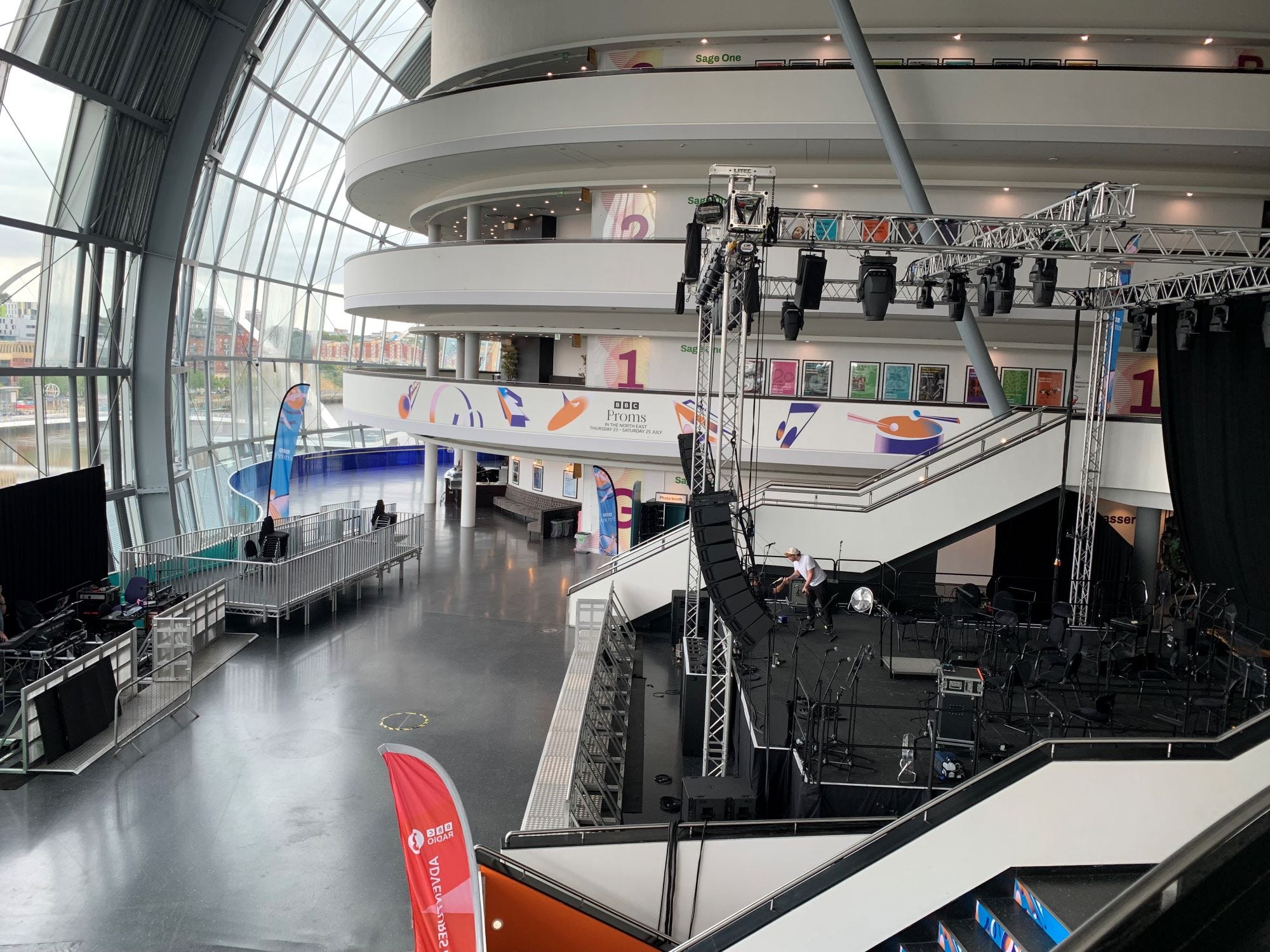
This was in evidence at The Glasshouse on Tuesday afternoon where Nadine Shah was watching a stage being constructed on the concourse.
The singer, born in South Tyneside, will be there under the spotlight (you’d assume a spotlight) on Friday evening as she performs with a Royal Northern Sinfonia ensemble.
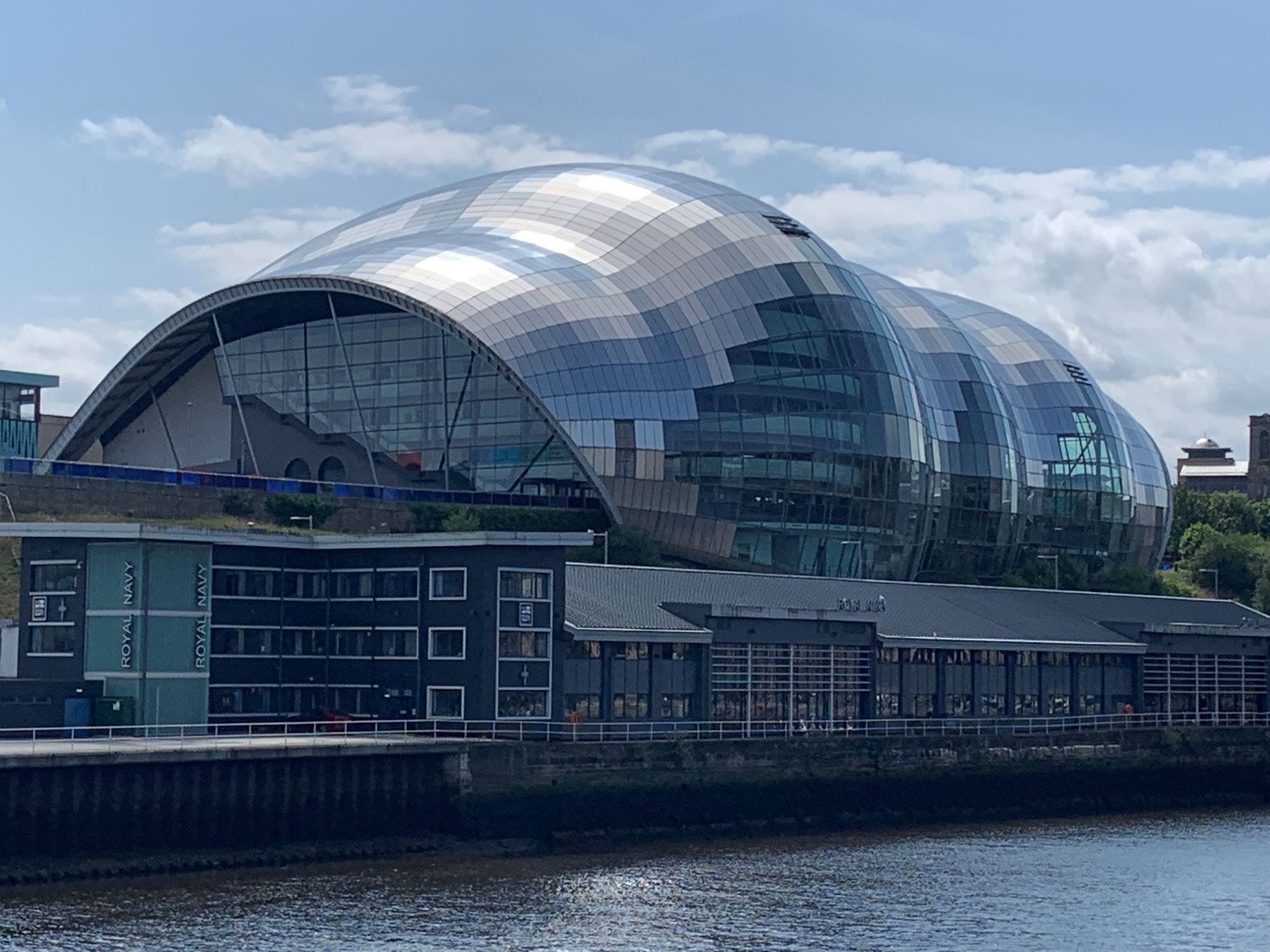
In other years – this is the fifth time the Gateshead building has been a Proms venue – they would have been in Sage One, but the big hall is closed and not due to reopen until the new classical season begins in September.
A major programme of capital renewal, the first since it opened in 2004, includes a refurbishment of the stage and a range of technical improvements designed to keep the building up to date and fit for future use.
The concourse, then, is being pressed into service for Nadine’s concert (standing tickets only) and also for Choirs on the Concourse on Saturday afternoon, featuring the Chorus of Royal Northern Sinfonia, the BBC Singers, Voices of the River’s Edge and sax star Jess Gillam.
But Sage Two, whose dark intimacy lends itself to exhilarating projects and collaborations, is open for the business of exploration and innovation.
Here on Thursday evening The Glasshouse will open its Proms account with BBC Introducing Live at the Proms.
Teesside rapper Shakk will present a programme featuring Glaswegian Liam Shortall’s band corto.alto, London songwriter Maddie Ashman and North East duo ATFK (accordionist Amy Thatcher and Francesca Knowles, drums/percussion).
And here, while Nadine is surveying the transformation of the concourse, a rehearsal is in progress and we sneak in, myself and Jackie Thompson, senior comms manager at The Glasshouse.
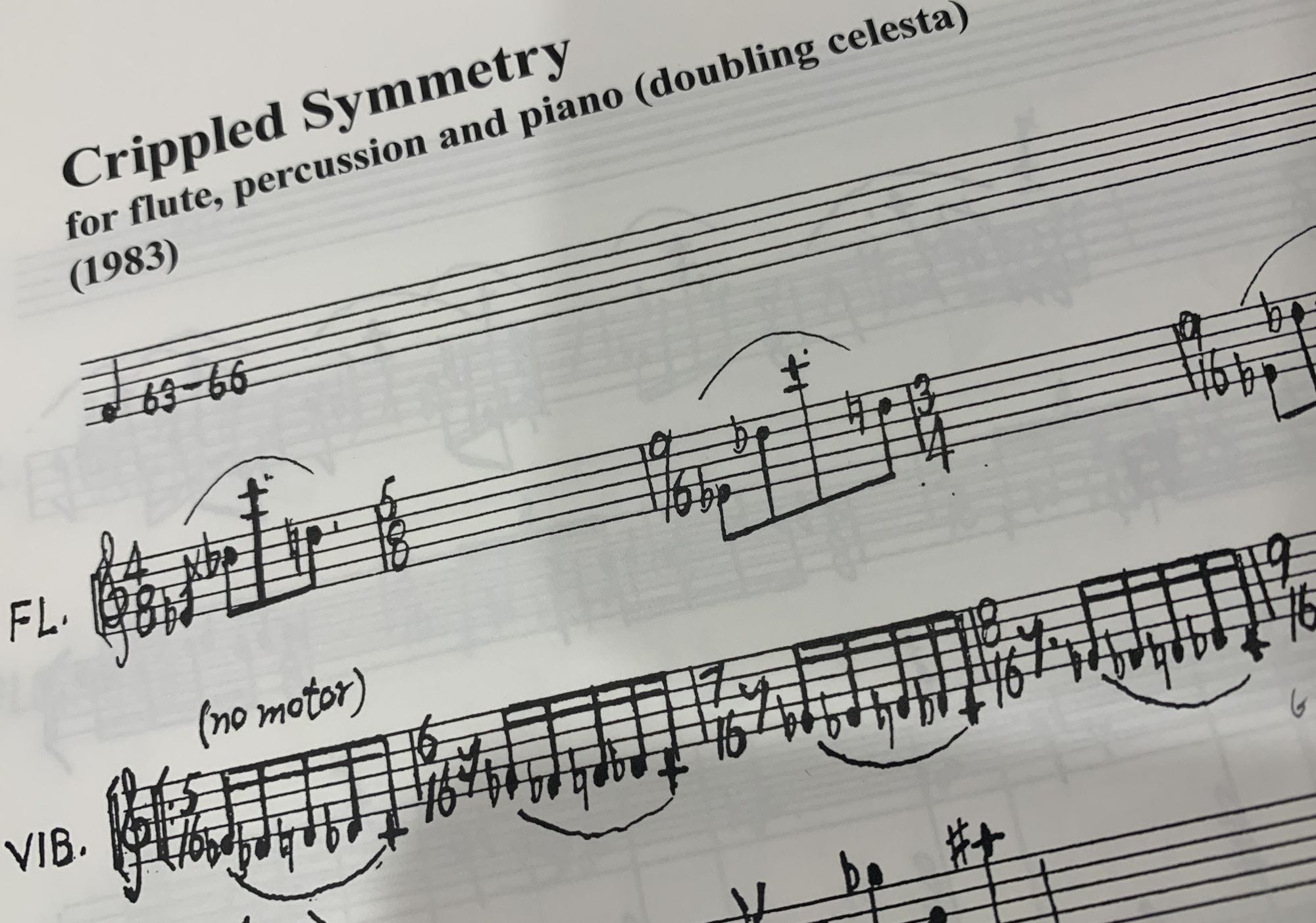
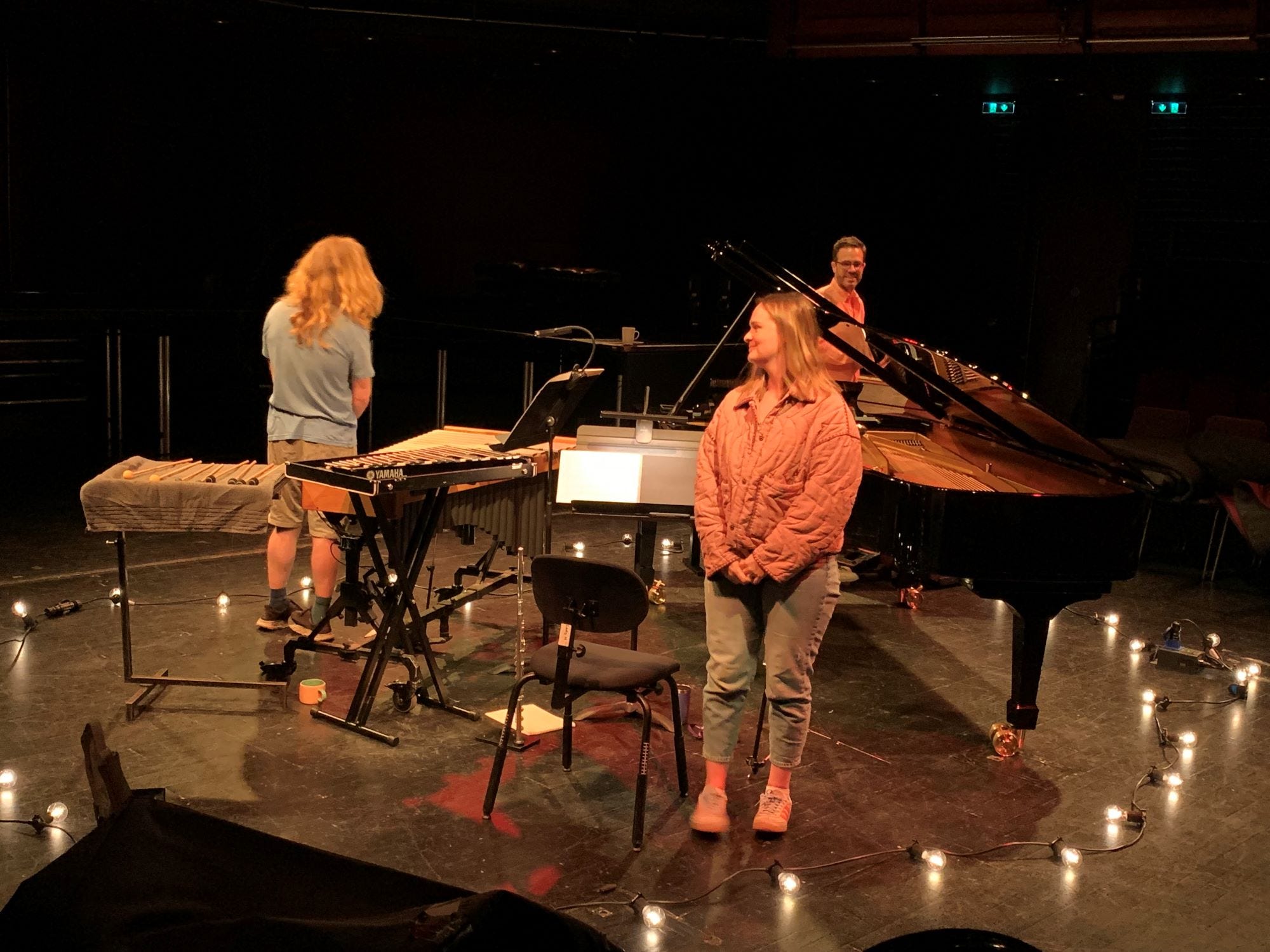
Amid a circle of lights on the floor, three Royal Northern Sinfonia musicians are about 30 minutes into Crippled Symmetry, which sounds painful but proves to be strangely beautiful and hypnotic.
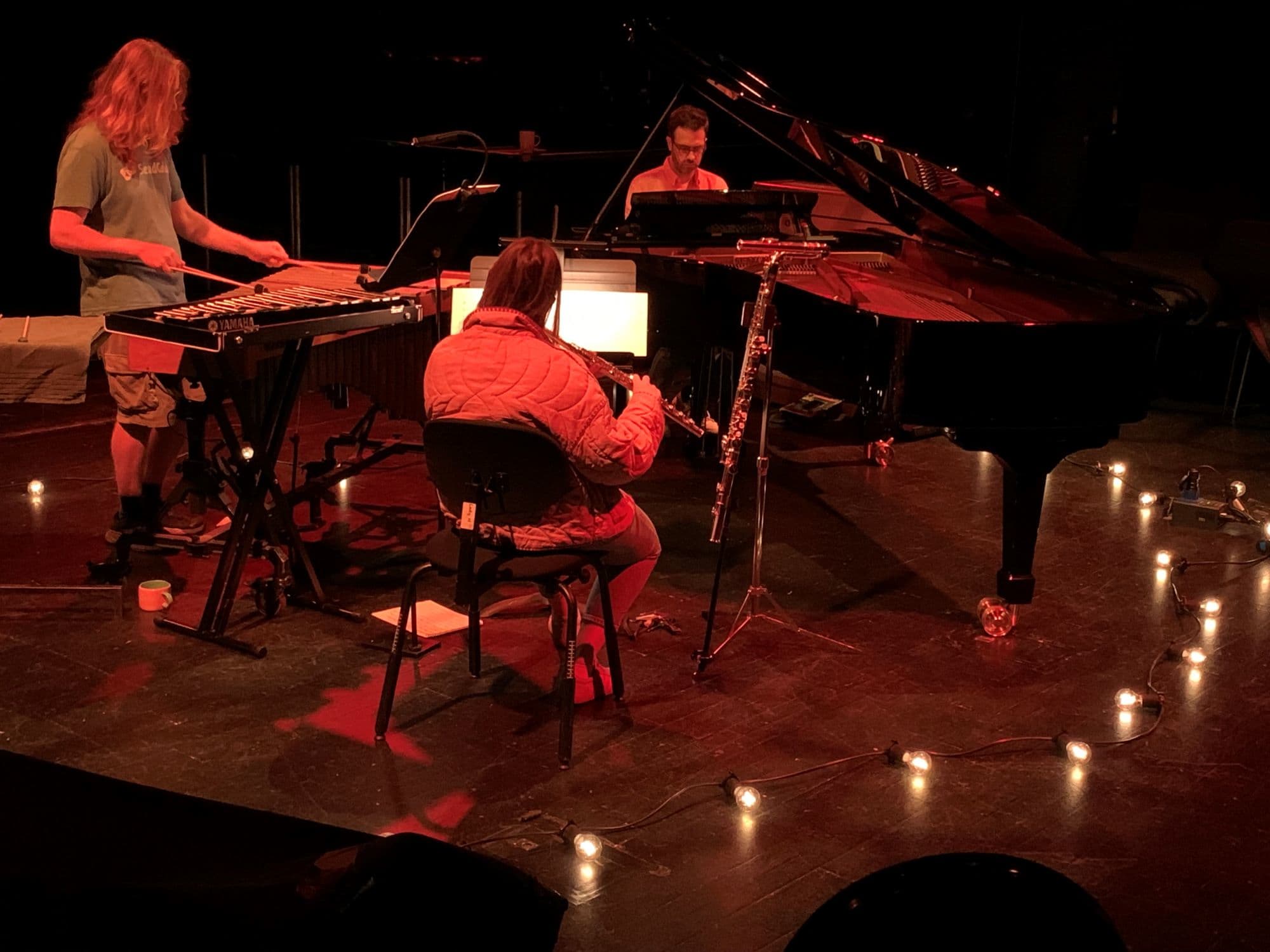
It feels a little – at first anyway – like music under exam conditions. The intense concentration you could cut with a knife as the trio play their single notes and repetitions, often alone but occasionally overlapping.
This 90-minute piece by American composer Morton Feldman, who died in 1987 but would have been 100 this year, is said to have been inspired by the intricate patterns on Turkish rugs.
The concert was chosen by two national newspaper critics as among the most interesting of this year’s 86 BBC Proms offerings.
Dinis Sousa, music director of Royal Northern Sinfonia, sits at a grand piano but has to one side a celesta, an instrument heard most famously in Tchaikovsky’s The Dance of the Sugar Plum Fairy – although this is nothing like that, not being a piece you’d idly hum or whistle.
Percussionist Jude Carlton stands before glockenspiel and vibraphone while flautist Helena Gourd has access to a flute and its more imposing relative, an upright bass flute.
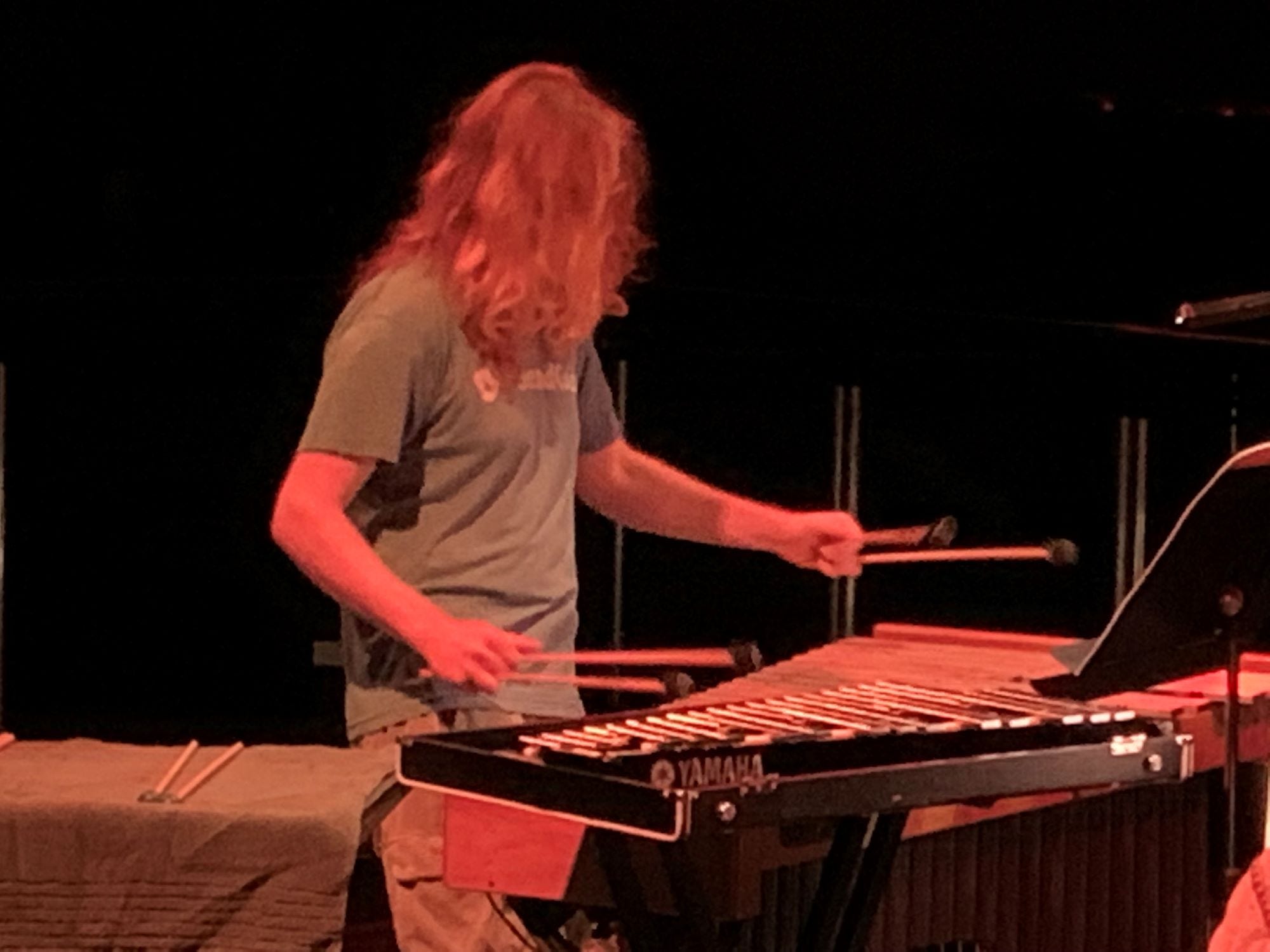
Between them, and alternating between their instruments – and Dinis and Jude occasionally playing both of theirs together – the musicians perform a piece of measured pulses, pauses and rhythms.
It’s unhurried music of the subtlest kind, as if the players are keeping a fragile thing alive. Someone coughs but they keep going, locked into the process but occasionally exchanging a brief smile.
It ends, finally, with a single percussive note repeated again and again. Cue collective exhalation of breath.
Back in his dressing room, Dinis has the air of a man who has just finished a run or climbed a mountain… or handed in his paper after an exam.
So was it fun? He smiles.
“Well, you can’t get carried away because concentration is key. You can’t get distracted by thinking, ‘Oh, that was nice’ because you have to keep super-focused all the time.
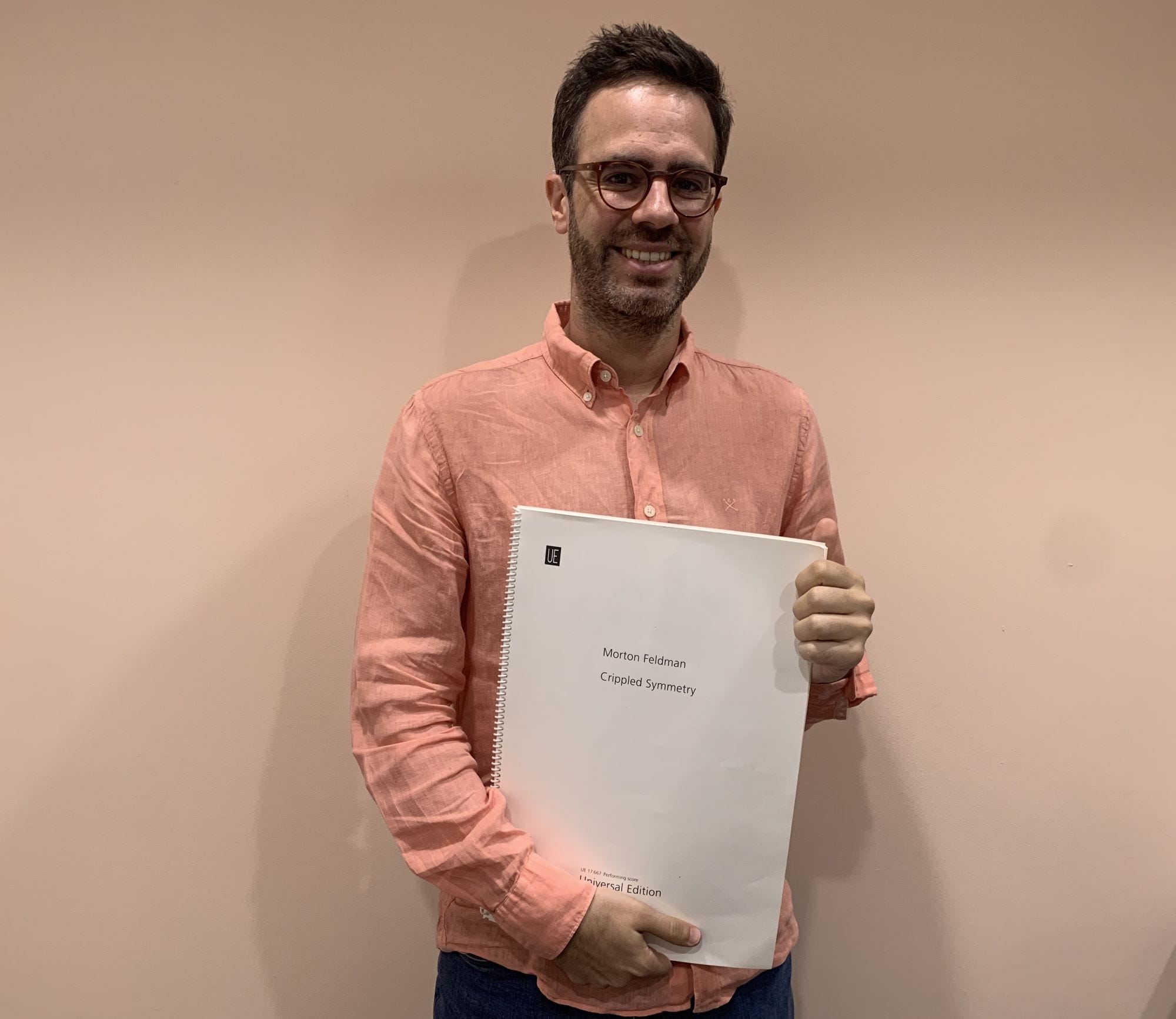
“You need to be very rigorous about your part. There are many places where we have to repeat a chunk and if you aren’t focused you might think, ‘Did I repeat that or not?’
“Every time you play the piece it can be different. I guess the only way to do it completely synchronised would be if we all performed with a click track or metronome.”
It’s a piece, he explains, with inbuilt unpredictability. Clearly carefully planned by the composer, the musicians must find their own path through it.
“There’s one page where I’m on a C for what feels like a long time, at least 10 minutes, and I just have this one note which I play at intervals.
“I’m counting, 1234, 123, 1234567, 123, and then the others also start repeating one note but with different intervals.
“Occasionally your note will come at the same time as somebody else’s and it seems amazing.”
It’s like the planets aligning, he agrees. Something to be savoured.
Morton Feldman was born in New York in 1926, the son of Russian Jewish immigrants.
He is remembered as a major figure in 20th Century classical music and an exponent of indeterminacy, meaning aspects of a composition being left to chance or interpretation.
His music has been characterised as quiet and slowly evolving, and with recurring asymmetric patterns… as evidenced here.
Dinis Sousa, naturally, is a fan.
“I have actually been wanting to do this piece for a long time but hadn’t found the right slot,” he says.
“When the conversation came up about what to do at the Proms, and because Sage One is closed, I mentioned this and they were really excited.
“I think it’s the only Feldman at the Proms in his 100th anniversary year so it felt totally right.”
You couldn’t do it in the Royal Albert Hall where most Proms concerts take place, he suggests. “I think the air conditioning would be louder than any of the noises we make.”
So you must be here in Gateshead to see it performed, and Dinis believes it will reward anyone approaching with the right mindset.
“Morton Feldman wrote amazing chords and was the master of spacing. Famously he said he wasn’t interested in colour but he writes these amazing colours.
“I think there’s real beauty in the music but not the kind we normally expect from classical music.
“It’s poetic and inspiring and it motivates your mind to go to places where it maybe doesn’t go every day.
“I really recommend it as an experience. And it’s also a rarity because it takes a while and is a big challenge. I don’t know the last time a big Morton Feldman piece was played in the North East.
“It doesn’t give the same adrenalin rush as a big concert because it’s slow and calm. It’s like going on this big journey. You enter this state of concentration and actually it’s magical.”
The magic of the BBC Proms in the North East begins on Thursday with The Unthanks and friends with Royal Northern Sinfonia in Middlesbrough Town Hall and ends on Saturday with a Mozart and Mendelssohn concert at The Fire Station in Sunderland performed by Royal Northern Sinfonia led by Maria Włoszczowska and with pianist Christian Ihle Hadland.
And you can hear everything at some point on BBC Radio 3 or BBC Sounds.
Crippled Symmetry is to be broadcast on Radio 3 on August 11 at 8.15pm. You can hear the Nadine Shah concert on the same channel on July 26 at 9pm while the concert at The Fire Station will be broadcast live.
Find details of the BBC Proms in the North East on The Glasshouse website and the full BBC Proms 2026 calendar here.