


While the Bayeux Tapestry is attracting sell-out visitor numbers in London, panels from the North East’s own 174-year-old version are to go on show.
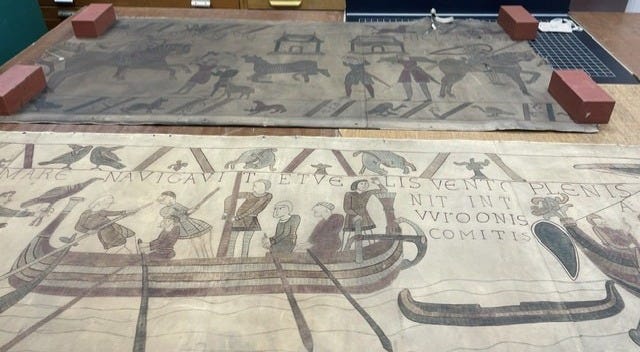
Antiquarian and historian the Rev John Collingwood Bruce commissioned the copy in the early 1850s from pupil John Moffat at his school in Percy Street in Newcastle.
Moffat, a relation of David Livingstone, the missionary and explorer, set to work to complete drawings of the tapestry in a series of paper panels, now the subject of a restoration programme to remove decades of dirt after many years in storage.
Now Newcastle University’s Great North Museum: Hancock will open a free exhibition from October 10 until January 17, titled Bayeux-on-Tyne: Drawing the Bayeux Tapestry.
The panels which have been restored so far will be on show in October, when visitors will also gain a sense of the original Bayeux Tapestry through accompanying visuals from the exhibition at the British Museum.
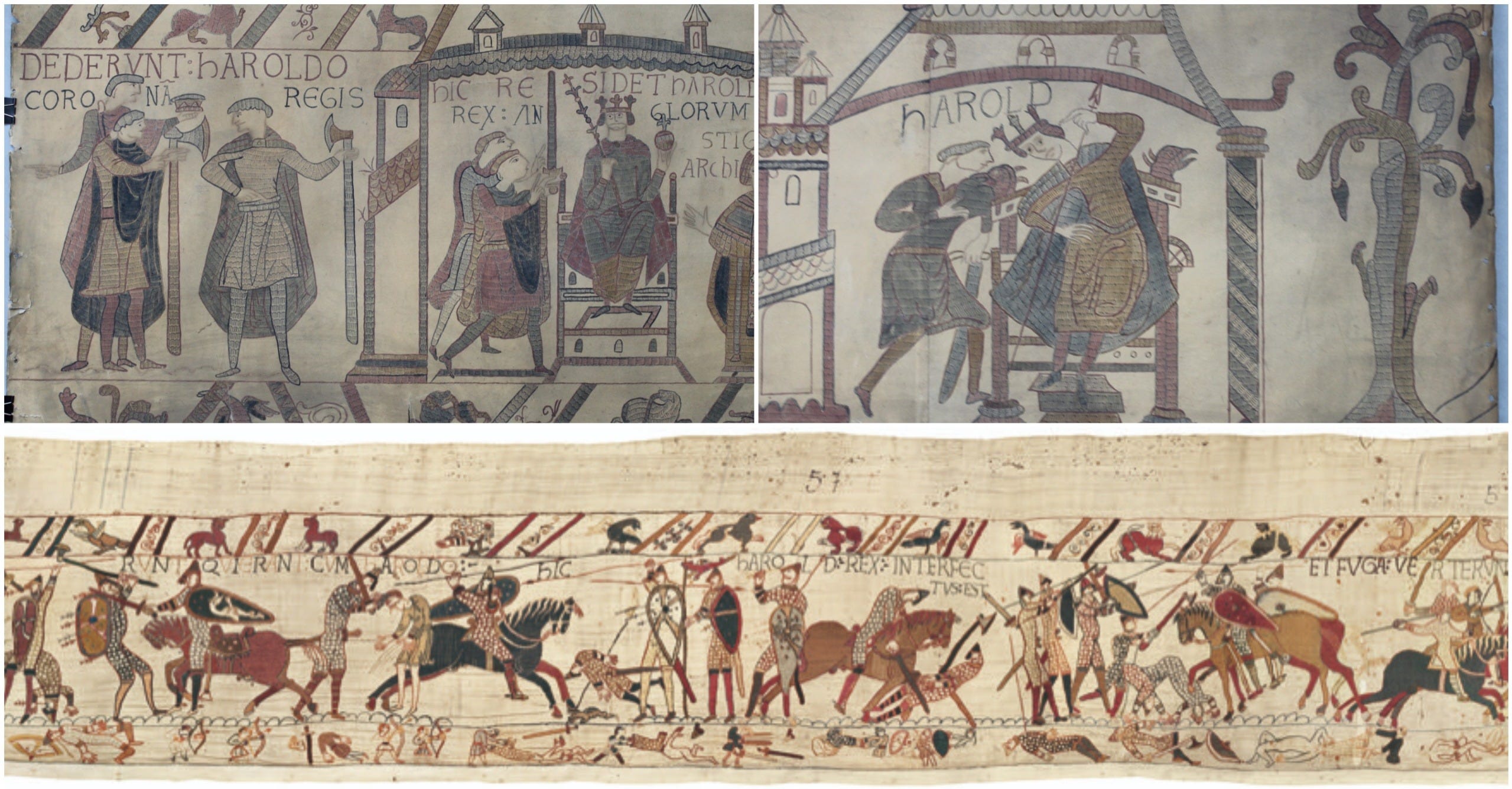
The original Bayeux Tapestry is a nearly 1,000-year-old hand-embroidered cloth, 70 metres long, telling the epic story of England’s conquest by William, Duke of Normandy.
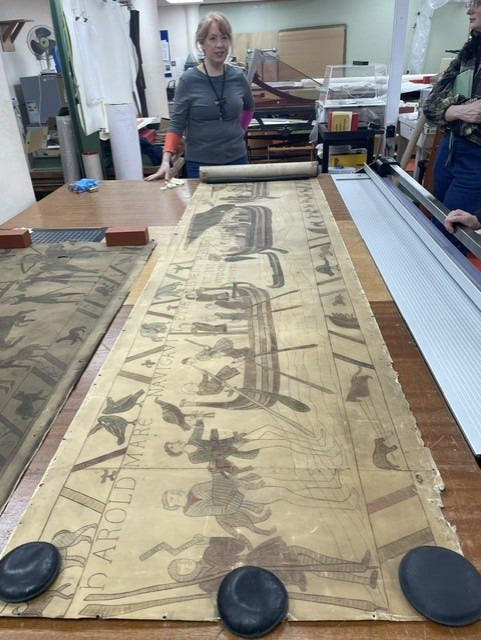
Bruce used the tapestry copy, owned by the Society of Antiquaries of Newcastle upon Tyne, in his history lectures.
It was also displayed, first at the Castle Keep and then the Black Gate, but over the years much of it gathered grime and soot and gradually became hidden behind bookcases and cupboards.
On the society’s move to the Great North Museum, it was decided to store the panels at Newcastle Discovery Museum. They were rolled up, placed in bags and largely forgotten about.
Bruce’s copy is on a larger scale than the original and five metres longer and is currently in 35 separate rolls.
Malavika Anderson, museum manager at the Great North Museum: Hancock, said: “It’s such a joy to be part of Bayeux Around Britain and to know that these 174-year-old panels will soon be on display to the public, giving visitors the opportunity to discover the extraordinary stories of the Norman conquest, the tapestry itself, and the Newcastle schoolboys who copied it by hand.”
Mike Barke, librarian at the Society of Antiquaries and a retired lecturer at Northumbria University, has researched and written extensively on the historical geography of the North East, including the recent book Newcastle upon Tyne: Mapping the City.
He said: “The Bayeux Tapestry is a fascinating work of art in itself but, due to its unique history, the facsimile presents an extra layer of interest. People can stand back and admire not only the stories and artistic skills it displays but also the sheer ambition and audacity of pupils and their master in even contemplating such a task.
“It provokes thoughts about this crucial period of English history but also on the nature and purpose of historical education. I am sure that, for the schoolboys involved in the production of this wonderful facsimile, history became very much alive.”
Also coming to the museum: Greggs’ Ta-Pastry
The Great North Museum: Hancock will be doubling down on tapestries when another rather different version of history arrives on October 24.
Greggs’ eight-metre-long Ta-Pastry charts the bakery chain’s “conquest of the British high street” through six embroidered chapters, from founder John Gregg making deliveries around Newcastle by bike to the arrival of the Vegan Sausage Roll and the brand’s more recent cult following.
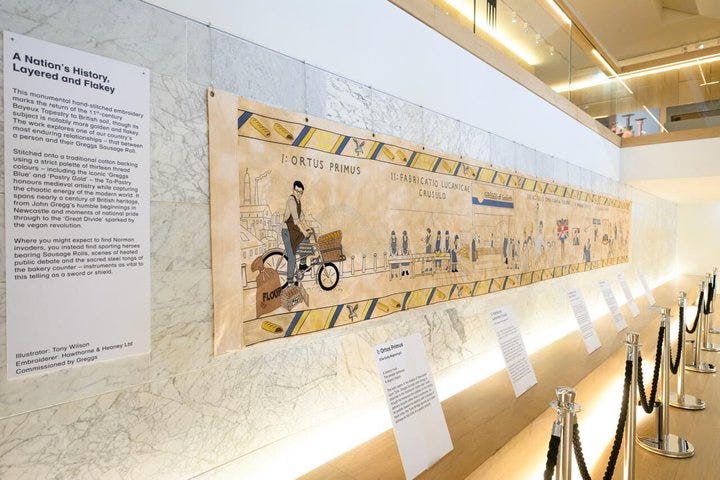
Created with Royal embroiderers Hawthorne & Heaney, the piece takes its inspiration from the Bayeux Tapestry, complete with medieval-style imagery, traditional border motifs and satirical Latin.
Among the scenes are the Tyne Bridge, post-war bakers at work and national events from the 1966 World Cup to London 2012, with the humble sausage roll remaining a constant throughout.
The final chapter, Victor Mundi, celebrates the rise of a Newcastle bakery product now eaten more than a million times every day.
Greggs’ Ta-Pastry will be on show at the Great North Museum: Hancock from October 24 until January 17.
