

Nigel is a name very much in the news, with hardly a day passing without Mr Farage featuring.
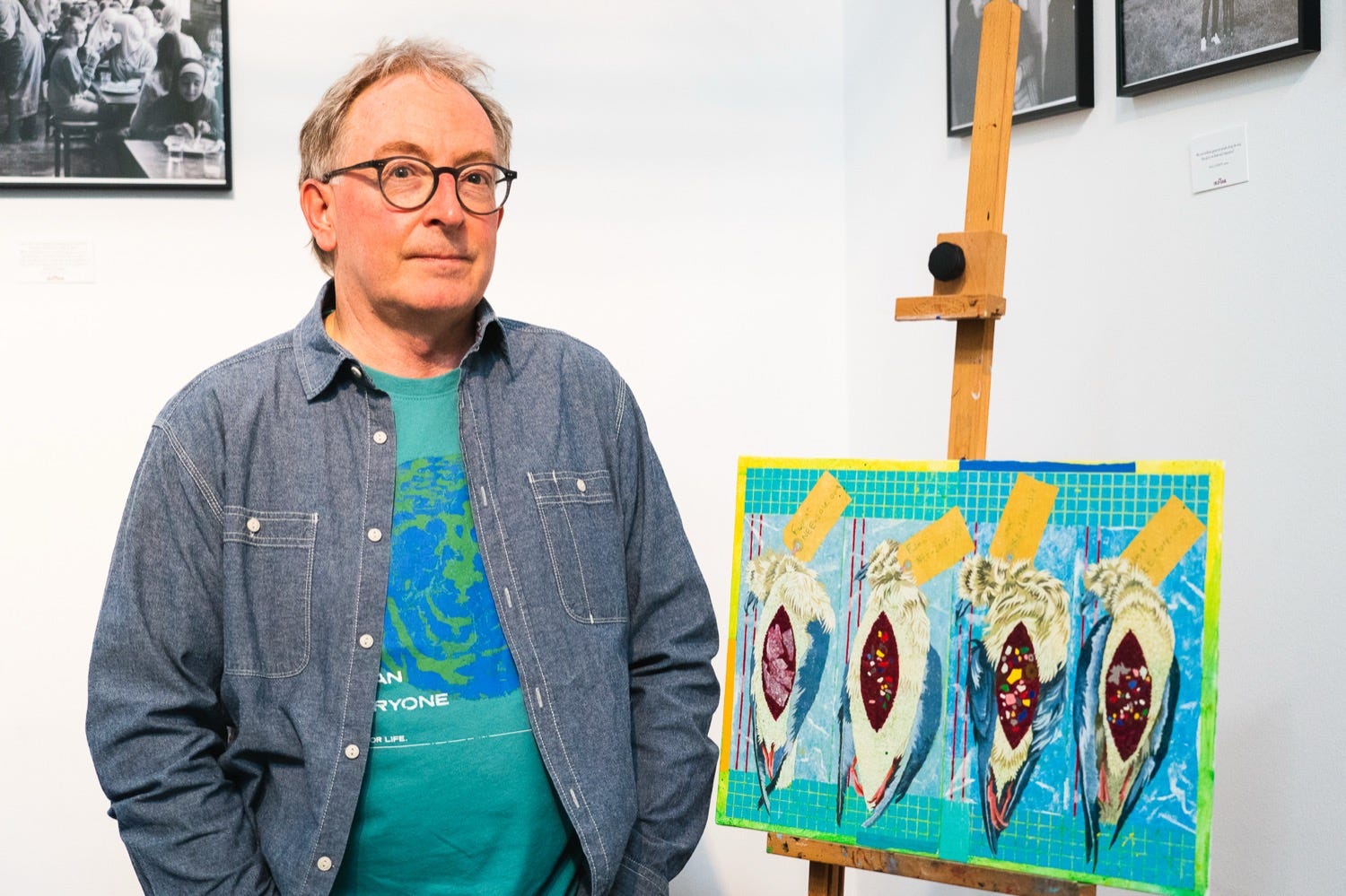
County Durham artist Stephen Livingstone has used Nigel as the inspiration for his latest exhibition.
But in Stephen’s case it is a specimen of the long-extinct Irish Elk, also called the Giant Deer, which for years has been known by its pet name of Nigel by Durham University academics and students.
One of the largest deer that ever lived, with antlers which can span over 4.2 metres (13.8 ft) across, the most recent remains found of the species have been radiocarbon dated to about 7,700 years ago.
Nigel is part of the collection of Durham University’s biosciences department’s array of animal skeletons and skulls, which Stephen has been sifting through.
The collection dates from the 1830s and was used as a teaching aid, but is now kept in storage.
Stephen has produced 35 oil paintings of the remains of various animals in the collection, either extinct or heading in that direction.
His exhibition, Gone But Not Forgotten, has gone on show at the Museum of Archaeology at Palace Green in Durham from July 18 to September 30.
Stephen said: “It is a menagerie of extinction. The collection is not open to the public and the exhibition is an attempt to put it into the public domain.
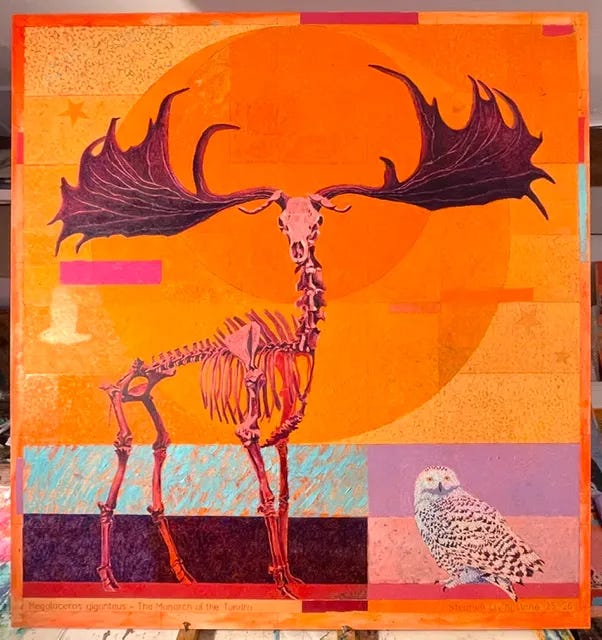
“I thought it was a shame that people don’t get to see Nigel so I decided to paint his portrait.
“That became the springboard for works on other animals which are either now missing from the British landscape or are facing severe threat.”
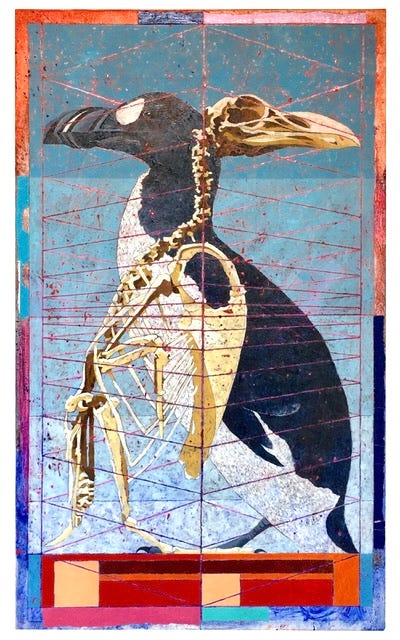
Stephen has also highlighted the extinction of the great auk, which was hunted on a significant scale for food, eggs and its down feathers.
On the islet of Stac an Armin, St Kilda, in Scotland, in July 1840, the last great auk seen in Britain was caught and killed.
Three men from St Kilda tied it up and kept it alive for three days, until a large storm arose. Believing that the bird was a witch and was causing the storm, they then killed it by beating it with a stick.
The great auk in the Durham collection was donated in 1838 but was sold in 1974 to the Kelvingrove Museum in Glasgow.
So Stephen turned to the specimen held in the collection of the Natural History Society of Northumbria, which is one of the few juvenile great auks to survive in collections.
Another animal whose skull has been painted by Stephen is the water vole – Ratty in The Wind in the Willows – whose population has crashed in recent years to the edge of extinction and has been the subject of reintroductions in the Kielder area under Northumberland Wildlife Trust’s Restoring Ratty project.
Other reintroductions include a family of beavers at the National Trust’s Wallington estate in Northumberland.
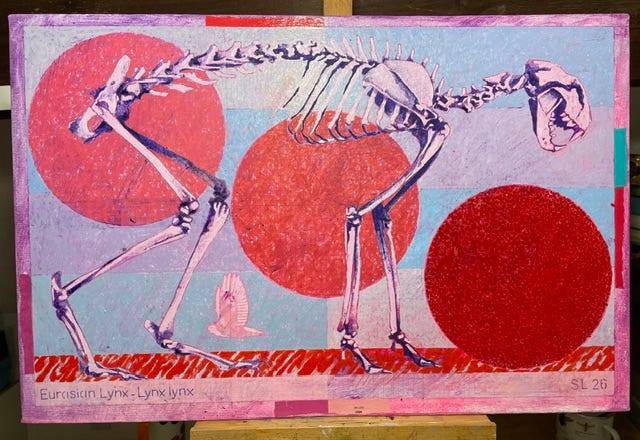
Other animals represented in the exhibition include the wolf, lynx, brown bear, aurochs, wild boar, Dalmatian pelican, snowy owl, pond turtle, cave lion/wild cat, harvest mouse/dormouse and hedgehog, bat species, wading birds and songbirds.
Stephen said: “The exhibition is saying that a lot of species have gone and others are under severe threat. We have to hang on to what we have got.”
Stephen will give a talk on the topic on behalf of the Natural History Society of Northumbria on August 2, 4pm, at the NHSN Council Room, Level 2, Great North Museum: Hancock in Newcastle. Cost: £4 NHSN members, £5 non-members.
Stephen deals principally with human impact on landscapes and habitats. His projects reference museum collections and archives and he frequently works in collaboration with academics and experts in a wide variety of fields, from soil scientists, ornithologists and archaeologists to mountaineers, beekeepers and boat builders.
He has developed exhibitions for many museums and institutions such as the British Library, the National Trust and the Museum of Art and Design in New York and, over the years, has worked closely with Durham University.