

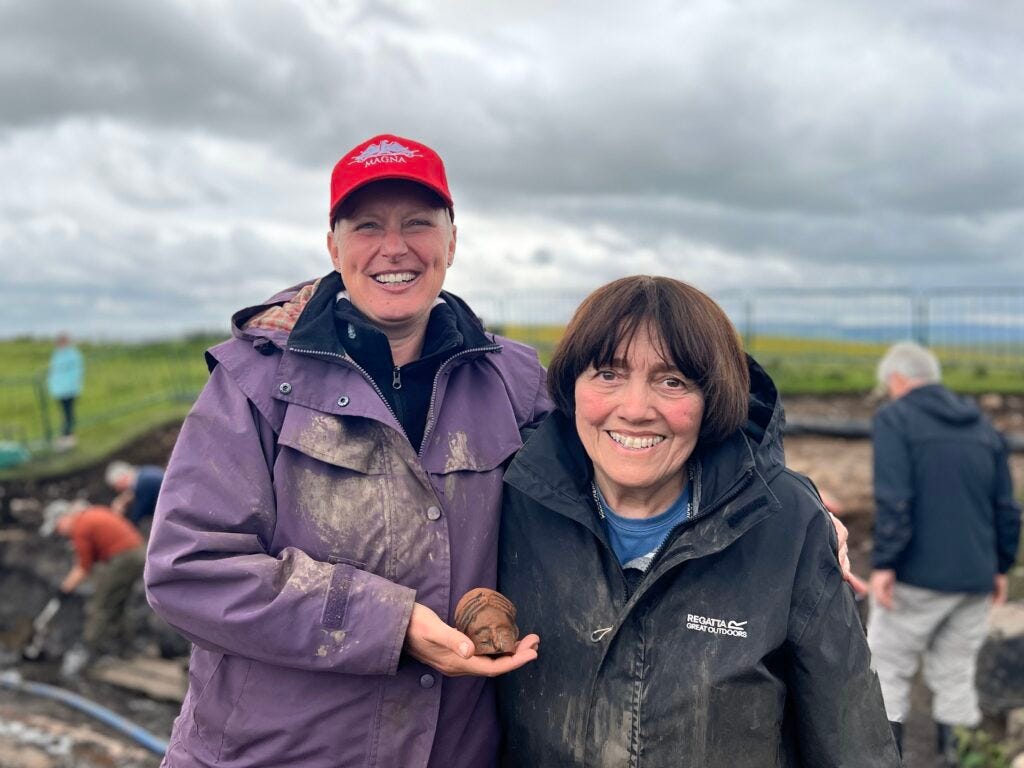
If you want to get ahead, practice makes perfect may have been the motto for the individual trying their hand at pottery at a Roman fort in Northumberland almost 2,000 years ago.
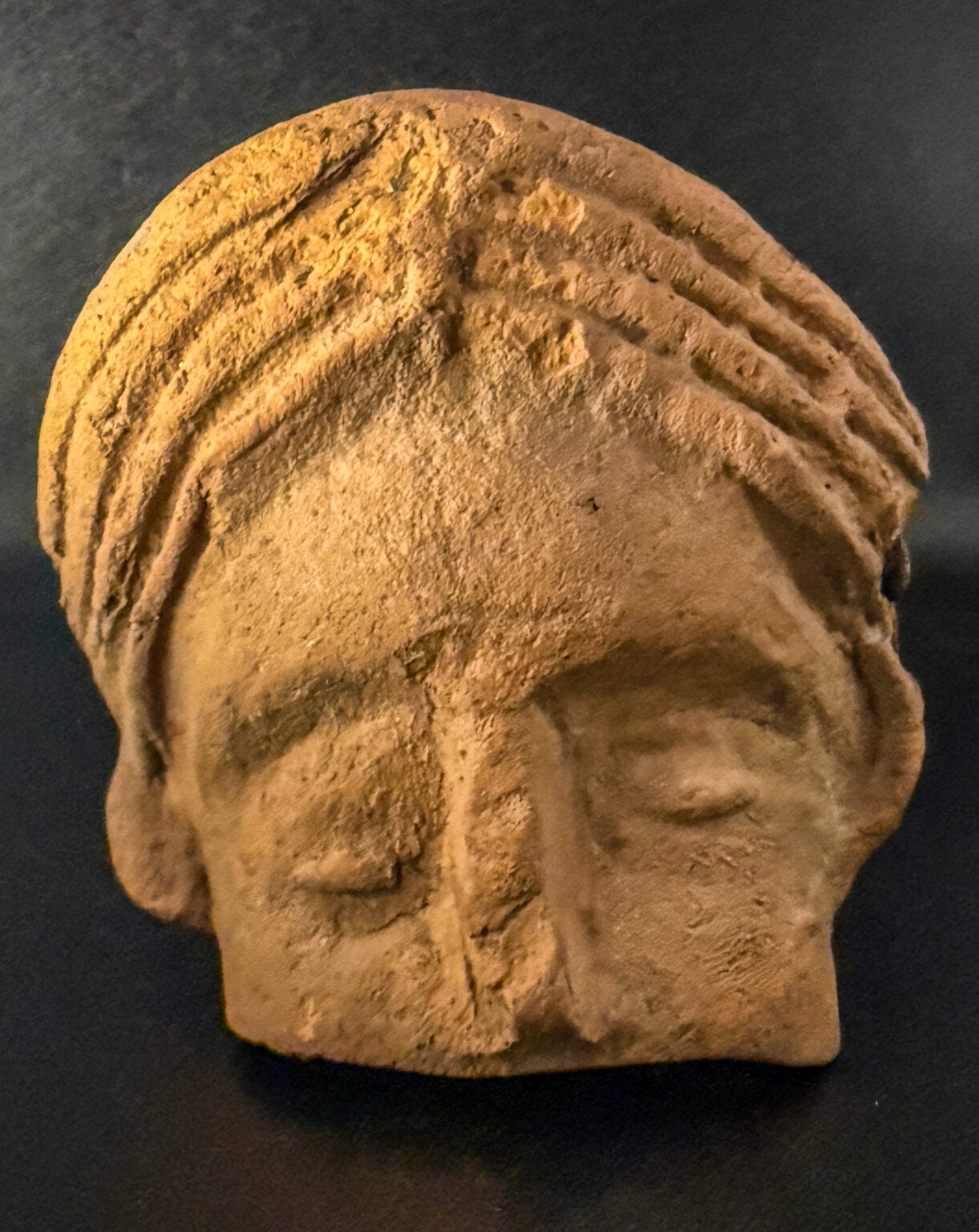
They produced a terracotta head of a woman which fell rather short in the quality stakes.
The head is one of the finds from excavations by the Vindolanda Trust at its Magna fort on the Roman northern frontier.
It may have been an attempt to copy a similar head which is part of the collections at the Great North Museum in Newcastle, and where the portrayed female figure is a cut above in appearance.
The Magna head was found by volunteer diggers Rinske de Kok and Hilda Gribbin and depicts a female figure with a centrally parted, four-strand plaited hairstyle. The piece is broken below the nose and appears crudely made, with notably asymmetrical eyes.
Berwick-based Roman artefact specialist Lindsay Allason-Jones said: “It appears that this has been a practice piece by an inexpert hand. The eyes do not match at all, and the ears are very weird. That leads me to presume it was made on site as no-one would have bothered to transport this very far or paid good money for it.”
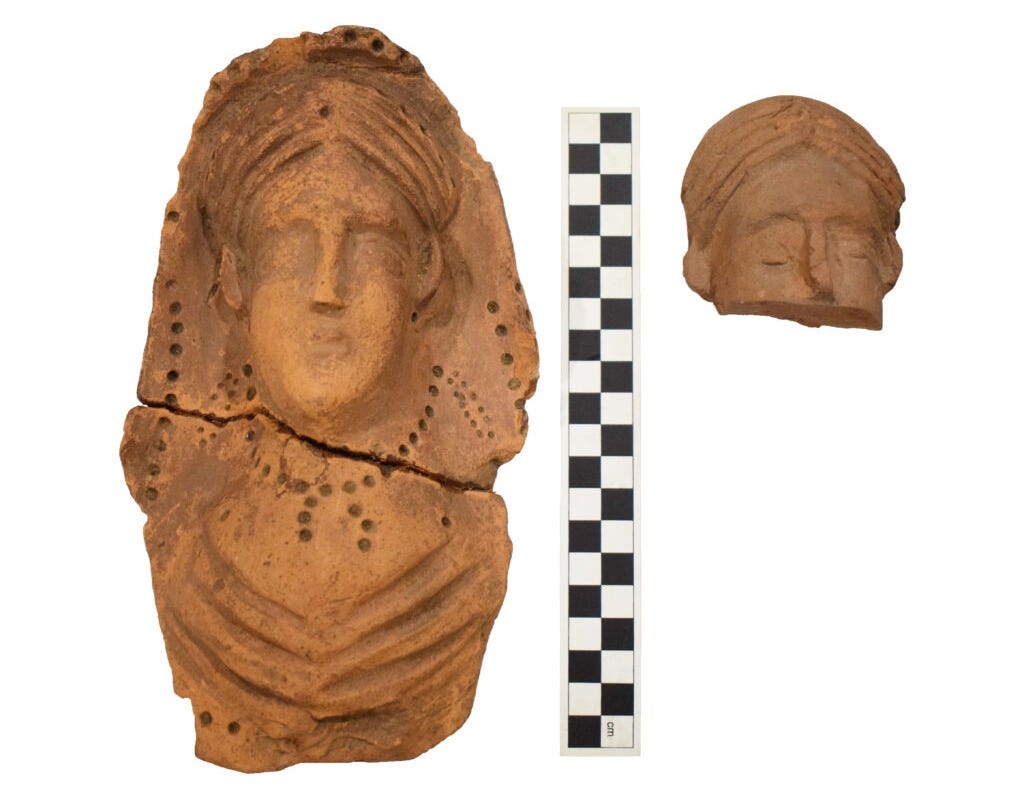
Lindsay said that while terracotta face pots are common in Roman Britain, free-standing heads are rare, and recalled a second, more accomplished terracotta head found at the Magna site in the 19th century.
That earlier example, donated to the Society of Antiquaries of Newcastle upon Tyne in 1982, and now held in the Great North Museum, preserves a fuller head and bust and shares striking similarities with the new find, including the distinctive hairstyle and facial features.
Rachel Frame, senior archaeologist at Magna, said: “There are clear similarities between the two heads from Magna. They are clearly meant to depict the same figure.
“My current hypothesis is that the latest find is a locally made copy of the earlier example, which may itself have been imported. The woman depicted was clearly important to the people living at Magna.”
Terracotta busts such as these are widely interpreted as being used in religious contexts and are unusual finds in Britain.
The earlier find, reported in 1889, was then in the possession of Miss Mary Ann Henderson of Haltwhistle, the last member of the Carrick family to live at Carvoran farm.
She likely found the object while living at Carvoran and appears to have kept it after selling the farm in 1885. It may have remained in family hands for nearly a century before being donated to the Society of Antiquaries.
Malavika Anderson, manager at the Great North Museum: Hancock, said:
“It was wonderful to see this newly uncovered terracotta head from Magna.”
The identity of the woman remains unknown, though possibilities include an imperial figure or a goddess. Researchers are now inviting further comparisons from across the Roman world.
A five-year research excavation at Magna started in 2023, with one of its main aims being to investigate the impact of climate change on buried remains at the site.
Barbara Birley, the Vindolanda Trust’s curator, said: “The newly discovered terracotta head will go on display at the Roman Army Museum at Magna as part of a recent finds display along with some of the other highlights of the project so far. These include leather shoes, a silver ring, bone hairpins, glass beads and a Venus pipe clay figurine.
“We are grateful to have the support from the National Lottery Heritage Fund, made possible by National Lottery players, who have enabled the Magna project to be realised and shared with the wider public – there is still so much more to discover about the people who lived at this Roman fort and we look forward to seeing what else is uncovered in the last two years of the project.”
Helen Featherstone, director, England, North at the National Lottery Heritage Fund, said: “It’s exciting that the team at Magna have uncovered this rare find. This discovery builds on our understanding of the Roman heritage of the area.”